


Norway’s Sporting Utopia? Golf Ace Hovland’s World Cup Fanaticism Unpacks a Nation’s Identity Crisis
POLICY WIRE — Edinburgh, Scotland — The quiet clinking of clubs, the hushed galleries, the intricate choreography of a championship golf swing—these aren’t exactly the roaring bedlam one...

POLICY WIRE — Edinburgh, Scotland — The quiet clinking of clubs, the hushed galleries, the intricate choreography of a championship golf swing—these aren’t exactly the roaring bedlam one associates with World Cup football. And yet, this is where Norwegian golf sensation Viktor Hovland finds himself, caught between the meticulously manicured fairways of the Genesis Scottish Open and the utterly unmanicured emotions of a nation consumed by an unexpected, exhilarating football run.
It’s a peculiar thing, isn’t it? A 26-year-old golf pro, fresh off besting the planet’s top-ranked player and pocketing another PGA Tour title—his eighth, no less, and tenth internationally—can’t quite shake the magnetic pull of his homeland’s unlikely athletic narrative. But then, he wasn’t always this fixated. He confesses a somewhat casual relationship with the beautiful game until, well, his country started defying gravity on the global stage. It seems winning has a way of changing allegiances, or at least expanding them, particularly for those with national skin in the game.
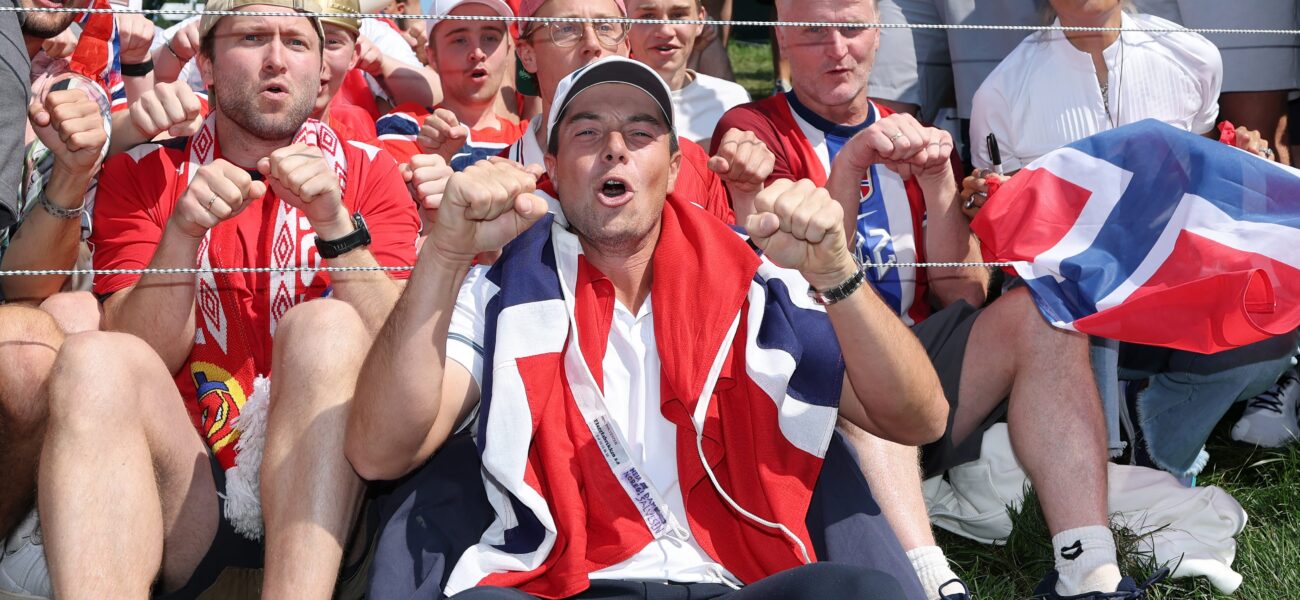
“I showed up for the game the following day, but it was a really cool experience. That was my first time ever watching a football game in person, and it was a great atmosphere,” Hovland recounted earlier this week from North Berwick. You’d think a man whose livelihood depends on pinpoint accuracy — and nerves of steel would be a jaded observer, but no. He was just another face in a sea of Norwegian jerseys, rowing (metaphorically, of course) in unison in Times Square, far from home. A startling tableau of spontaneous patriotism.
This isn’t just about football. Not really. It’s about something far more potent: a small nation’s quest for identity on the world stage, refracted through the lens of sport. Norway, often lauded for its robust social welfare and scenic fjords, has found itself grappling with a sudden, almost unholy, dose of international sporting success. Hovland’s win, hot on the heels of the national squad’s stunning victory over traditional powerhouse Brazil—a feat propelling them to their first-ever World Cup quarter-final appearance—has coalesced into a national mood bordering on delirium. According to the Norwegian Golf Federation, golf participation in Norway has seen a 15% increase in registered players since 2019, reflecting a broader European trend of athletic diversification. So, yeah, people are getting into it.
“Norwegians really like their football. We’re big football fans,” Hovland conceded, before hitting on the larger point. “But at the same time, what’s really cool to see is any Norwegian that’s doing well at anything, like we’ve had Jonas Abrahamsen and the Tour de France and when he was doing well. Now everyone starts to cycle. Then Magnus Carlsen, when he’s winning… people are starting to play chess. Casper Ruud playing tennis. Golf is really trending back home. You can really feel that patriotic support from back home any time any Norwegian athlete would do anything well. It’s really cool to feel that.” It’s a sentiment well understood in places like Pakistan, where cricket triumphs can momentarily unite a nation, papering over complex internal divides with a shared, potent sense of glory.
This confluence of individual — and collective triumph has national officials positively beaming. Minister Ane Halsheim-Wold, who oversees Norway’s culture and sports initiatives, recently remarked, “It’s a beautiful thing, seeing an athlete like Viktor embody our national spirit, whether he’s on the greens or in the stands. This World Cup run isn’t just about football; it’s about showcasing Norway on the global stage, proving that even a small nation can achieve greatness through unified effort and exceptional talent. This collective joy is priceless, truly.” Because, let’s face it, a good run in a major international tournament does more for national brand imaging than a thousand government-funded PR campaigns.
📄 POLICY WIRE WHITEPAPER PUBLISHED: PAKISTAN'S NATIONAL SECURITY POLICY PRIORITIES
👉 READ BY CLICKING HEREHovland, clearly buzzed by the World Cup ride, declared, “Man, I think I’m no expert analyst when it comes to football but it does feel like even though this is a massive accomplishment for Norwegian football and just Norwegian sports in general, in a sense, we have already won. All of this is just a cherry on top. But I think beating Brazil in the manner that it did, I think now they believed this they can beat anybody, which is what they should believe and I hope we go all the way.” A candid admission that sometimes, belief itself is the ultimate currency.
His infectious confidence extends to some playful antagonism toward his British counterparts. When pressed on ribbing English pros, he grinned. “I feel like it’s a very sensitive subject for them, so it might cut a little too deep there if I push too hard,” he teased. “But yeah, I hope they lose and come crying out on Sunday morning.” It’s classic athletic banter, though perhaps slightly more pointed given the circumstances. An English Football Association spokesman, perhaps accustomed to this sort of playful jabbing, simply commented, speaking anonymously to preserve diplomatic decorum, “We’re focused on our game. Friendly rivalry is part of sport, isn’t it? We wish everyone a good tournament.”
What This Means
The saga of Viktor Hovland and Norway’s football frenzy is more than a fleeting sports story; it’s a fascinating study in soft power and national cohesion. For a country that’s not historically a sporting superpower in most mainstream global pursuits, this kind of success generates immense cultural capital. It fosters a collective identity that transcends individual sports, uniting disparate fanbases under a common banner. Economically, this translates into increased tourism interest, enhanced national branding—think merchandise sales, media exposure, and a general feel-good factor that might even grease the wheels for trade relations. It also acts as an aspirational catalyst for young Norwegians, potentially driving participation in sports like golf and football. And this isn’t exclusive to Europe, either. Look at the intense focus on athletic development in many developing nations, often seeing sporting success as a path to global recognition and economic diversification, echoing similar aspirations, just in different arenas.
Ultimately, it shows that while nations like England might possess deep-seated football traditions, the sudden, exhilarating emergence of a contender—or a golfing icon reveling in it—can reconfigure the dynamics of national pride faster than a sudden summer downpour. It reminds us that for athletic underdogs, the triumph isn’t just in winning, it’s in the belief that winning is even possible.