


The Ghost in the Machine: World Cup’s ‘VARgentina’ Controversy Stirs Global Distrust
POLICY WIRE — Arlington, Texas, U.S. — The beautiful game, they call it. But sometimes, when the whistle blows and the electronic ghost in the machine takes over, it feels a lot less like poetry and...

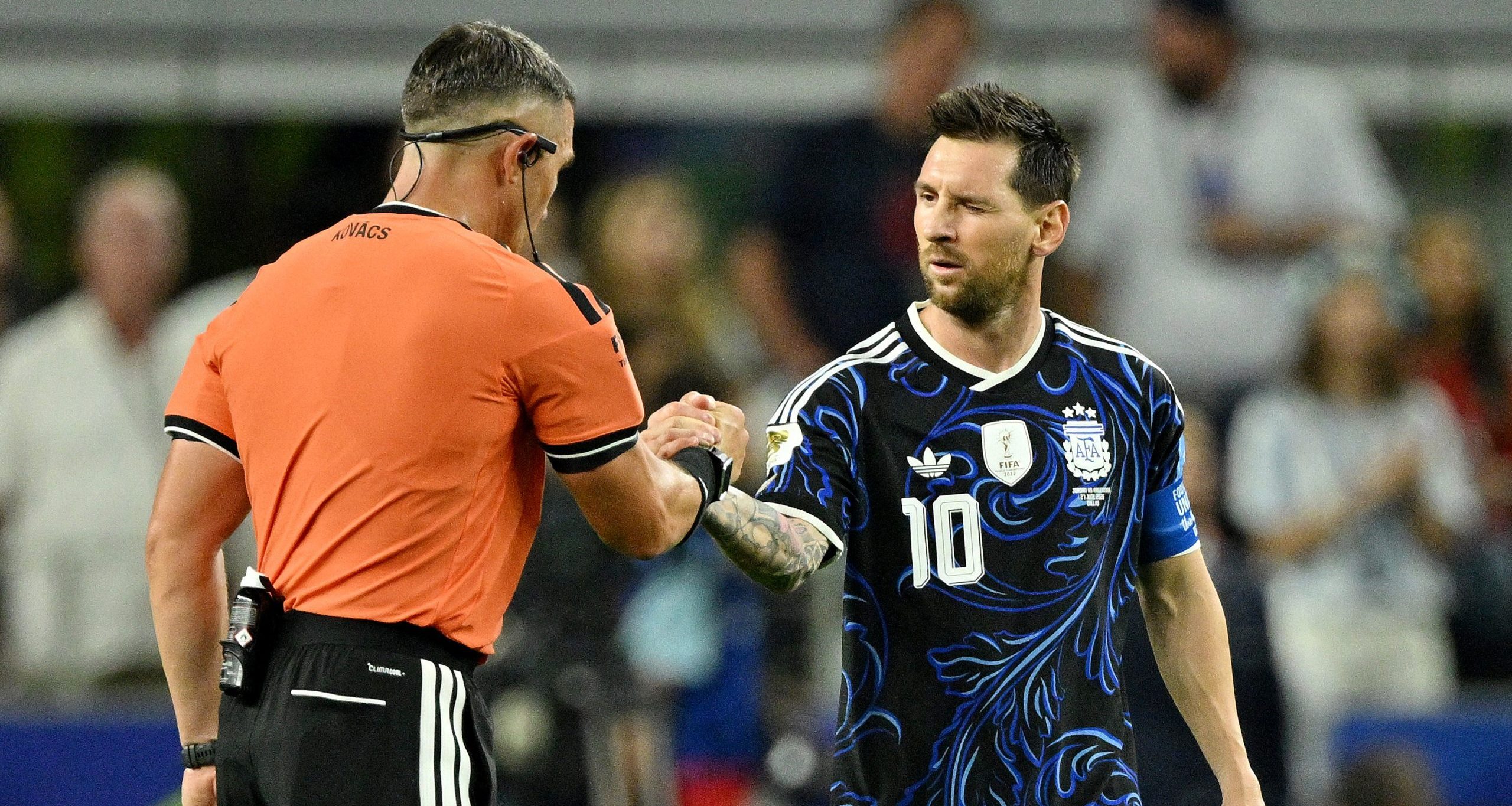
POLICY WIRE — Arlington, Texas, U.S. — The beautiful game, they call it. But sometimes, when the whistle blows and the electronic ghost in the machine takes over, it feels a lot less like poetry and more like a carefully orchestrated power play. Such is the swirling conversation surrounding Argentina’s formidable, perhaps historically good, run in the 2026 FIFA World Cup. Forget just Lionel Messi’s breathtaking individual artistry—that’s a given. The real debate, the hushed whispers now roaring across stadiums and social media feeds, centers on the uncanny allegiance of VAR. We’re talking about ‘VARgentina,’ the moniker adopted by skeptical fans who insist the world’s most popular sporting event isn’t playing by its own rules, at least not for everyone.
It’s not just sore losers grumbling from the cheap seats. You don’t have to be a tactical genius to notice a pattern, it’s just got this… vibe. Following their 3-2 defeat in a blistering round of 16 clash, Egyptian coach Hossam Hassan didn’t pull any punches, not after his squad went toe-totoe with the titans and came up short, apparently, against more than just talent. “We haven’t seen respect or fair play,” Hassan frankly told media members. “A penalty was ruled out and a second [incident] that should have been checked for a penalty for us was not even checked by the VAR. A second goal was remarkably, for whatever reason, disallowed.” He didn’t stop there. “There seems to have been pressure on the Argentinian side on the referee that has brought about this outcome. Life is unfair. The world is unfair. OK, but why isn’t there any fairness in sports?”
This sentiment, a gnawing suspicion that the scales are perpetually tipped, resonates far beyond the pitch. In the bustling halls of New York City, a metropolitan microcosm of global cultures, Mayor Zohran Mamdani recently echoed the widespread concern, connecting sporting fairness to broader public trust. “When citizens and fans lose faith in the institutions meant to uphold equity—whether on a soccer field or in public service—it chips away at the foundations of global civic engagement. We demand transparency, even in sports.” It’s clear that this isn’t merely about fouls and yellow cards; it’s about the feeling that some are more equal than others. But how much of this is just passionate post-match frustration, — and how much is based on cold, hard data?
And that’s where the numbers drop a fascinating bombshell. A unique chart, meticulously crafted by NetSI Sport and subsequently publicized by Northeastern Global News, lays bare the rather stark reality of VAR interventions. It scrutinizes which teams received the most “favorable” VAR outcomes based on fouls committed or won. The findings, released prior to Argentina’s quarterfinal triumph, are striking: Argentina stands alone. Among all teams reaching the quarterfinals, they hadn’t seen a single foul committed against them undergo a VAR review. Concurrently, they topped the list—by a considerable margin—for having fouls *in their favor* reviewed and acted upon. Quite the statistical anomaly, wouldn’t you say?
Still, Brennan Klein, the research director at Northeastern’s NetSI Sport group, urged caution, preferring to stick to the mechanics of the data rather than assigning malice. “Why are Argentina — and Mexico topping this list?” he posed. “They’re topping this list because the referees missed fouls that the VAR thought should have been fouls. There’s a hop, step, — and a jump away from: ‘They’re biased against my team or for this team.’” Fair enough, perhaps. But in the theater of international sports, perception often carries more weight than raw statistical interpretation.
This narrative, one of systematic preference, has particularly strong resonance in parts of the world—like Pakistan, across South Asia, and indeed throughout the broader Muslim world—where many often feel global institutions already operate with inherent biases against them. Egypt’s lament, from an established footballing nation in the Middle East, feeds directly into this broader sense of marginalization. It’s not just a World Cup match; it becomes a proxy for larger grievances, for the belief that even in sport, where merit should reign supreme, hidden agendas might dictate outcomes. Because when powerful global bodies are perceived to bend rules for a favored few, trust erodes across all domains, not just on the pitch.
What This Means
The ‘VARgentina’ controversy is more than a trivial sports squabble; it’s a policy conundrum wrapped in a football kit. For FIFA, the allegations and data undermine the core integrity of a multibillion-dollar enterprise that prides itself on universal appeal and fair play. Economically, this erosion of trust could dent broadcast rights, sponsorship deals, and fan engagement in non-favored regions, especially where disillusionment is already high. Imagine a significant segment of the Global South feeling perpetually excluded; that’s not just a PR nightmare, it’s a financial vulnerability.
Politically, the outcry acts as a potent symbol. Governments, often already wary of Western-centric international systems, seize on such perceived inequities as evidence that global governance—even in sport—is a rigged game. It reinforces populist narratives about elites manipulating systems — and widens geopolitical divides. For countries like Argentina, it’s a double-edged sword: a potential World Cup victory might be tarnished by an asterisk, its legitimacy questioned even as it lifts the trophy. The subtle, yet consistent, patterns observed in VAR decisions suggest either a deeply flawed technical application, an implicit human bias among officials, or perhaps a combination of both. Either way, it casts a long, unwelcome shadow over what should be sport’s purest spectacle, turning every contested call into an international incident of perception management.
You can’t just dismiss the feeling, you know? It’s tangible.