
Sudan’s Phantom Justice: Death Sentence on RSF Chief Sparks Regional Tremors
POLICY WIRE — Khartoum, Sudan — The streets of Khartoum haven’t known genuine quiet in well over a year. The cacophony of war—the rattling small arms fire, the thunder of artillery, the...

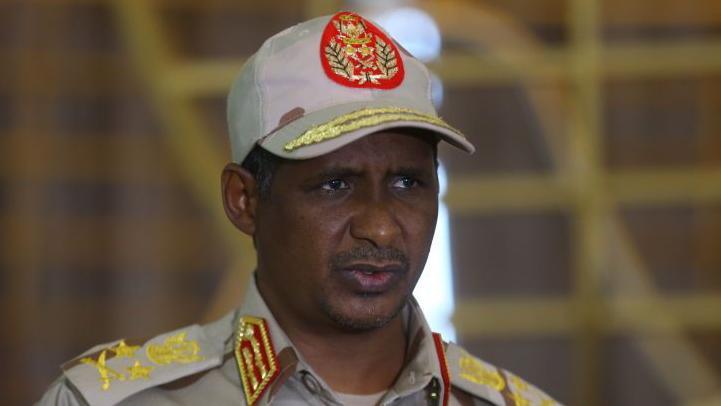
POLICY WIRE — Khartoum, Sudan — The streets of Khartoum haven’t known genuine quiet in well over a year. The cacophony of war—the rattling small arms fire, the thunder of artillery, the desperate cries—has become a constant, an unforgiving soundtrack to a nation tearing itself to shreds. But a different kind of noise—the symbolic clang of a gavel—recently echoed, with a military court here sentencing General Mohamed Hamdan Dagalo, leader of the Rapid Support Forces (RSF), to death. It’s a move that, while providing a fleeting sense of judicial resolve for some, doesn’t really touch the battle-scarred earth he currently commands from.
It’s a peculiar thing, issuing a death sentence to a man still very much alive and, in many areas, dictating the tempo of one of Africa’s bloodiest conflicts. This isn’t about physical incarceration; it’s about branding. The verdict, handed down by the very military judicial system General Abdel Fattah al-Burhan’s Sudanese Armed Forces (SAF) controls, accuses Dagalo—better known as Hemeti—of a litany of charges: sedition, treason, and other grave offenses. He wasn’t in the dock, of course. No, Hemeti’s likely plotting moves somewhere in Darfur or surveying captured districts of Omdurman, oblivious, or perhaps just indifferent, to the decree.
“This ruling, in absentia, provides little comfort to the millions displaced, or the families who’ve lost everything,” commented Fatou Bensouda, a former Chief Prosecutor of the International Criminal Court, known for her staunch pursuit of accountability in Africa. “It’s a declaration, sure, but the tangible effect on the ground is what really counts for ordinary Sudanese citizens. They’re watching, waiting, — and frankly, despairing.” She’s got a point. What’s a piece of paper to a hungry child?
The sentencing isn’t an isolated incident. It’s a calculated escalation in a war of narratives, each side painting the other as the ultimate villain. The SAF aims to strip Hemeti of any lingering legitimacy, hoping to fragment his command or alienate international sympathizers. And yes, some will surely see it as a strong message. But when an entire state is collapsing around you, legitimacy is often less about court papers and more about who’s got the bigger gun and the best supply lines.
The war, grinding on since April 2023, has wrought absolute hell. United Nations data suggests that over 14,000 people have perished, with approximately 8.2 million folks forced from their homes – that’s a staggering figure, effectively making it the world’s largest displacement crisis. OCHA’s reports detail humanitarian needs that are nothing short of catastrophic. Famine stalks parts of the nation. It’s a slow-motion catastrophe.
“The justice sought here is perhaps more symbolic than substantive in the immediate term,” observed Dr. Kamal Zulfiqar, a geopolitical analyst with a focus on South Asian security, noting parallels in the challenges facing fledgling judicial systems across the broader Muslim world. “But its echo, even if faint, reverberates beyond Khartoum’s beleaguered halls. Other strongmen, considering extra-constitutional grabs, or prosecuting internal conflicts, they’re watching. They’re certainly keeping tabs on how this plays out.” It’s a global game, this contest for power, even if the board is scorched Sudanese earth.
And it’s a stark reminder that across the Muslim-majority world, from the fractured states of the Sahel to the simmering tensions in South Asia—say, parts of Balochistan in Pakistan, or Afghanistan—the fight for rule of law often comes second to raw military power. The rhetoric of justice rings hollow when those meant to uphold it are embroiled in the very conflict they seek to judge. This sentencing might serve as a moral compass for one faction, but for the rest, it’s just another casualty report in a war of attrition.
Because ultimately, until Hemeti is either captured, dead, or brokered into some form of peace, the pronouncement from a dusty courthouse in Khartoum changes little about the daily grind of survival. It doesn’t put food on tables. It doesn’t stop the rockets. It’s an intellectual exercise, largely—a declaration from one side in a two-sided slaughter.
But make no mistake; even symbolic acts have weight. They might not stop the current fighting, but they do complicate any future attempts at political reintegration or international recognition for Dagalo. It paints a target on his back, a legal rather than just military one. This court’s declaration, flawed as it may seem to outsiders, solidifies a position. It states unequivocally: You are not a legitimate actor. You are a criminal. And that’s something the world, one hopes, might eventually remember, especially as talk turns to reconstruction and the need for new leadership.
What This Means
This death sentence, for all its current impracticality, is a calculated political maneuver designed to weaken the RSF’s morale and international standing. Politically, it deepens the chasm between the SAF and RSF, making any future power-sharing agreement — a pipe dream anyway at this point — almost impossible. It ensures that Hemeti, if he survives, will remain a pariah figure for any SAF-led administration, limiting his diplomatic options and forcing him to rely even more heavily on battlefield victories and regional patrons. Economically, the move does precisely nothing to alleviate the catastrophic conditions in Sudan; in fact, by prolonging the conflict, it only compounds the devastation. Investment remains a fantasy. The currency’s toast. The economy, already a wreck, will continue its freefall. the judicial precedent, even if ignored by the RSF, presents a long-term headache for global efforts to stabilize fragile states, raising questions about impartiality and prosecutorial legitimacy during active conflict. It also puts more pressure on regional powers, many of whom have backed different factions in Sudan, to reconsider their support if they want to appear aligned with international legal norms. The move could solidify allegiances but also embolden those who dismiss such judicial actions as mere propaganda. In the desperate search for peace, these are often just more reasons for bloodshed. Europe’s silent fray over its own political future suddenly seems like a polite parlor game by comparison.