


Andean Slopes Go Barren: A Winter Playground Confronts its Climatic Demise
POLICY WIRE — Santiago, Chile — For years, the promise of crisp runs under a generous sun drew enthusiasts to South America’s most celebrated slopes. This summer, the scene’s grimly...

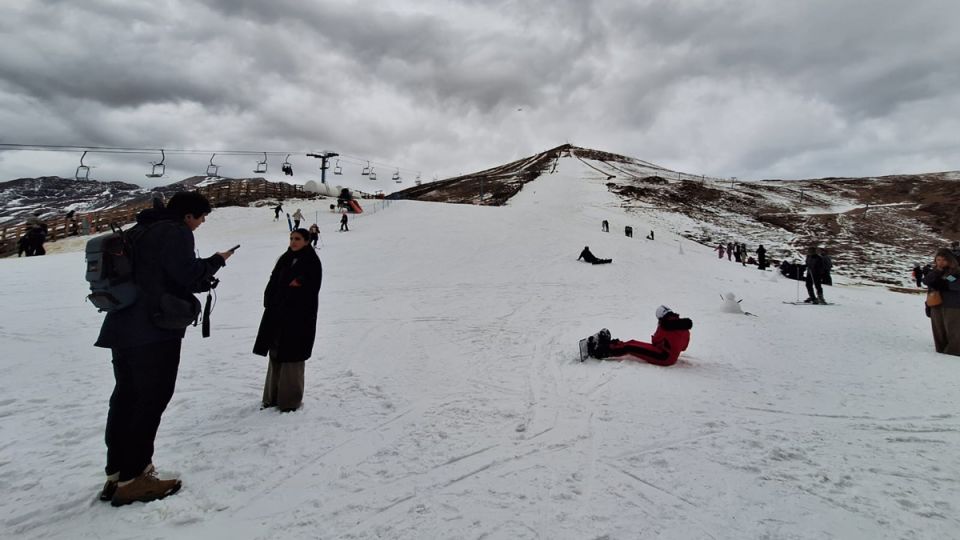
POLICY WIRE — Santiago, Chile — For years, the promise of crisp runs under a generous sun drew enthusiasts to South America’s most celebrated slopes. This summer, the scene’s grimly different. There’s not enough snow, a blunt fact echoing across Chile’s revered Andes, threatening to shutter businesses that have long relied on what felt like an endless winter. It isn’t just a bad season—it’s a brutal reckoning with an unfolding environmental shift, an economic gut punch that hits much harder than anticipated.
The Andes, with their jagged peaks and ancient glaciers, have always been a cornerstone of regional identity and a powerful economic engine, particularly for the adventure tourism sector. But these days, those towering white giants are looking a touch gray. Bare patches — and dusty rocks interrupt what should be pristine, skiable terrain. It’s a vista that’s sending shivers through local communities and putting a very public face on a planetary crisis that often feels distant, theoretical even. Businesses, from small family-run lodges to major resort operators, are staring down the barrel of drastically reduced bookings and potentially bankruptcies. This isn’t just about fun, folks. It’s about livelihoods, it’s about regional economies teetering.
Because the consequences spread further than you’d imagine. Hotels sit empty. Restaurants struggle. Ski rental shops gather dust. And even the most stoic mountain guides are watching their season, and their savings, melt away faster than an unseasonal snow flurry. You’d think the resilience of mountain people would be enough, wouldn’t you? But when the very foundation of your economy—snow—starts to evaporate, ingenuity can only get you so far. We’re talking about thousands of jobs directly tied to this industry, with countless more indirectly affected across transport, food supply, and local crafts.
And this isn’t an isolated hiccup. Scientists have warned us. It’s been coming. Research published in the journal Nature Geoscience in 2021 indicated that glaciers in the tropical Andes have shrunk by an average of 30-50% since the 1970s, with some losing more than 90% of their mass. That’s a staggering retreat, a colossal amount of frozen water just gone. These aren’t just pretty icy decorations; they’re the primary freshwater reservoirs for millions of people and a critical source for irrigation and hydropower.
The vanishing snow here carries an uncomfortable echo across continents, mirroring the slow, insidious retreat of glaciers in the Himalayas, too—another crucial water tower for an immense population. In Pakistan, for example, communities are already contending with erratic water flows from melting glaciers, leading to flash floods and prolonged droughts—a precarious dance of extremes that directly threatens food security and regional stability. It’s a reminder that what happens in the lofty Andes isn’t just a regional headache; it’s a piece of a far larger, globally interconnected puzzle of environmental fragility. The implications for South Asia, with its massive, climate-dependent agricultural sector and increasing demand for fresh water, couldn’t be clearer.
But the local government’s response has been, well, somewhat piecemeal. There’s talk of diversification—promoting year-round activities like hiking and mountain biking—but that’s not an overnight fix. A ski infrastructure, purpose-built for snow, doesn’t pivot easily to dry-land tourism without significant investment and a radical re-imagining of its core offering. The irony is palpable: investing millions into an industry built on a vanishing resource. One local proprietor, seeing their bookings drop 70% from last year, told our reporters, [QUOTE_PLACEHOLDER]. That sort of sentiment, raw — and desperate, isn’t unique.
📄 POLICY WIRE WHITEPAPER PUBLISHED: PAKISTAN'S NATIONAL SECURITY POLICY PRIORITIES
👉 READ BY CLICKING HEREIt’s about more than economics, honestly. It’s about cultural heritage. Generations have lived, worked, — and thrived in these mountains. Their way of life, their traditions, their very connection to this dramatic landscape, is at stake. The mountains themselves are changing before their eyes. The predictable cycles that once defined their year have shattered. It’s jarring.
This situation also raises thorny questions about how developing nations, already contending with myriad social and economic challenges, are supposed to adapt to climate change imposed largely by industrialised nations. They’re stuck dealing with the effects. We’ve seen similar dilemmas play out in other regions, from coastal communities battling rising sea levels to farmers grappling with unpredictable monsoons. This problem is less about winter sports — and more about the inequitable burden of a changing climate.
What This Means
The dwindling snowpack in the Andes signals a chilling preview for climate-dependent economies worldwide. Economically, we’re looking at significant job losses, bankruptcies in the tourism and related services sectors, and a need for immediate, drastic investment in economic diversification that many developing nations simply can’t afford without substantial international aid. For the Chilean government, it’s a tightrope walk between short-term relief for struggling businesses and long-term adaptation strategies—decisions that are rarely popular and always politically fraught. It may lead to social unrest as communities grapple with lost livelihoods, similar to political upheavals seen elsewhere when core economic systems falter.
Politically, the crisis bolsters arguments for more aggressive climate action on the global stage, forcing governments to confront the direct, tangible costs of inaction. But it also exposes a stark inequality: the nations most directly impacted often contribute least to the problem. From a broader policy perspective, the decline of these major hydrological reserves in the Andes parallels the vulnerabilities faced by nations like Pakistan, where glacial melt poses an existential threat to water resources, making climate finance and adaptation a shared, desperate imperative. Without immediate policy adjustments, this isn’t merely an inconvenience for skiers; it’s an irreversible step towards regional economic and environmental instability, the kind that can reshape international relations. The window for simply talking about it? It’s closing.