


Michigan Snags Ivy League ‘Brain’ in Relentless Coaching Carousel
POLICY WIRE — Ann Arbor, Michigan — The high-stakes chess match of college basketball’s coaching carousel keeps turning, each move more calculated than the last. But this time, it’s not just a...

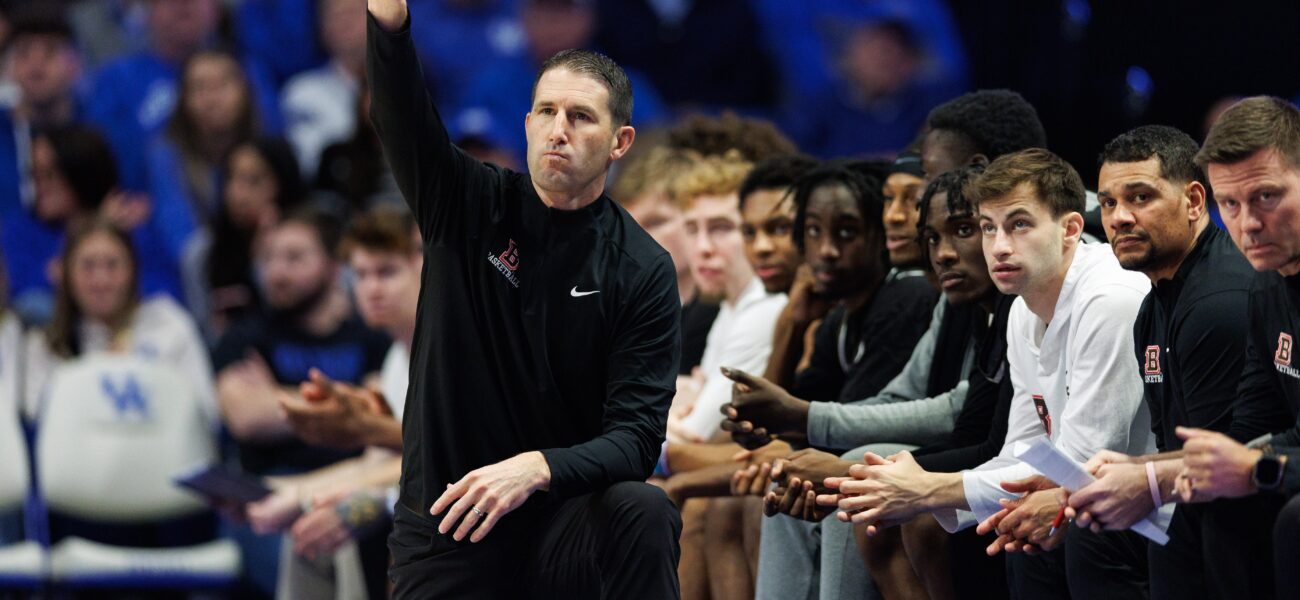
POLICY WIRE — Ann Arbor, Michigan — The high-stakes chess match of college basketball’s coaching carousel keeps turning, each move more calculated than the last. But this time, it’s not just a reshuffle; it’s a strategic extraction, a big-game hunter dipping into the academic groves of the Ivy League to bag some prized experience. Michigan, fresh off a tumultuous period, has plucked Mike Martin, Brown University’s longtime head coach, signaling that in this new era of hyper-competitive collegiate athletics, every advantage is seized—especially human capital.
It’s no small thing for an institution like Michigan to tap a coach from Brown. The Wolverines operate in the high-rent district of Big Ten athletics, a world away from the Ivy’s unique blend of academic rigor and relatively modest sporting ambitions. Yet, new Michigan head honcho Mike Boynton Jr., only recently shedding his own interim tag, wasted precisely zero time making Martin his first significant staff hire. He’s not playing games; he’s rebuilding a flagship program that simply can’t afford missteps. Because, frankly, the expectations in Ann Arbor don’t really do ‘modest’.
“Finding someone who genuinely understands the fabric of program building, who knows how to wring every ounce of potential from a roster—that’s a rarity,” Boynton told Policy Wire in an exclusive statement, sidestepping the usual canned press release platitudes. “And Mike? He’s done it for years, quietly, effectively, in an environment where every win is earned through sheer will and meticulous development. That’s what we need here now, that unshakeable foundation.” He added, “It’s not just about wins, it’s about investing in the whole person. He gets it. That’s why he’s here.”
Martin, a sprightly 44-year-old, spent a remarkable 14 years tethered to Brown, a program where he himself once starred as a guard. He literally bled brown for two decades, graduating from player to assistant, then eventually taking the reins as the nation’s fourth-youngest Division I head coach back in 2012. He wasn’t just there; he fundamentally reshaped it, steering the Bears to their first-ever 20-win season and postseason victory in a program history stretching back over 120 years. His career record at Brown? A gritty 171-202. He squeezed water from stones, — and sometimes, he made that water sparkle.
“Michigan’s name alone carries an undeniable weight, a certain championship whisper that echoes through the halls of college sports,” Martin himself observed to us, his tone betraying a hint of awe mixed with professional eagerness. “You feel it the moment you step on campus—the passion, the commitment, the sheer resources poured into making excellence a habit. It’s an honor to contribute to that, to help build something truly special again.” And he’s already hit the ground running; that commitment’s no joke.
This isn’t just about an assistant coach hiring; it’s a commentary on the ecosystem of modern college athletics. Coaches like Justin Joyner leaving for Oregon State’s top job, or Drew Williamson following his old boss to the NBA’s Dallas Mavericks, illustrate the rapid ascent and migration of talent. Boynton, as the new man in charge, isn’t just replacing bodies; he’s meticulously curating a brain trust. Michigan’s athletic department, often boasting annual revenues exceeding $200 million—a figure that would swallow entire smaller university budgets whole—can afford to hunt for the best, no matter where they’re currently polishing academic silverware. It’s a zero-sum game, — and the big players are always on the prowl.
📄 POLICY WIRE WHITEPAPER PUBLISHED: PAKISTAN'S NATIONAL SECURITY POLICY PRIORITIES
👉 READ BY CLICKING HEREWhat This Means
Martin’s arrival in Ann Arbor is far more than just another face on a coaching staff. It’s a sharp articulation of Boynton’s vision: stability forged through hard-won experience. After a season marked by unexpected upheaval, Michigan needs seasoned hands, and Martin’s track record of developing players and sustaining competitive performance, albeit on a different scale, suggests a focus on the fundamentals rather than splashy, unproven gambles. Because at this level, optics are everything—and the substance needs to be there to back it up.
Economically, this sort of ‘brain drain’ from smaller, academically-focused institutions like Brown to powerhouses like Michigan is a microcosm of global talent migration. We see similar patterns in places like Pakistan and across South Asia, where top minds, driven by opportunities, infrastructure, and remuneration, often leave for better-resourced nations. For universities like Michigan, attracting proven talent isn’t just about winning games; it reinforces their institutional prestige, drawing a more diverse, global applicant pool (both academic and athletic) that understands the pursuit of excellence—be it on the court or in the classroom. This constant recruitment struggle among educational and athletic institutions worldwide, mirroring that of the broader economy, ensures that those with deeper pockets often dictate the flow of expertise.
Politically, the hire symbolizes the increasing corporatization of college sports. A successful athletic program brings massive media exposure, lucrative sponsorship deals, and significant alumni donations, all of which indirectly benefit the wider university. Martin’s appointment, therefore, isn’t merely about Xs and Os; it’s an investment in a robust revenue stream and a brand identity that needs to be polished continually. He’s been tasked with being a steadying force, a kind of cultural anchor amidst a storm of competitive pressures and escalating expectations.
The message is clear: Michigan won’t settle for anything less than a return to form. And they’re not afraid to scour the intellectual—and athletic—proving grounds of the Ivy League to find the very best to get them there. It’s a calculated bet on old-school grit in a new-school landscape. And it’s one that Mike Boynton hopes will pay dividends quickly.