


The Brutal Ballet of Bundesliga: Another Young Talent Trades Potential for Millions
POLICY WIRE — Berlin, Germany — Forget the glamour shots and stadium cheers for a moment. In the ruthlessly efficient, often impersonal machinery of European football, Hennes Behrens isn’t just a...

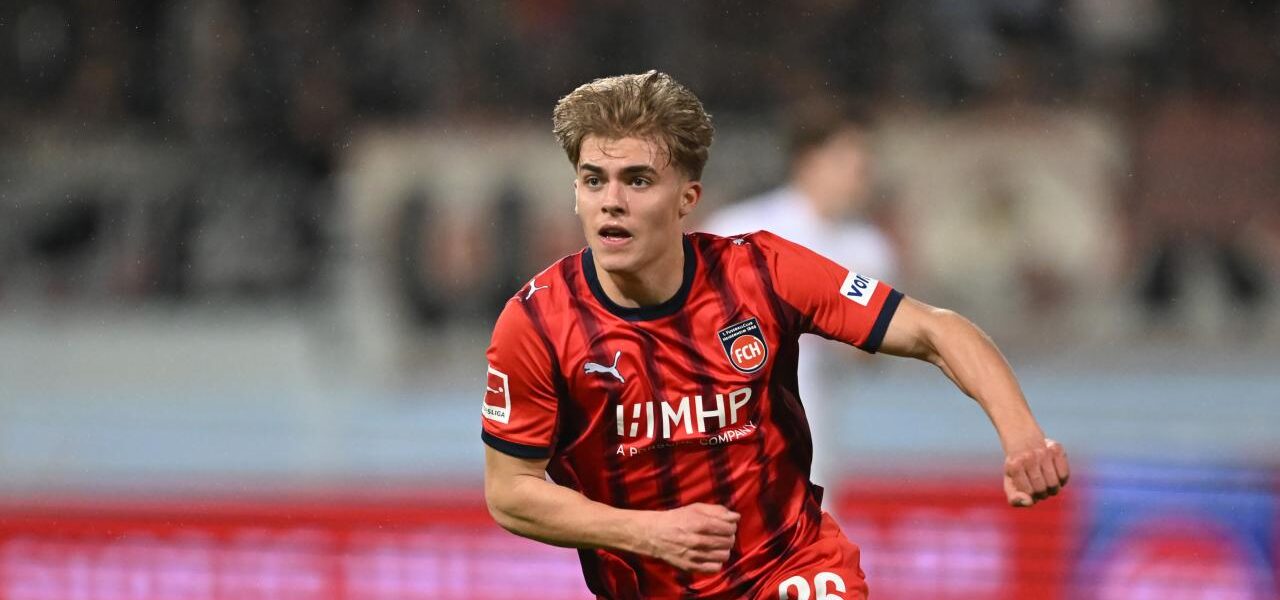
POLICY WIRE — Berlin, Germany — Forget the glamour shots and stadium cheers for a moment. In the ruthlessly efficient, often impersonal machinery of European football, Hennes Behrens isn’t just a 21-year-old left-back; he’s another finely polished cog—a tangible asset shifting value across the Bundesliga’s balance sheets. His impending €3.5 million move from TSG Hoffenheim to Augsburg, sweetened with potential bonuses and a handy sell-on clause, isn’t merely a signing; it’s a stark, unblinking snapshot of the industry’s ceaseless cycle of development, debt, and the relentless chase for the next big thing.
It’s the quiet business of potential that truly defines this landscape, far more than the on-field heroics. Behrens, who recently wrapped a loan stint with relegated 1. FC Heidenheim, logging 16 appearances and a few respectable offensive contributions, now embodies a new round of speculation for Augsburg. They’re banking hard on his rapid ascent, enough to lock him down until 2031. Because, let’s face it, in this market, you buy a young player for today, but you invest for tomorrow’s profit margins—or, at least, for their continued service on the pitch.
And Hoffenheim? They aren’t shedding tears. They’re playing the long game, as they always have. The 10 percent sell-on clause they negotiated isn’t just shrewd; it’s a declaration. They’re signaling: ‘We found him, we nurtured him, and we still expect a slice of the pie when his market value truly explodes.’
“But this isn’t just about raw talent,” says Marinko Jurendic, Augsburg’s sporting director. “It’s about belief, about fit. Hennes possesses that rare blend of youthful audacity — and a grounded understanding of the game. He’s an investment, yes, but a calculated one, we think.” It’s a boilerplate statement, sure, but it reflects a common sentiment in an industry constantly trying to justify monumental spending.
Meanwhile, the selling club maintains its posture as a talent incubator, a springboard. “We nurture them, we prepare them for the big leagues,” comments Pirmin Schwegler, Hoffenheim’s Head of Pro Development. “Hennes’s journey—from our academy, through a loan spell, and now to a permanent transfer—that’s the blueprint. It proves our system works, and it frees up resources for the next crop of promising young players waiting in the wings.” The pragmatism, frankly, is stunning in its transparency.
The financial gravity pulling young players into Europe’s elite leagues is immense. The International Centre for Sports Studies (CIES) Football Observatory data shows that the average transfer fee for a player under 23 in Europe’s top five leagues hovered around €8-12 million in 2023, underscoring the perceived value of such prospects. It’s an escalating arms race, each club trying to snap up the next superstar before the price tag becomes truly astronomical. This is big money, — and these aren’t just kids kicking a ball; they’re valuable, appreciating commodities.
📄 POLICY WIRE WHITEPAPER PUBLISHED: PAKISTAN'S NATIONAL SECURITY POLICY PRIORITIES
👉 READ BY CLICKING HEREWhat This Means
This single transaction, seemingly minor in the grand scheme of football’s billions, encapsulates a far larger trend in the global sports economy. It highlights the premium placed on youth development and the almost predatory efficiency of talent identification systems. Clubs like Hoffenheim aren’t just football teams; they’re high-yield investment funds for human potential, consistently churning out players and cashing in. Augsburg, in turn, is buying into that promise, hoping Behrens becomes a franchise player rather than a costly flop.
The implications ripple outwards. Such deals set benchmarks, influencing the valuation of similar talents across the world. For young athletes from burgeoning football regions, perhaps a kid in Karachi dreaming of dribbling like Messi or a talent from a humble academy in Lahore, these European transactions provide a dual message: immense opportunity but also an overwhelming commercialization that can swallow even the purest passion. Their own clubs in Pakistan or Bangladesh often lack the sophisticated infrastructure, funding, and scouting networks to compete or retain such talent. They’re left watching European clubs make millions from a developmental model they can only envy—a diamond dream, corporate reality, but with global implications.
This dynamic ensures a consistent drain of elite talent towards European centers, consolidating power and wealth within these established leagues. It’s an economic ecosystem, not just a sporting one, with its own intricate web of agents, scouts, data analysts, and transfer gurus—all profiting from the perpetual motion of these human assets. And it keeps everyone on their toes, because yesterday’s star is today’s bench warmer, and tomorrow’s prospect is already knocking on the door. It’s the ruthless, unforgiving business of top-tier football.