


Hollywood’s ‘Futbol Is Life’ Star Swaps Screen For Scrappy Pitch, Sparking Cross-Cultural Dialogue
POLICY WIRE — ALBUQUERQUE, N.M. — It’s a curious dance, isn’t it? The way reality bends to meet the stories we tell ourselves, then twists back again, almost tauntingly. You see it in politics. You...

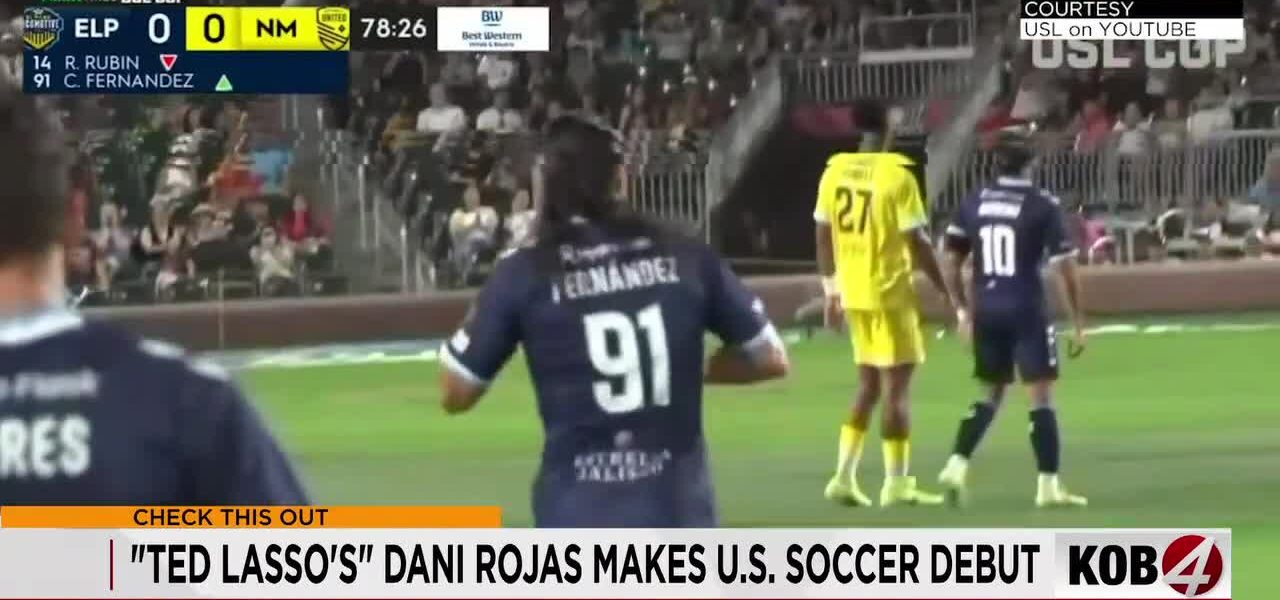
POLICY WIRE — ALBUQUERQUE, N.M. — It’s a curious dance, isn’t it? The way reality bends to meet the stories we tell ourselves, then twists back again, almost tauntingly. You see it in politics. You see it in pop culture. And now, for one man, it’s playing out on a dusty pitch in New Mexico. We’re talking about Cristo Fernandez, the actor who brought the relentlessly optimistic Dani Rojas to life in Apple TV’s hit series “Ted Lasso”—a character whose signature phrase, “Futbol is Life!”, became a global mantra.
But Fernandez isn’t just an actor, not really. Before AFC Richmond existed even on a screenwriter’s laptop, he was a professional footballer, plying his trade in Mexico and Puerto Rico until injury called time in 2014. Now, almost a decade later, he’s pulled on cleats again, this time for El Paso Locomotive FC in a real-deal USL Championship match against New Mexico United. Talk about a second act. It’s almost too neat, this narrative arc, even for Hollywood. A late-second-half substitute appearance, a few touches—then a 2-0 loss for El Paso. Didn’t matter, though, not really.
Because for El Paso Locomotive, and frankly, for the league itself, this move is less about immediate athletic impact and more about an audacious cultural experiment. “We signed raw talent, not just a TV personality,” said Mark Lowry, head coach for El Paso Locomotive, in a post-match press conference. “He’s got heart. That’s something you can’t fake, on screen or off. But, yeah, the buzz helps. Can’t deny it.” He isn’t wrong. The ripple effect of a familiar face stepping onto an unfamiliar stage is powerful.
And what’s it all for? Growth, darling, growth. Because, let’s be honest, for all the USL’s aspirations, it’s not exactly drawing Super Bowl numbers. This gambit, however, could nudge the needle. Dr. Anya Sharma, a sharp sports marketing analyst from Zenith Dynamics, put it this way: “This isn’t just about ratings, is it? It’s about expanding the sport’s footprint in a way conventional advertising just can’t touch. Fernandez brings a new kind of celebrity buzz to leagues that desperately need it. It’s smart, and frankly, a bit brilliant.” It’s a shrewd, albeit subtle, nod to the economics of celebrity, where fame, even fictional fame, translates into tangible interest and ticket sales. For regional clubs, these kinds of narrative boosts are incredibly valuable.
But let’s think about this on a larger scale. The global game of soccer, you know, it transcends borders — and cultural divides like few other things. Go to Karachi, to Cairo, to Kuala Lumpur; “futbol” really is life. It’s the ultimate soft power—a language spoken everywhere. This crossover event, bringing a celebrated character from American pop culture into the world of professional sport, illustrates a peculiar aspect of globalized entertainment: how characters from a streaming hit like ‘Ted Lasso,’ often consumed in parts of the world with complicated views of Western media, can create a common thread. Imagine a young fan in Lahore, glued to their phone, watching highlights of ‘Dani Rojas’ playing in Texas. That’s connection.
It’s this interplay—of fame and game, of aspirations and practicalities—that makes Fernandez’s story more than just a footnote. It’s a parable, really. Sports business analysts project the global soccer market to exceed $50 billion by 2028, with emerging markets and celebrity involvement playing an increasingly significant role in this expansion, according to recent projections from Sportico. They’re all scrambling for attention. And you gotta commend El Paso for finding a fresh angle. Because everyone loves a comeback story, especially one with a dash of Hollywood magic.
📄 POLICY WIRE WHITEPAPER PUBLISHED: PAKISTAN'S NATIONAL SECURITY POLICY PRIORITIES
👉 READ BY CLICKING HEREUltimately, Fernandez’s re-entry onto the pitch serves as a potent reminder of the interconnectedness of our entertainment landscape and the raw human drive to chase long-dormant dreams. And maybe, just maybe, it teaches us that sometimes, the best way to get people talking about a league or a sport is to give them something delightfully unexpected to chew on.
What This Means
This whole situation is a masterclass in modern sports marketing — and cultural cross-pollination. Economically, El Paso Locomotive likely saw a surge in interest—merchandise, ticket sales, media mentions. It’s an astute play for a club trying to elevate its profile in a crowded sports market, especially when competing against the NFL’s massive gravity (see also: Texas Titans’ Teetering Triumph for a similar high-stakes, brand-building narrative). The political implication, subtle as it might seem, rests in the soft power projection: American entertainment culture, via a widely adored show, actively engaging with a real-world, global sport. It’s a cultural export in disguise. It bridges divides—fans who wouldn’t ordinarily watch USL might tune in precisely because of the ‘Ted Lasso’ connection, showcasing American regional sports to international audiences.
Then there’s the professional athlete’s trajectory itself. The ‘Ted Lasso’ role probably didn’t happen in a vacuum; Fernandez was always close to the game. His story highlights the precariousness of professional sports careers—one injury can alter everything. But it also demonstrates the growing permeability between sports and entertainment, suggesting that traditional paths aren’t the only ones to sustained engagement or even, in this rare case, a return to the field. For communities that often see sports as a sole route to economic mobility, this blended approach—actor and athlete—presents a new, complex blueprint for ambition.