


Decoding the Din: The Screen-Based Whisper That’s Outmaneuvering AI’s Loudest Promises
POLICY WIRE — Washington D.C., USA — In an era where every pixel, every algorithm, and every venture capital dollar screams for more — more complexity, more data, more predictive power — a peculiar...

POLICY WIRE — Washington D.C., USA — In an era where every pixel, every algorithm, and every venture capital dollar screams for more — more complexity, more data, more predictive power — a peculiar sort of rebellion is brewing. It’s quiet, it’s unassuming, — and it doesn’t boast a single line of machine learning code. But it’s also startlingly effective, challenging the prevailing dogma that true innovation must be a symphony of zeros and ones performed by a supercomputer.
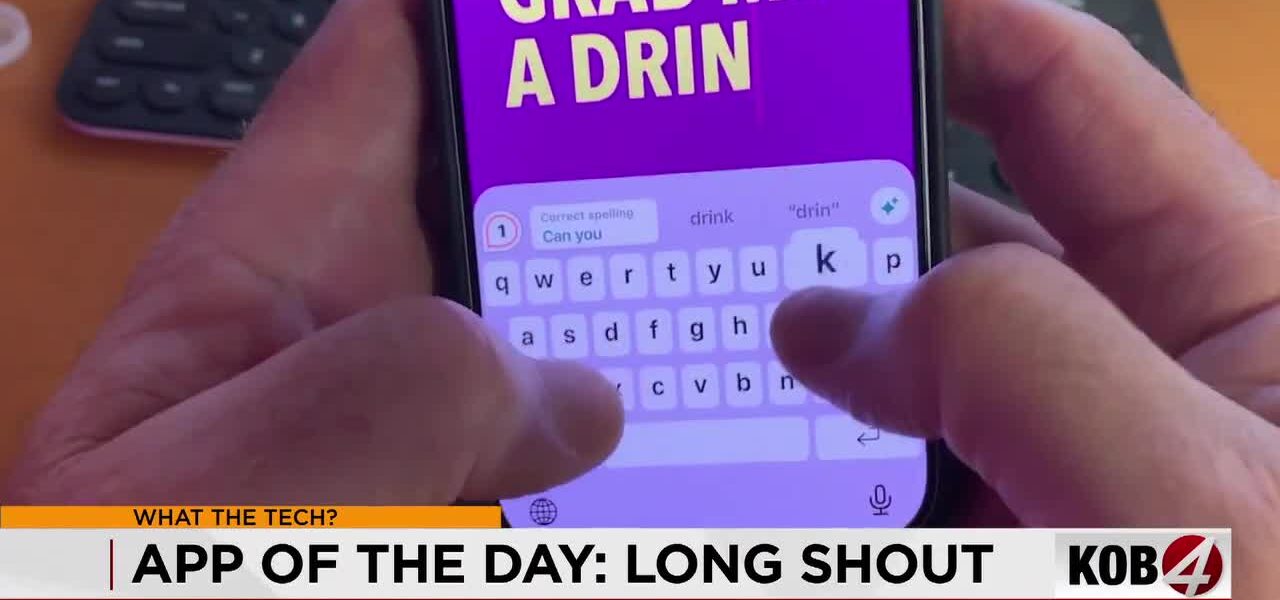
We’ve been conditioned, haven’t we? To believe that only AI can solve our deepest, most human problems. And then along comes ‘Long Shout,’ an application so rudimentary, it’s almost an affront to modern tech aspirations. Its sole function: transform typed messages into colossal, full-screen text. Imagine that. Holding up your phone so someone can read, silently, across a raucous ballroom or a hushed hospital waiting room. It’s almost Luddite in its elegance. But it works, splendidly so.
It’s the digital equivalent of an illuminated scroll. You tap in ‘Another chai, please?’ at a bustling street market in Karachi, and suddenly your phone is a discreet, personal billboard. Or, in a packed parliamentary session, a staffer might silently flash ‘PM arriving in five’ without disturbing proceedings. No voice, no sound — just pure, unadulterated visual communication. This isn’t about AI predicting your needs; it’s about you stating them, loudly, but silently.
“There’s an implicit bias in the tech sector, a kind of technological solutionism, that always leans towards the most complex answer,” observed Dr. Aisha Rahman, Director of Digital Rights Asia, speaking from her offices in Lahore. “But sometimes, the human experience dictates a simpler tool. This app cuts through the noise, both literal — and metaphorical. It’s a powerful testament to the unmet demand for frictionless interaction, devoid of the privacy concessions often tied to advanced AI.” She’s got a point. You aren’t feeding an algorithm your patterns; you’re just typing.
And that lack of algorithmic ambition is exactly what makes it so subversive. While tech giants are pouring billions into creating increasingly sophisticated AI systems that can translate speech in real-time or predict consumer behavior—some of which stumble over nuanced accents or dialects, as we’ve seen—this app bypasses the entire elaborate ballet. It just says it. Large. Plain. Universal. According to a 2022 World Health Organization report, excessive noise is a growing public health concern in urban centers, affecting roughly one in three people globally. This isn’t just about convenience; it’s about making communication accessible and less stressful in increasingly auditory-overloaded environments.
Because sometimes, you just don’t want to talk. You don’t want to interrupt. You need to convey something precise in an environment that conspires against oral clarity. Think about it: parents communicating with sleeping children, subtle instructions to a stage manager, even letting a fellow driver know their brake light’s out – as one early reviewer noted. It strips away the unnecessary layers of sound — and gesture, leaving only the message.
📄 POLICY WIRE WHITEPAPER PUBLISHED: PAKISTAN'S NATIONAL SECURITY POLICY PRIORITIES
👉 READ BY CLICKING HERESardar Arif Khan, a prominent Member of the National Assembly from Pakistan, recognizes the understated power here. “In diverse, densely populated countries like ours, where silence and respect for public spaces hold immense cultural value, a tool that facilitates communication without disturbance isn’t just an app—it’s a societal enhancement,” Khan stated emphatically in a recent parliamentary committee briefing. “Imagine the potential during crises, when loud announcements could cause panic, but clear, silent instruction could save lives. Or for discreetly managing affairs in sensitive security environments. It echoes a quiet diplomacy that’s often required, whether among states or within crowded bazaars.” It’s true. Sometimes, understanding unspoken signals can be crucial to de-escalation, especially in complex geopolitical situations.
This isn’t just about consumer convenience; it’s about a subtle shift in the philosophy of digital tools. An app that offers functionality without surveillance, utility without data monetization, and effectiveness without complexity. It’s free. No ads. It’s almost quaint. Like finding a functional, perfectly engineered mechanical watch in a world obsessed with smartwatches and their constantly tracking, perpetually hungry processors. Maybe the future isn’t always more; sometimes, it’s just clearer.
What This Means
The sudden emergence of a ‘dumb’ app making such significant waves exposes several uncomfortable truths for policy makers and industry players alike. Politically, this signals a public appetite for digital tools that don’t come tethered to a privacy trade-off. Governments often wrestle with the perception of intrusive surveillance in an increasingly data-hungry world. An ad-free, data-agnostic app demonstrates a path toward digital inclusion that doesn’t demand constant data harvesting, which could inform future regulations on app development, especially in nations grappling with digital rights debates. It’s also a powerful, low-tech avenue for emergency alerts or public information dissemination that bypasses language barriers in highly diverse populations, potentially enhancing public safety and civic engagement.
Economically, Long Shout serves as a stark reminder that innovation isn’t exclusive to large, well-funded R&D departments fixated on AI and Web3. It threatens to disrupt entire categories of communication solutions—from conference tools to accessibility devices—simply by being cheaper, simpler, and less demanding of user data. Its ad-free model challenges the pervasive assumption that every digital service must be monetized through advertising or subscription, potentially pushing for more diverse and ethical business models in the tech industry. For policymakers eyeing monopolistic tendencies in tech, this micro-disruption serves as a crucial case study: simplicity can indeed be a fierce competitor.