
Silent Echoes: Beaufort Castle Braces, the Mideast Holds Its Breath
POLICY WIRE — BEAUFORT CASTLE, ISRAEL — From the rugged heights of Beaufort Castle, you don’t just see the lush green landscape of southern Lebanon; you feel the weight of it. It’s a vista that...

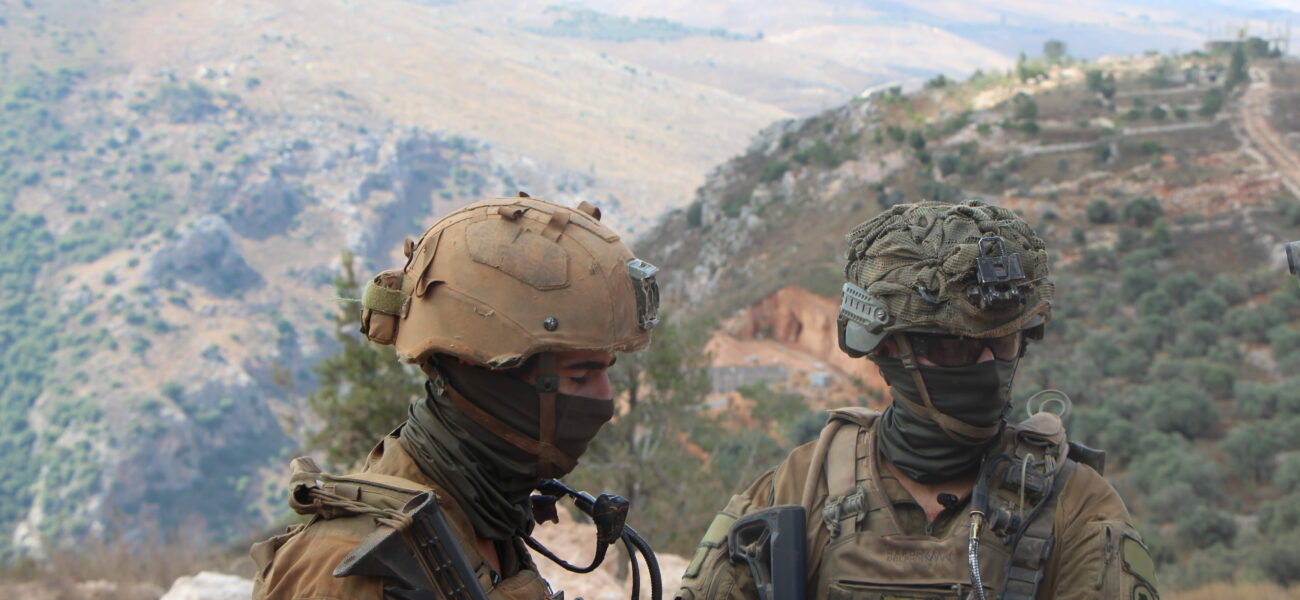
POLICY WIRE — BEAUFORT CASTLE, ISRAEL — From the rugged heights of Beaufort Castle, you don’t just see the lush green landscape of southern Lebanon; you feel the weight of it. It’s a vista that whispers histories of ancient conquests, Crusader strongholds, — and more modern skirmishes. But mostly, it’s a quiet. A menacing, coiled-spring kind of quiet that permeates the air, thickening with every gust of wind from across the border.
It’s here, overlooking the Wazzani River and the undulating hills, that Israel’s 36th Division conducts its perpetual ballet of readiness. They aren’t just training; they’re rehearsing. They’re anticipating the next move in a strategic chess game played with lives, a scenario that seems less a hypothetical and more a question of ‘when,’ not ‘if.’ The Israeli Defense Forces (IDF) brass know it, the soldiers digging trenches know it, and the civilians living mere miles away know it in their bones. This isn’t just about ‘holding the line;’ it’s about holding onto a moment of uneasy truce that could shatter any second.
Defense Minister Yoav Gallant didn’t mince words recently when pressed on the situation. “Our forces aren’t just on high alert,” he stated, a distinct edge in his voice. “They’re in a perpetual state of readiness. We understand the calculus of our adversaries, — and they, ours. Any misstep, any aggression from the north, will be met with overwhelming, decisive force.” He’s got a point. You can’t be casual here; the stakes are too darn high. The specter of Hezbollah—well-armed, well-trained, and funded by Tehran—looms large, a complex, hydra-headed challenge the IDF has learned to live with.
And it isn’t just military maneuvering dominating the mental bandwidth. It’s the constant surveillance, the drone patrols humming overhead, the intelligence briefings dissecting every little whisper from across the demarcation line. Sometimes it feels like they’re waiting for an email that’ll never come, only this one would kick off a major regional conflagration. According to UNIFIL reports, cross-border incidents involving belligerent actors increased by over 30% in the last fiscal year, painting a pretty grim picture of rising tensions.
The situation isn’t some isolated skirmish; it reverberates far beyond the immediate region. In capitals across the Muslim world—Islamabad, Tehran, Riyadh—every twitch along the Lebanon-Israel frontier is watched with varying degrees of concern, calculation, or strategic interest. In Pakistan, for example, the fate of the Palestinian people and the stability of Lebanon’s Shi’ite communities often dominate headlines and fuel passionate public discourse, shaping foreign policy considerations and public opinion. The constant, low-grade conflict provides fodder for those seeking to highlight external threats or to galvanize domestic support around specific geopolitical narratives. It’s complicated, seeing how each nation reacts (or doesn’t react) to this persistent Mideast wound.
But the broader world also takes note. You don’t need a crystal ball to see how instability here becomes a global headache. A veteran United Nations diplomat, speaking off-the-record during a recent visit, put it bluntly: “The quiet before a potential storm here isn’t peace; it’s a holding pattern, with immense human cost hanging in the balance. The international community, frankly, can’t afford another major escalation in this area.”
📄 POLICY WIRE WHITEPAPER PUBLISHED: PAKISTAN'S NATIONAL SECURITY POLICY PRIORITIES
👉 READ BY CLICKING HEREThey’re right, of course. Everybody remembers the last flare-up—and the one before that. The routines, the preparedness, they’re just layers over deep-seated geopolitical anxieties. Soldiers at Beaufort Castle, they’re the sharp edge of this tension. They don’t just protect; they deter. They absorb the quiet. They learn to live in it. It’s a demanding, thankless job, full of grim possibilities.
What This Means
The perpetual state of high alert along Israel’s northern border has far-reaching implications, not just for regional security but also for global economic stability and diplomatic priorities. Economically, prolonged tension impacts everything from tourism—imagine trying to sell a relaxing holiday next to a simmering conflict zone—to foreign investment, diverting precious resources into defense spending that could otherwise bolster a fragile economy. Politically, the IDF’s preparations are as much about deterrence as they’re about defense. Any significant escalation could force Washington to shift its focus away from other critical foreign policy objectives, forcing yet another realignment of resources and attention to the ever-turbulent Middle East. (Gaza’s Perpetual Dusk: Six More Souls and the Fickle Gaze of Global Attention).
a full-blown conflict would invariably inflame sectarian tensions across the region, potentially empowering extremist factions and complicating an already fragile global fight against radical ideologies. For a nation like Israel, still reeling from internal political machinations (Israel’s Endless Encore: Parliament Gears Up for Another Spin on the Electoral Wheel), maintaining a unified front against an external threat becomes both a strategic necessity and a domestic challenge. The sheer logistical and human cost of such a conflict isn’t just a concern for the direct belligerents; it’s a burden on humanitarian agencies and a source of profound unease for world powers.