

Infant’s Untimely End Ignites Familiar Fury in Occupied Territories
POLICY WIRE — Ramallah, West Bank — There’s a particular kind of silence that descends after an alarm rings too many times, a dull resignation that something terrible, yet entirely predictable,...

POLICY WIRE — Ramallah, West Bank — There’s a particular kind of silence that descends after an alarm rings too many times, a dull resignation that something terrible, yet entirely predictable, has come to pass. So it was this week, as the short, painful existence of an infant Palestinian boy came to an abrupt, avoidable halt. Not because of a stray bullet, or a direct act of aggression, but because the machinery of control, with its reams of permits and checkpoints, ground on regardless. He needed a hospital. He didn’t get there.
Malik Abu Sham, a three-month-old, born with a congenital heart defect, was a fragile life from the start. His only hope, medical specialists in an East Jerusalem hospital, was less than an hour’s drive away, under different circumstances. But circumstances in the West Bank are never ‘different.’ They’re tangled, bureaucratic, often deadly. His family, scrambling for weeks, had tried every channel—appeals, petitions, urgent requests through intermediaries. All for naught. They said no. Or, rather, they simply didn’t say yes fast enough, an answer often indistinguishable from a firm refusal in these parts.
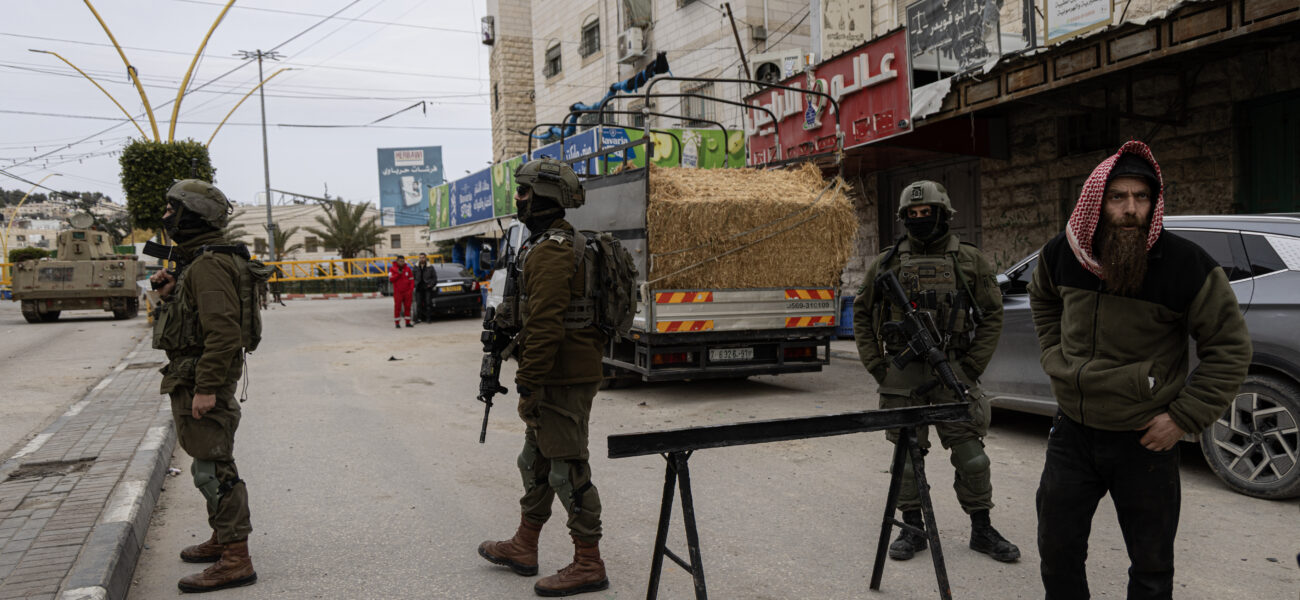
His parents, distraught, couldn’t navigate the labyrinth of Israeli military administration to secure the necessary travel permits. The child’s condition deteriorated. When permission finally trickled through—days later, some reports suggest, and by others, not at all for the accompanying parent—it was too late. Malik had already slipped away. Another tiny casualty of a conflict that seems to have outsourced its brutalities to spreadsheets — and metal barriers.
“Every border, every checkpoint, every delay is a death sentence here, plain and simple,” decried Wasel Abu Yousef, a prominent figure in the Palestine Liberation Organization (PLO) Executive Committee, speaking to Policy Wire from Ramallah. “It’s not just a block; it’s a dehumanization process. They’re telling us our children’s lives simply don’t matter, not against their ‘security’ concerns.” He sounded tired. Exhausted, even.
But Israeli authorities see it differently, often framing such incidents as unavoidable side-effects of an ongoing security threat. “We’re operating in a highly volatile region, constantly working to prevent terror activities,” an Israeli Ministry of Foreign Affairs spokesperson, who requested anonymity due to the sensitivity of specific medical cases, told Policy Wire. “While regrettable, security protocols sometimes require stringent checks. We process thousands of humanitarian requests annually, most of which are approved expeditiously. But each application undergoes necessary vetting.” It’s a standard line, delivered with a detached efficiency that does little to comfort bereaved parents.
This isn’t an isolated incident, not by a long shot. The World Health Organization (WHO) reported in 2023 that approximately 14% of Palestinian patients requiring permits for urgent care from Gaza and the West Bank faced denials or significant delays in access to external treatment, impacting over 4,000 individuals annually, a stark statistic that paints a grim picture. Many are children. It’s a cruel game of roulette with human lives, where the house always wins.
📄 POLICY WIRE WHITEPAPER PUBLISHED: PAKISTAN'S NATIONAL SECURITY POLICY PRIORITIES
👉 READ BY CLICKING HEREThe echoes of Malik’s death resonate far beyond the arid hills of the West Bank. Across the Muslim world, from Ankara’s indignant denunciations to the streets of Lahore, the incident feeds into a deepening narrative of injustice. Because, let’s face it, for many, every report of Palestinian suffering is confirmation of a collective wound, a fresh indignity piled onto decades of despair. Governments like Pakistan’s often find themselves under immense public pressure to act, or at least condemn, such actions, shaping their foreign policy posture towards both Israel and its Western allies. You’ll find similar passions flaring, albeit on a different scale, in their national discourse.
And it’s a cycle, isn’t it? One of accusation — and counter-accusation, where human tragedy gets weaponized in a larger geopolitical struggle. Nobody really wins. Not the families, certainly. Not regional stability. Only the cold, unfeeling logic of unending conflict.
What This Means
The tragic death of Malik Abu Sham isn’t just a humanitarian catastrophe; it’s a geopolitical tripwire. For the Palestinian Authority, it amplifies their core complaint about Israeli control and the erosion of self-governance. They’ll use it to bolster calls for international intervention and condemnation, seeking to expose the ‘human cost’ of occupation on the global stage. But the international community, often bogged down in its own shadow games of expediency, typically offers platitudes without meaningful action. The incident provides further fodder for anti-Israel sentiment across the Middle East and among nations traditionally supportive of the Palestinian cause, potentially escalating diplomatic tensions.
Economically, such permit restrictions further cripple an already struggling Palestinian health sector, forcing families to seek costly and often unattainable treatment abroad, or worse, face no treatment at all. It also fuels a growing dependency on humanitarian aid, rather than fostering independent, resilient institutions. For Israel, while officially lamenting civilian deaths, these incidents underscore the inherent challenge of maintaining security control over a restive population without inflicting deep human suffering. It reinforces the view, for critics, that its security apparatus often acts with impunity, leading to significant reputation damage in the global arena. Don’t expect any seismic policy shifts from Jerusalem though; they’ve heard this all before. They’ll cite security concerns. We’ll lament. And the checkpoints? They’ll remain.