
Jerusalem’s Unending Cycle: A Teen’s Murder Stokes Old Flames Amidst Fractured Peace
POLICY WIRE — Jerusalem, Israel — Sometimes, the quiet hum of an air conditioner on a hot summer night feels like the loudest thing in Jerusalem. A momentary reprieve. But that silence, much like any...

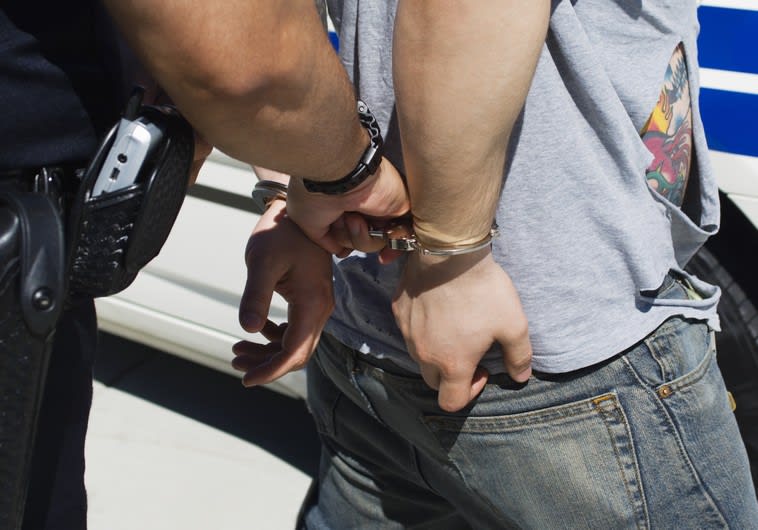
POLICY WIRE — Jerusalem, Israel — Sometimes, the quiet hum of an air conditioner on a hot summer night feels like the loudest thing in Jerusalem. A momentary reprieve. But that silence, much like any semblance of calm here, is always brittle, ready to crack at the slightest pressure. This week, the illusion shattered again, not with rockets or protests, but with the stark, chilling discovery of a murdered 19-year-old and the subsequent dragnet by Israeli police. Six individuals are now cooling their heels in custody, suspected of having a hand in the death of a young life abruptly ended.
It’s the kind of story that gets buried quickly in other metropolises, a tragedy confined to crime blotters. But not here. Every violent death in Jerusalem—especially when its circumstances hint at deeper, more corrosive resentments—becomes another thread pulled from an already frayed rope. This isn’t just about six arrests; it’s about what those arrests signal: the constant, low-frequency tremor beneath the city’s ancient stones. The official line from authorities remains predictably tight-lipped, citing ongoing investigations. You wouldn’t expect them to spill the beans, would you?
The victim, a teenager whose name will likely be a footnote for most outside the immediate circle of grief, was found dead under circumstances yet to be fully revealed. The arrests followed rapidly, an efficiency that speaks both to the capability of Israeli law enforcement and the heightened state of readiness that permeates every corner of this contentious urban sprawl. Six people. Six lives abruptly intersecting with a tragedy that—let’s be honest—feels preordained in a city perpetually teetering on the edge of sectarian strife. What prompts such an act, really? Just the usual human malice, or something deeper, something institutionalized by decades of unresolved conflict?
Because every square meter of Jerusalem is a disputed narrative, layered with histories and competing claims, a mere act of violence can mutate into a political football faster than you can say ‘settlement expansion.’ It’s a mechanism deeply ingrained in the regional psyche. From Karachi to Cairo, the news of unrest in Jerusalem, however small, however localized to a single, horrific crime, ignites discussions. It reinforces long-held beliefs, feeding into an ongoing, global dialogue about justice, occupation, and the elusive quest for peace.
Major General Yaakov Shabtai, Israel’s Commissioner of Police, didn’t mince words, though he offered no specifics about the latest incident. “We don’t chase headlines; we chase justice,” he stated recently to an internal security forum, his jaw tight. “But make no mistake, every single incident, no matter its apparent scale, is connected to the bigger picture. We’re working with every tool at our disposal to ensure law and order, and to prevent these individual acts from escalating into communal chaos. It’s an exhausting fight.” Indeed, an exhausting fight waged on cobblestone streets and in the shadows of ancient walls. And yet, the cycle churns.
The specifics of the murder remain shrouded, but the mere announcement of arrests in connection with a youthful death in Jerusalem carries its own weight. It’s an instant reminder of the combustible nature of everyday life here. For many, it’s a signal that even a walk down a familiar street can turn deadly, a fear amplified by the ongoing, slow-burn conflict. An unofficial 2023 report from an NGO specializing in conflict resolution in the Levant observed that roughly 30% of all reported violent incidents in Jerusalem over the past five years involved perpetrators and victims from different ethnic or religious groups, irrespective of official police classifications.
The situation isn’t lost on diplomats — and policy makers. Even as far afield as Pakistan, where religious solidarity often overshadows local geopolitics, these incidents register. “What happens in Jerusalem is felt across the Muslim world,” remarked Zahid Chaudhry, a foreign policy analyst based in Islamabad. “Every act of violence there, every sign of instability, validates certain narratives and complicates any efforts for broader regional understanding. It’s a barometer of something far greater than local crime.” That’s the cold reality of it, isn’t it?
📄 POLICY WIRE WHITEPAPER PUBLISHED: PAKISTAN'S NATIONAL SECURITY POLICY PRIORITIES
👉 READ BY CLICKING HEREThese arrests aren’t an endpoint; they’re merely another chapter. Another page turned in a very old, very bloody book. But the question always lingers: how many more chapters must be written before someone finds the courage—or the will—to change the story entirely?
What This Means
The detention of six suspects in the Jerusalem murder case, while a matter of domestic policing, carries significant implications well beyond the immediate legal process. Politically, it re-stokes the perpetual ‘security’ debate within Israel, inevitably leading to calls for tougher measures, particularly in Arab neighborhoods, which itself can become a flashpoint. This isn’t just about catching a criminal; it’s about the optics of control and the perception of vulnerability, often exploited by various political factions seeking to gain ground. It fuels the narrative for both the hardline Israeli right (emphasizing threats) and Palestinian solidarity movements (pointing to systemic issues).
Economically, prolonged instability or perceived insecurity can deter investment — and tourism, key sectors for Israel. Even minor skirmishes, when widely reported, ripple through these markets. But for Jerusalem, the human cost always supersedes the economic—the erosion of trust between communities, the normalization of fear, and the cyclical nature of retaliatory sentiments. Every incident reinforces divides. It’s a grim equilibrium, this constant cycle of friction, arrest, — and renewed suspicion. The city already struggles with development issues, often hampered by its unique socio-political environment. Events like these just make everything harder, slowing the wheels of progress to a crawl.