

Axelrod’s Red Flag: Veteran Strategist Warns of Election Integrity ‘Interference’
POLICY WIRE — Washington D.C., USA — The familiar hum of political machinery usually precedes an election. This cycle, though, a grating dissonance underscores the usual campaigning—a persistent...

POLICY WIRE — Washington D.C., USA — The familiar hum of political machinery usually precedes an election. This cycle, though, a grating dissonance underscores the usual campaigning—a persistent tremor in the foundational plates of American democracy, sensed most keenly by those who’ve spent decades calibrating the national mood. It’s a discomforting melody, an unease not merely about outcomes, but about the very fairness of the contest itself.
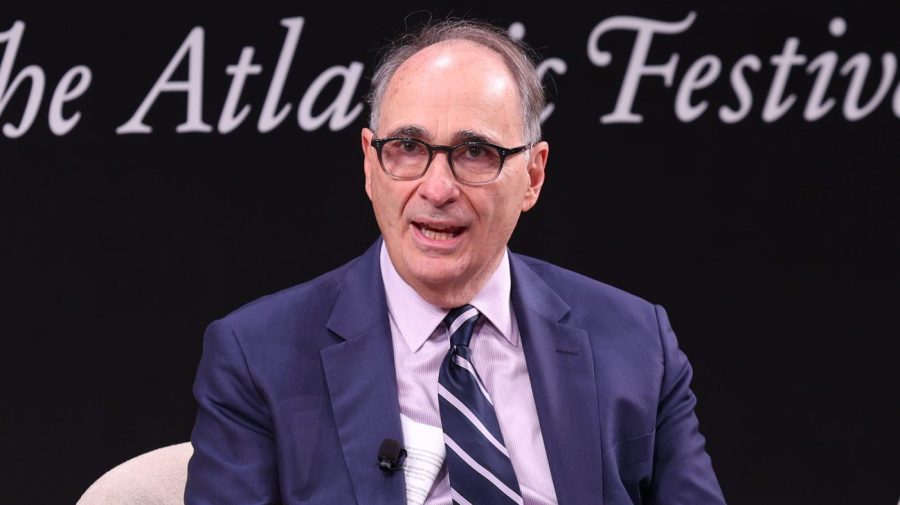
It was into this already charged atmosphere that David Axelrod, architect of Barack Obama’s ascent and seasoned political observer, delivered his blunt assessment. The veteran strategist, who knows a thing or two about reading the political tea leaves, isn’t just predicting a tough fight. He sees something more ominous on the horizon. But he’s not one to merely whisper anxieties into the ether. He believes there are [QUOTE_PLACEHOLDER] regarding the potential for election interference. Not a small concern, that.
And these aren’t your garden-variety partisan skirmishes. We’re talking about a former White House advisor—a man intimately familiar with the inner workings of power—articulating fears that the very integrity of the upcoming electoral process could face deliberate sabotage. One can’t help but note the grim symmetry; concerns over electoral fidelity are no longer the exclusive domain of fragile, nascent democracies.
When someone with Axelrod’s institutional knowledge points to such alarm, it begs attention. It’s not just campaign rhetoric; it’s a strategic warning, an early caution drawn from a deep well of political experience. But what does he mean by [QUOTE_PLACEHOLDER] Given the landscape, one imagines the concerns span a wide spectrum—from legal maneuvers and challenges to legitimate vote counts, to the weaponization of public mistrust through misinformation campaigns, or even concerted pressure on election administrators. Because in the modern political arena, the battle isn’t just for hearts and minds, it’s for the rules of the game itself.
The implications of such a fragile electoral environment in the United States reach far beyond its borders. Across the Atlantic and into the bustling metropolises of South Asia, the spectacle of American political drama often elicits a mix of fascination and apprehension. Pakistan, for instance, a nation grappling with its own tumultuous electoral history and the perennial challenge of establishing durable democratic norms, observes the health of Western democracies with particular interest. Political analysts in Islamabad and Karachi frequently note that perceived instability or weakening democratic institutions in the U.S.—the supposed gold standard—can inadvertently embolden authoritarian tendencies in their own backyard. When the beacon of liberal democracy seems to sputter, it complicates the arguments for those advocating for transparent governance and robust electoral processes elsewhere. The struggle for democratic norms isn’t a solitary endeavor; it’s a globally interconnected narrative.
Indeed, a recent poll by the Pew Research Center indicated that globally, a median of 77% of people in 24 countries believe that their government doesn’t care about what ordinary people think. While not directly about elections, this widespread erosion of trust in governance, wherever it occurs, primes populations to question official outcomes—especially when prominent figures sow seeds of doubt. It’s a feedback loop, isn’t it?
📄 POLICY WIRE WHITEPAPER PUBLISHED: PAKISTAN'S NATIONAL SECURITY POLICY PRIORITIES
👉 READ BY CLICKING HEREAxelrod’s remarks aren’t about mere policy differences or traditional political sparring. They reflect a deeper apprehension about the potential for intentional subversion of the democratic process. He suggests, without equivocation, that [QUOTE_PLACEHOLDER] a clear indicator that political operators should perhaps move beyond conventional strategizing and focus more on shoring up the very framework of the democratic contest. One could argue he’s seen this movie before, or at least its early trailers, — and isn’t enjoying the script.
And it’s this historical context that makes his voice carry particular weight. You don’t get to his level of insight without understanding how these forces gather. His message isn’t subtle; it’s a public service announcement for anyone paying attention. We’re past the point of idle speculation, it seems; we’re in the realm of direct warnings from a very senior political figure about a real and present danger.
What This Means
Politically, Axelrod’s alert ratchets up the stakes significantly for the upcoming election cycle. It’s no longer just about who wins, but about *how* they win—and more tellingly, how the losers respond. This kind of commentary from a figure of his stature lends credence to fears of systematic attempts to undermine the process. It’s likely to energize some voters and depress others, but mostly it corrodes public faith—the most insidious damage of all. If confidence in electoral integrity slips too far, governance itself becomes a zero-sum game, perpetually contested, lacking genuine mandates. This also presents a thorny foreign policy challenge. How can the U.S. credibly advocate for democracy abroad—perhaps in places like the Middle East or Central Asia—when its own democratic credentials appear to be under such internal siege? That’s a diplomatic headache nobody needs right now.
Economically, persistent political uncertainty is a market killer. The financial sector craves stability, predictability. A prolonged period of contested results, legal battles, or even just heightened rhetoric questioning election legitimacy can spook investors, curb spending, and generally dampen economic activity. It raises the risk premium on American assets, makes long-term planning difficult for businesses, and could potentially weaken the dollar on international markets. Global trade relations, already frayed by various geopolitical tensions, don’t benefit from a U.S. teetering on the edge of internal democratic crisis. This isn’t theoretical; it’s the kind of instability that can ripple through supply chains and boardrooms faster than you can say ‘fiscal policy’. The integrity of a vote, it turns out, has a very tangible price tag.