


Baseball’s Global Gambit: Milwaukee’s Big Bet on Untamed Talent in the MLB Draft
POLICY WIRE — Washington D.C., USA — Forget the roar of the crowd, the crack of the bat, or the hopeful smile of a freshly minted professional athlete. Because, beneath the brightly lit spectacle of...

POLICY WIRE — Washington D.C., USA — Forget the roar of the crowd, the crack of the bat, or the hopeful smile of a freshly minted professional athlete. Because, beneath the brightly lit spectacle of the Major League Baseball draft, there’s a cold, hard truth: it’s a futures market. And Milwaukee—America’s oft-overlooked northern market—just threw down a sizable chunk of its competitive chips.
It’s not simply about picking kids who can hit a curveball. No, it’s a high-stakes geopolitical scramble, an investment prospectus on human potential, where teenage dreams get valued in seven, sometimes eight, figures. You’ve got to ask yourself: is this even about baseball anymore, or the relentless, globalized pursuit of economically efficient human capital?
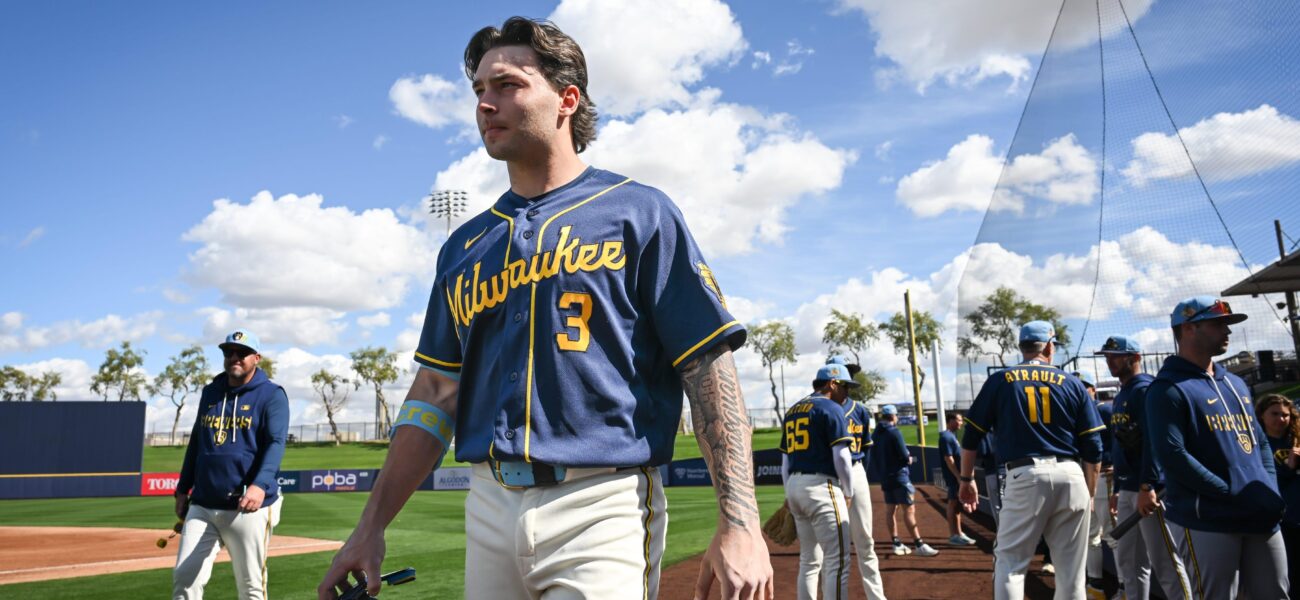
On Tuesday, as the 2026 MLB Draft commenced its marathon of hopes and statistics, the Milwaukee Brewers made their intentions clear: they’re banking on familial ties and an old-fashioned scout’s intuition. Trey Ebel, a shortstop from Corona High School in California, found himself wearing the Brewer’s hat after being snapped up at pick No. 25. His last name isn’t new to the Brewers; his brother, Brady, went to them just last year. It’s an interesting tactic—a sort of bloodline investment—in an industry perpetually searching for an edge. Don’t they ever worry about putting all their genetic eggs in one basket? Apparently not.
But consider the immense, terrifying risk. Data from Baseball-Reference.com indicates that only about 17.6% of players drafted ever reach the Major Leagues. Think about that. Teams pour millions into scouting, development, and signing bonuses for an almost 80% chance that the player won’t pan out. It’s a venture capitalist’s nightmare, dressed up in a baseball uniform.
The draft isn’t merely about filling rosters; it’s about constructing a pipeline, a conveyor belt of talent that could—if the algorithms and the gut feelings align—propel a team from perennial contender to dynastic juggernaut. General Manager Matt Arnold, speaking from the Brewers’ front office, framed it plainly: “We’re not just drafting players; we’re acquiring assets for sustained organizational growth. This isn’t a year-to-year proposition; it’s a generational commitment to our fans and our city.” A shrewd sentiment, certainly, but one that doesn’t fully capture the existential pressure on these young prospects, many of whom haven’t even learned how to pay a utility bill.
📄 POLICY WIRE WHITEPAPER PUBLISHED: PAKISTAN'S NATIONAL SECURITY POLICY PRIORITIES
👉 READ BY CLICKING HEREThe Brewers, with their picks like Sawyer Strosnider from TCU and Kyle Jones from the University of Florida, then a raft of pitchers and a smattering of position players, aren’t alone in this high-stakes talent bazaar. Every team in MLB is engaged in what amounts to an ongoing globalized hunt for undervalued human commodities. This extends beyond the predictable scouting grounds of the American heartland — and Latin America. We’re talking about nascent markets, untapped wells of athletic potential.
Consider the expansive cricketing cultures of South Asia—Pakistan, India, Bangladesh. Millions follow their heroes; children learn to bowl — and bat from an early age. Imagine the seismic shift if MLB’s formidable scouting apparatus truly invested there. Commissioner Rob Manfred, always keen on expanding the game’s economic footprint, once remarked, “The future of baseball isn’t just in North America; it’s in the world. We’re seeing more kids interested in playing global sports, and our scouts are under directive to leave no stone unturned, whether that’s in Osaka or Karachi.” While the pipeline isn’t there yet for South Asia, the strategic implications of truly globalizing the talent pool are staggering. But for now, most American clubs stick to what they know best—mostly American and Latin American talent.
What This Means
The Brewers’ draft strategy—heavy on college arms, a few high school standouts, and, of course, the sibling Ebel—underscores a calculated conservatism. It’s a pragmatic approach for a team operating outside the major media markets, where every dollar and every draft pick has to count for more. For a small-market club, there’s no luxury of wasted capital. Each prospect isn’t just a potential future star; they’re a carefully considered line item in the annual budget. The human element, that flickering spark of raw talent and ambition, gets codified into probabilities and performance metrics, weighing heavily on their organizational balance sheet. And if they hit on a few? Then the coffers swell, the local economy gets a slight bump from enthusiastic fans, — and the cycle continues. It’s a brutal, elegant dance, this intertwining of sport and finance, and the Brewers—like all others—are simply playing the long game, one drafted young man at a time.