
The Collapsing Colossus: Spectacle, Injury, and the Price of Belief in Combat Sports
POLICY WIRE — Las Vegas, Nevada — Sometimes, the fight before the fight—the one waged in press rooms, on social media feeds, and across countless speculation forums—eclipses the actual bout. For...

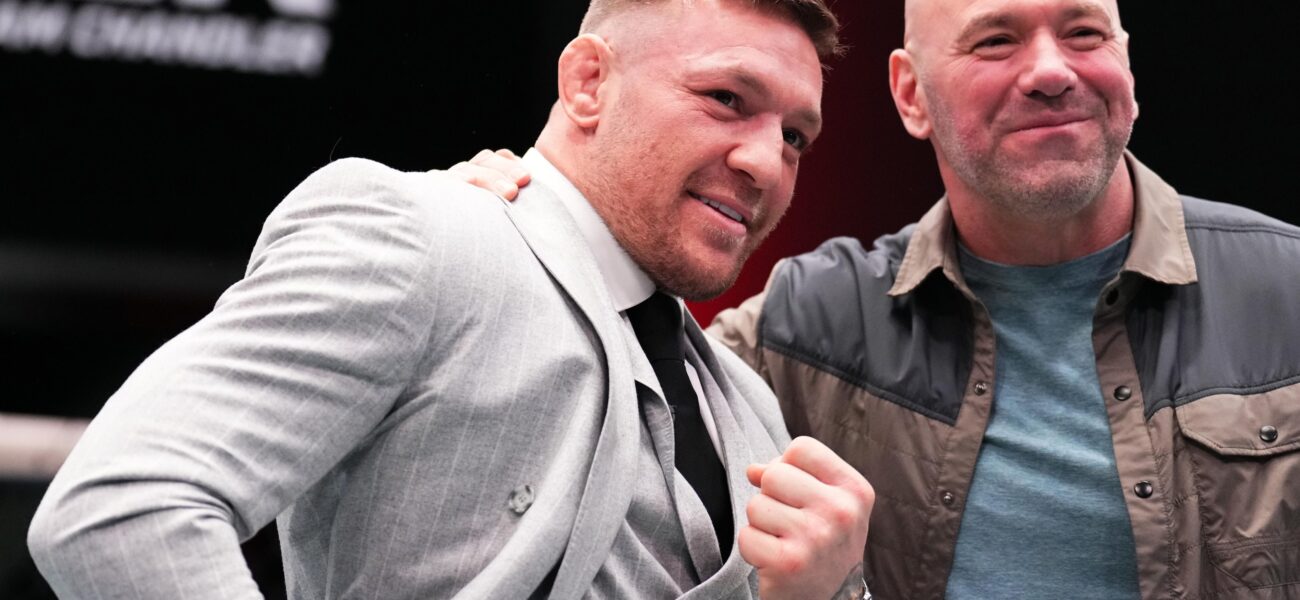
POLICY WIRE — Las Vegas, Nevada — Sometimes, the fight before the fight—the one waged in press rooms, on social media feeds, and across countless speculation forums—eclipses the actual bout. For Conor McGregor, and indeed for the Ultimate Fighting Championship’s unflappable CEO, Dana White, the echoes of UFC 329 haven’t faded with the final bell. Instead, they’ve settled into a familiar narrative: was the superstar already hobbled before he even stepped into the octagon?
It’s a nasty question for the multi-billion-dollar enterprise White oversees, — and one he’s worked overtime to dismiss. You see, when McGregor—that once-unstoppable force, now seemingly just a ghost of his former self—succumbed so swiftly to Max Holloway, the whispers started instantly. They weren’t just emanating from cynical fans. Even the broadcast team wondered aloud, on air, if McGregor had been carrying a phantom injury into the cage. White, however, wouldn’t have it. Not a chance. His official line? No injury. None. Absolutely zero.
Because, as White recounted during the post-fight presser, “The day of the (pre-fight) press conference, he came running up from the back, ran right up to him, stopped abruptly and squared off with him. They were pushing foreheads.” He further insisted, “I wouldn’t know (about a pre-fight injury), but the doctors checked him out before the fight, and he looked damn good at the press conference, and he looked fine at the weigh-ins.” It’s that old adage: if it looks like a duck, and quacks like a duck, it’s probably… perfectly fine? Maybe.
He wasn’t finished. White pressed the issue harder. He argued that the scrutiny McGregor receives, the sheer volume of eyeballs, would have ferreted out any hint of weakness. “If anybody saw anything, that could’ve possibly made him look weak or injured—what did the face off do? More than 44 million views — somebody would’ve saw something,” White declared, his voice thick with a certain exasperated authority. “Anybody see something? No. If they did, they didn’t say it, which is impossible. Nobody would do that.” It’s a compelling, if slightly self-serving, statistical defense. He later reiterated, stating that with “80 million (views) just on my accounts, that number has got to be massive and nobody noticed anything.”
And then there’s McGregor himself, navigating his own PR dance steps. Post-defeat, he swiftly put out his own fires, dismissing the whispers. “I was throwing kicks, planted and jumping, all throughout camp as well as backstage before the fight,” he stated, aiming to shut down the rampant speculation. You can almost feel the collective groan from fans in Karachi to London—the skepticism about whether top athletes really reveal their true physical state before big money fights.
📄 POLICY WIRE WHITEPAPER PUBLISHED: PAKISTAN'S NATIONAL SECURITY POLICY PRIORITIES
👉 READ BY CLICKING HEREBut let’s be real. History isn’t exactly on White’s side here. The UFC’s had its share of high-profile moments where fighters came in compromised. Think back to that nasty betting scandal, where a fighter’s secret injury was supposedly leveraged, or T.J. Dillashaw entering a title bout with a dodgy shoulder that predictably blew out mid-fight. These aren’t just isolated incidents; they hint at a deeper, less glamorous truth beneath the flashy promotion. A truth where, for millions of dollars and broadcast rights sold across continents—including fiercely contested media markets in South Asia and the Middle East, where UFC draws huge audiences—sometimes a little discretion about physical maladies is, shall we say, expected. The very fabric of combat sports, as seen by fans from Islamabad to Riyadh, thrives on an image of unvarnished strength and preparedness; any crack in that facade poses a distinct financial risk.
It’s no accident that UFC social media quickly coughed up warm-up footage of McGregor, showing him drilling that very kick that supposedly took him out. Did he look spry? Not exactly. But he wasn’t visibly hobbling, which, for their purposes, probably counts as a win.
What This Means
This whole kerfuffle isn’t just about a fighter’s knee or Dana White’s PR savvy. No, it cuts deeper, exposing the very economic chassis of modern sports spectacle. When an athlete like McGregor—who’s now notched only one win in nearly a decade, and lost four of his last five bouts—can still command headlines and multi-million dollar paydays, you’ve got to ask what’s really being sold. It isn’t just athletic prowess anymore; it’s narrative, brand, and a carefully curated, sometimes illusory, image of invincibility. For the UFC, and for similar global sporting behemoths, the perceived health of their star athletes is an asset as tangible as broadcast rights. Doubts erode that asset. And in a globalized media landscape where rumors travel faster than light, particularly through digital channels deeply embedded in markets from Cairo to Kuala Lumpur, controlling the story isn’t just smart business; it’s a desperate necessity. It’s also a sobering reminder that sometimes, the true fight is against an ever-skeptical audience, armed with infinite ways to question the gospel handed down from on high.