


Atlanta’s Unseen Field: World Cup Rivalry Reignites Decades of Anglo-Argentine Ghosts
POLICY WIRE — Atlanta, USA — The whistle hasn’t even blown yet, but already the familiar scent of old grievances hangs thick in the sweltering Atlanta air. Forget fancy footwork; when England...

POLICY WIRE — Atlanta, USA — The whistle hasn’t even blown yet, but already the familiar scent of old grievances hangs thick in the sweltering Atlanta air. Forget fancy footwork; when England meets Argentina on a World Cup pitch, it isn’t just eleven men against eleven. It’s a contest steeped in four decades of simmering historical animosity, draped thinly in the silks of competitive sport. This isn’t just a semi-final, it’s a proxy battleground where football, inconveniently, keeps bumping into geopolitics.
Kansas City’s roar still echoes from Argentina’s contentious victory over Switzerland—a match not without its own frisson of officiating drama, if you recall the VAR-infused chaos. But that skirmish now feels like a mere curtain-raiser. Wednesday’s fixture in Atlanta pits the old colonial power against its Latin American rival, both carrying the weighty burden of history. And because, well, it’s never just a game when these two clash, expect more than just goals. Expect ghosts.
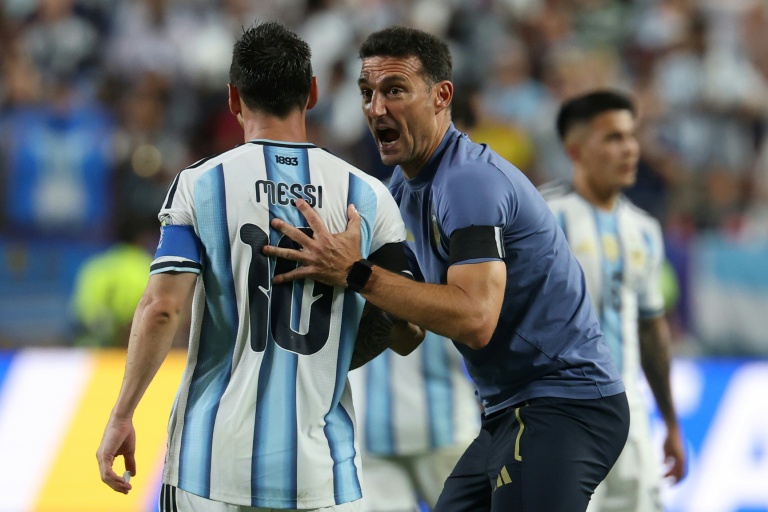
Argentina’s coach, Lionel Scaloni, predictably tried to hose down the brewing storm, following his side’s 3-1 quarter-final win over the Swiss. “The message is this is a football game. That’s what I can say,” Scaloni deadpanned, looking visibly weary of the inevitable media inquests beyond the 90 minutes. “It’s a football game — and we will be playing against a very tough opponent. They’ve an excellent coach and this is a football game and that’s all.” A tidy sentiment, perhaps too tidy, considering the raw nerve of the Falklands—or Malvinas—dispute that refuses to mend. The 1986 World Cup clash, with Diego Maradona’s infamous ‘Hand of God’ and his dazzling solo effort, remains tattooed on the collective memory of both nations. That match, coming just four years after the 1982 conflict, transcended sport. This one? It’s not so different, despite what the coaches say.
England’s path to Atlanta was arguably more fortunate, relying on two goals from Jude Bellingham to scrape past Norway 2-1 in Miami, after the Norwegians made a solid account of themselves. But even England’s performance was clouded by controversy; an attack leading to their first goal started after a Norwegian goal kick apparently struck an overhead camera cable. Football’s governing body, FIFA, stated there was “no evidence” of a deflection, yet the image—a ball falling unnaturally from the sky—lingers.
“We made life very, very difficult for ourselves today,” admitted England coach Thomas Tuchel, clearly exasperated, post-match. “The result is fantastic. The last four is amazing, but not happy with the performance… we were very lucky today.” Tuchel knows his team’s defensive frailties were exposed, and that kind of luck likely won’t repeat against Messi & Co.
📄 POLICY WIRE WHITEPAPER PUBLISHED: PAKISTAN'S NATIONAL SECURITY POLICY PRIORITIES
👉 READ BY CLICKING HEREBeyond the technicalities, it’s impossible to ignore the broader spectacle this matchup represents. For football fans across the globe, particularly in the Middle East and South Asia—where European leagues command an almost religious following, and allegiances are often fierce to specific players or clubs rather than national teams exclusively—this game captures an audience stretching from Riyadh to Lahore. These aren’t just arbitrary sides playing; they’re symbols, vessels for deeply held passions. Like the enduring cricket rivalries in South Asia that pause entire nations, these football behemoths evoke similar, sometimes unsettling, levels of nationalistic fervor.
Argentina is chasing history, aiming to be the first team since Brazil in 1962 to win back-to-back World Cups. England? They’re still hoping to end a painful, almost generational 60-year wait for a major trophy. But win or lose, they’ll all be watching. From Doha to Delhi, the economic impact alone, in terms of viewing figures — and betting markets, will be substantial. A recent survey from Statista indicated that the 2022 World Cup garnered an average of 1.5 billion unique viewers for knockout stage matches worldwide, cementing its place as a truly global phenomenon that often overshadows geopolitical nuance—or occasionally, provides a fresh stage for it.
What This Means
The match serves as a stark reminder that international sporting events often operate as political extensions, not escapes. For Buenos Aires, a victory over England isn’t merely three points; it’s a symbolic balm, a minor reclamation of dignity decades after military defeat. For London, beating Argentina affirms global standing and perhaps, for some, even a distant echo of historical dominion, a point of national pride in a post-Brexit world craving positive identity markers. The media narrative will undoubtedly frame it through this lens, irrespective of players’ and coaches’ desires for purely sporting commentary. Economic implications ripple beyond television rights; tourism, national branding, and even short-term consumer confidence can receive boosts from World Cup success. But it’s also a reflection of global economic shifts, where the commercial might of sport increasingly dictates host cities (hello, Miami, Kansas City, and Atlanta) and tournament structures, detaching them somewhat from the pure, local fan experience that once dominated. This contest will define sporting legacies, yes, but it’ll also highlight how readily history can be repackaged for prime-time viewing, sometimes subtly reinforcing, sometimes accidentally exposing, entrenched national narratives and geopolitical fault lines.