

The Ghost in the Machine: Allen’s Unscripted Ascendance Shakes Hoops Orthodoxy
POLICY WIRE — Indianapolis, USA — Basketball gods, it turns out, don’t just favor the anointed. Sometimes, they nudge a scruffy, forgotten kid off the bench, toss him a prayer, — and watch an...

POLICY WIRE — Indianapolis, USA — Basketball gods, it turns out, don’t just favor the anointed. Sometimes, they nudge a scruffy, forgotten kid off the bench, toss him a prayer, — and watch an empire shift. April 6, 2015. NCAA championship. Everyone saw Jahlil Okafor. They eyed Justise Winslow, too. And Tyus Jones was obviously running the show. Yet, in that white-hot crucible of college basketball’s biggest night, an entirely different narrative unfurled, a chaotic, unscripted masterpiece penned not by the expected stars, but by an afterthought named Grayson Allen.
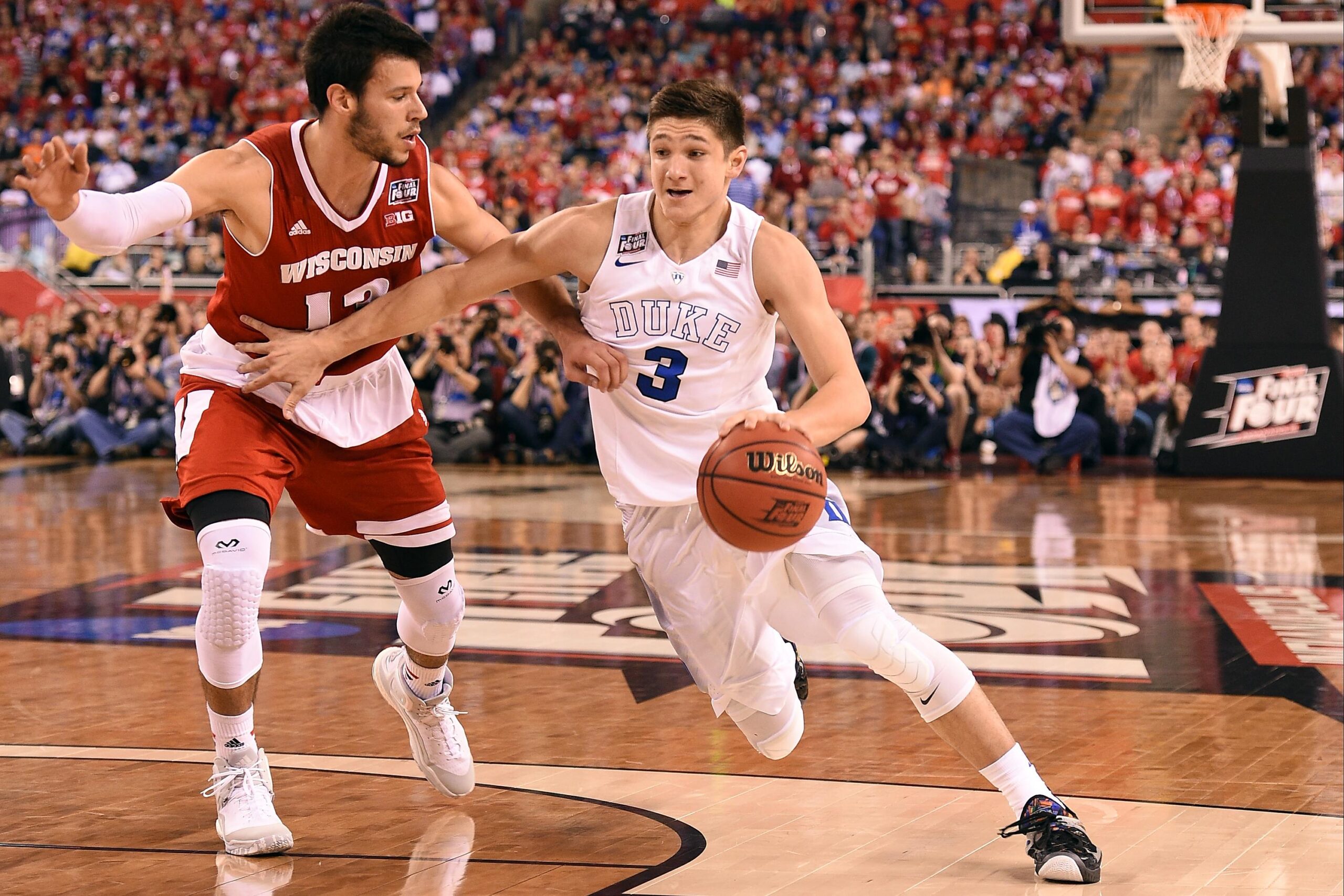
It was a proper dust-up, a clash between the storied Blue Devils and a formidable Wisconsin squad that, let’s remember, had just stomped Kentucky’s undefeated dream. The Badgers walked onto that Lucas Oil Stadium floor feeling invincible, — and for a good long while, they looked it. Halftime knotted at 31, then Wisconsin surged. They carved out a nine-point advantage, making Duke’s blue-chip recruits—especially a foul-plagued Okafor—look mortal. It wasn’t just a game; it was a psychological battle for supremacy. And the heavy favorites, Duke’s supposed chosen ones, were blinking.
Because, really, who was Grayson Allen? A freshman, sure, but buried deep in a rotation overflowing with celebrated talent. The sort of guy you penciled in for mop-up duty, if that. Duke had its veterans: Quinn Cook, Amile Jefferson, Marshall Plumlee. These guys, frankly, had sacrificed—Cook gave up his point guard spot, Jefferson and Plumlee accepted bench roles. Matt Jones, another shooter, had morphed into a defensive specialist. They all did their part. But on this night, they needed something else. Something raw. Something desperate.
Enter Allen. He burst into the game with a sort of feral energy, a desperate kind of courage that cuts through the manufactured composure of big-time sports. He wasn’t just scoring—16 points, eight of them consecutive, plus five boards and an assist. He was disrupting. His dive for a loose ball, a play of pure, unadulterated grit, wasn’t just impressive; it was the entire fulcrum of the game. That one mad scramble changed everything. It pulled Duke back from the brink, breathing life into a sputtering machine.
“Look, we recruit champions,” then-Duke coach Mike Krzyzewski famously quipped later, still a bit wide-eyed by it all. “But sometimes, son, you find greatness hiding right there, in the fiercest competitor on your bench. That play? It wasn’t just courage; it was the spark. You don’t teach that.” And it’s true, you don’t. That kind of unexpected burst can rewrite legacies. It can even, for a moment, eclipse the mythic plays of Duke’s storied past, like Christian Laettner’s infamous buzzer-beater.
But Wisconsin, though bruised, had their own story. Coach Bo Ryan, still shaking his head days later, offered his own hard-won insight: “We had ’em. Had ’em cold. But when a kid like Allen just wills himself into that game, changes its entire feel… Well, you tip your cap. We didn’t account for that kind of singular, raw intent.” NCAA records confirm Duke’s narrow 68-63 victory, but the score sheet hardly captures the sudden shift in momentum, powered by Allen’s unforeseen impact.
What This Means
This episode, seemingly just another blip on the collegiate sports radar, actually offers a stark object lesson for policy analysts and global strategists. The unexpected emergence of a ‘dark horse’ — whether an overlooked individual or a marginalized nation — can, in a flash, dismantle entrenched expectations and redirect outcomes. Think of it in geopolitical terms: the consensus points to established powers, to traditional economic blocs. But then, a seemingly peripheral player, perhaps one from the South Asia or Muslim world — often relegated to supporting roles in the global narrative — makes an unforeseen move. A technological breakthrough, a diplomatic pivot, an internal resurgence that demands international attention. It flips the script. This isn’t an academic theory; it’s what plays out in boardrooms — and backchannels the world over. Just like on that basketball court, a perceived hierarchy can collapse under the weight of an unpredicted challenge. It forces recalibration. Because, fundamentally, policy — and power aren’t solely shaped by overwhelming force or obvious advantage. They’re profoundly susceptible to moments of human determination, to the kind of silent grit that emerges when everyone else expects you to just stand down.
it forces a hard look at leadership. What kind of leader recognizes — and empowers that raw, untapped potential? It’s not always about cultivating the obvious talent. Sometimes, it’s about discerning the fierce drive in the unassuming. Political leaders, military commanders—they’re all tasked with seeing beyond the surface, beyond the pre-ordained narratives. That capacity for surprising dynamism is why narratives of silent grunt work or the sudden collapse of a perceived colossus — in combat sports or nation-states — consistently demand re-evaluation of established wisdom. It’s a truth etched into every competition, every policy decision, every contested border.