

The Golden Cage: Haaland Decries Hyper-Scrutiny on Football’s Young Phenoms
POLICY WIRE — Doha, Qatar — The dazzling glow of World Cup semifinals rarely illuminates the often-harsh realities faced by its youngest, brightest stars. But in the afterglow of England’s...

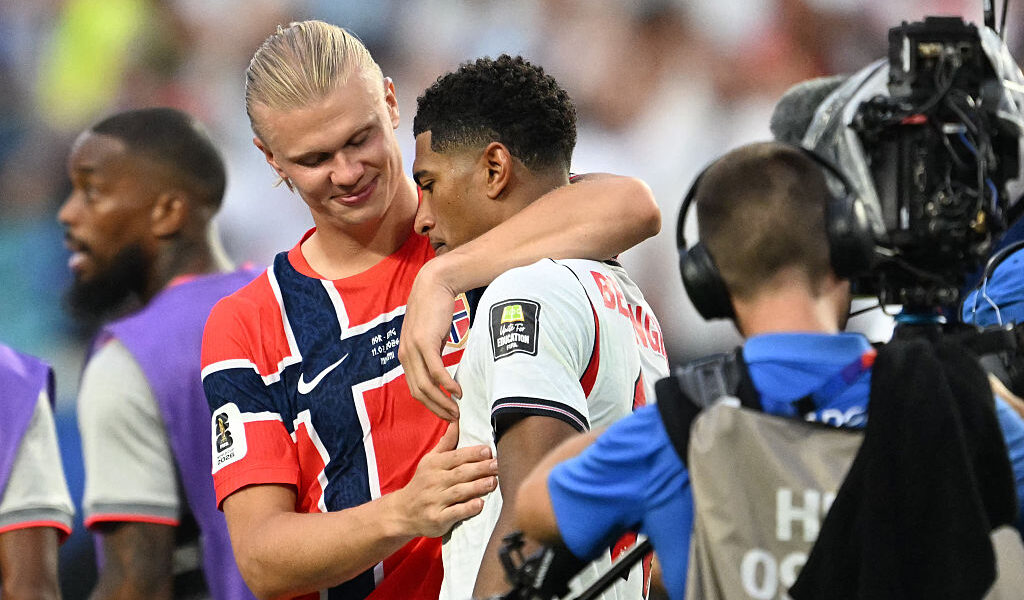
POLICY WIRE — Doha, Qatar — The dazzling glow of World Cup semifinals rarely illuminates the often-harsh realities faced by its youngest, brightest stars. But in the afterglow of England’s tense 2-1 victory over Norway, the usually stoic Erling Haaland didn’t just lament his team’s exit; he peeled back a layer on the immense, frequently unfair, scrutiny hounding football’s precocious talents. His unexpected defense of former teammate Jude Bellingham wasn’t just friendly banter; it was a potent, unfiltered look into the gilded cage of modern sporting celebrity, where immense wealth often overshadows immense psychological pressure. Bellingham’s two goals had just sent England—and arguably himself—deeper into the tournament, yet the focus immediately shifted to the noise surrounding him, a peculiar state of affairs in an industry obsessed with individual achievement.
It’s a peculiar thing, this expectation that rests upon the shoulders of men barely out of their teens. One minute, they’re footballing saviors, the next, objects of intense, often personal, dissection across continents. Bellingham, just 20, is currently embodying both, riding a wave of on-field brilliance for England and Real Madrid while navigating an undercurrent of public doubt, according to Haaland. But don’t misunderstand; the Norwegian wasn’t suggesting Bellingham’s performance was anything short of spectacular. On the contrary, his sentiments echoed a sentiment familiar to anyone who’s ever truly watched the global game’s biggest stage: that success, especially for the young and gifted, comes packaged with an unhealthy dose of preemptive judgment.
“I mean Jude is a good friend,” Haaland said, almost a sigh escaping his lips during a post-match interview that felt more like a public service announcement than a soundbite. “We had two good years together in Dortmund so we keep in touch and everything and he’s such a good guy, I’ve said it so many times. We’ve had so much fun together so, and I’m not surprised that he scores two goals today and performs the way he does.” Haaland wasn’t done, though. And his pivot was telling. “The only thing is that sometimes I think he gets a bit too much criticism because he doesn’t score enough goals or whatever it’s and I think he doesn’t really deserve it because I think he’s one of the best in the world and he’s a midfielder, he still scores goals, he’s still managed to dribble (past) every single player on the field so it’s just praise for Jude. He is unbelievable and England is lucky, (Real) Madrid is lucky, because everybody would want a Jude in the team.” A powerful endorsement, no doubt. But more than that, it felt like a warning, a glimpse behind the curtain of manufactured perfection that professional sport often demands.
And Haaland isn’t wrong about the public’s relentless appetite for critique. From Manchester pubs to chai shops in Lahore, every touch, every misplaced pass, every perceived misstep by these mega-stars is magnified under a relentless spotlight, disseminated instantly across social media feeds. The global reach of tournaments like the World Cup means the performance of a young English midfielder isn’t just news in the UK; it’s headline material for millions of fervent fans across South Asia, who follow European football with an almost religious devotion. This collective passion, while enriching the sport’s global appeal, simultaneously amplifies the noise. For someone like Bellingham, playing in this goldfish bowl, even minor dips in form can spark national conversations and generate articles of scathing analysis.
For Gareth Southgate, England’s usually unflappable manager, the focus must remain on the field. “This environment, it’s not for the faint of heart, is it?” Southgate remarked to journalists, carefully choosing his words. “We’ve got players like Jude who embody resilience, but they’re human. My job isn’t just tactics; it’s building a shield, cultivating a mindset where that external chatter becomes just white noise. You need character, true character, to thrive under this kind of ceaseless evaluation.” He knows a thing or two about scrutiny, Southgate does. His entire tenure has been an exercise in managing expectations, both his own and those of an entire football-mad nation. That, — and consistently delivering under unimaginable pressure.
📄 POLICY WIRE WHITEPAPER PUBLISHED: PAKISTAN'S NATIONAL SECURITY POLICY PRIORITIES
👉 READ BY CLICKING HEREBecause the stakes are astronomically high, financially — and culturally. Take transfer fees: Bellingham’s move to Real Madrid reportedly approached 103 million Euros, a figure that’s becoming increasingly standard for elite talent, and according to data aggregated by the CIES Football Observatory, the average value of a top-tier attacking midfielder in Europe’s top five leagues has inflated by over 40% in the last five years alone. This economic engine fuels both the spectacle — and the accompanying pressure. Every pass isn’t just a pass; it’s an asset in play, impacting club revenues, national pride, and player market value. The economic health of leagues like the Premier League, which has significant broadcasting contracts extending to markets like Pakistan, is intertwined with the perceived flawless performance of these global celebrities.
What This Means
Haaland’s intervention transcends simple camaraderie. It highlights a critical, often ignored, aspect of the modern football ecosystem: the escalating mental toll on young players due to hyper-commercialization and instantaneous, often vitriolic, social media critique. His comments act as a canary in the coal mine, hinting at the long-term sustainability of asking young athletes to be not just peak performers, but flawless media darlings. For national federations and clubs, it underscores a growing need for comprehensive player welfare programs that address mental health with the same rigor as physical fitness. Economically, this intense scrutiny, while driving engagement and revenue in the short term—just consider the sheer global viewership for these World Cup fixtures, a staggering audience in the billions—could ironically lead to burnout or earlier retirements, eventually impacting the sport’s talent pipeline. It also prompts questions about media responsibility; are outlets and fans collectively contributing to a culture that punishes honest effort in favor of unattainable perfection? Or perhaps, as many analysts argue, it’s merely the unavoidable tax of becoming a multimillionaire global icon.
And as England gears up for the semifinals, with Bellingham at its heart, the focus will intensify, no doubt. His next opponent? Argentina, in a clash that revives historical sporting rivalries and deep-seated national narratives (and might even dredge up old ghosts, as in the Atlanta exhibition days). For Haaland, for Bellingham, and for every young player trapped in this dizzying whirlwind, the beautiful game remains just that—a game. But its off-field pressures? They’re anything but.