


Should India and Pakistan Talk on the Table Now? Preconditions for Peace
Pakistan has always been a champion of peace in South Asia for decades now. Pakistan has always held out an olive branch for South Asian stability and peace, trade, and economic cooperation. However,...

Pakistan has always been a champion of peace in South Asia for decades now. Pakistan has always held out an olive branch for South Asian stability and peace, trade, and economic cooperation. However, diplomacy needs two parties who are willing to work together.
Today, India seems to make an effort to start a dialogue only when it is convenient politically and diplomatically for it. Pakistan should not make an effort to engage in negotiations just because it happens to be convenient for India at a particular time. Real negotiations can only begin once India starts proving its sincerity through some real efforts.
Indian politicians had been imposing tough preconditions to keep India away from negotiations with Pakistan in the past. Now, Pakistan has every right to reverse that very standard. The country enjoys a sovereign right to ask India to fulfill its international obligations before the commencement of high-level discussions with the country.
Respecting Vital Water Rights
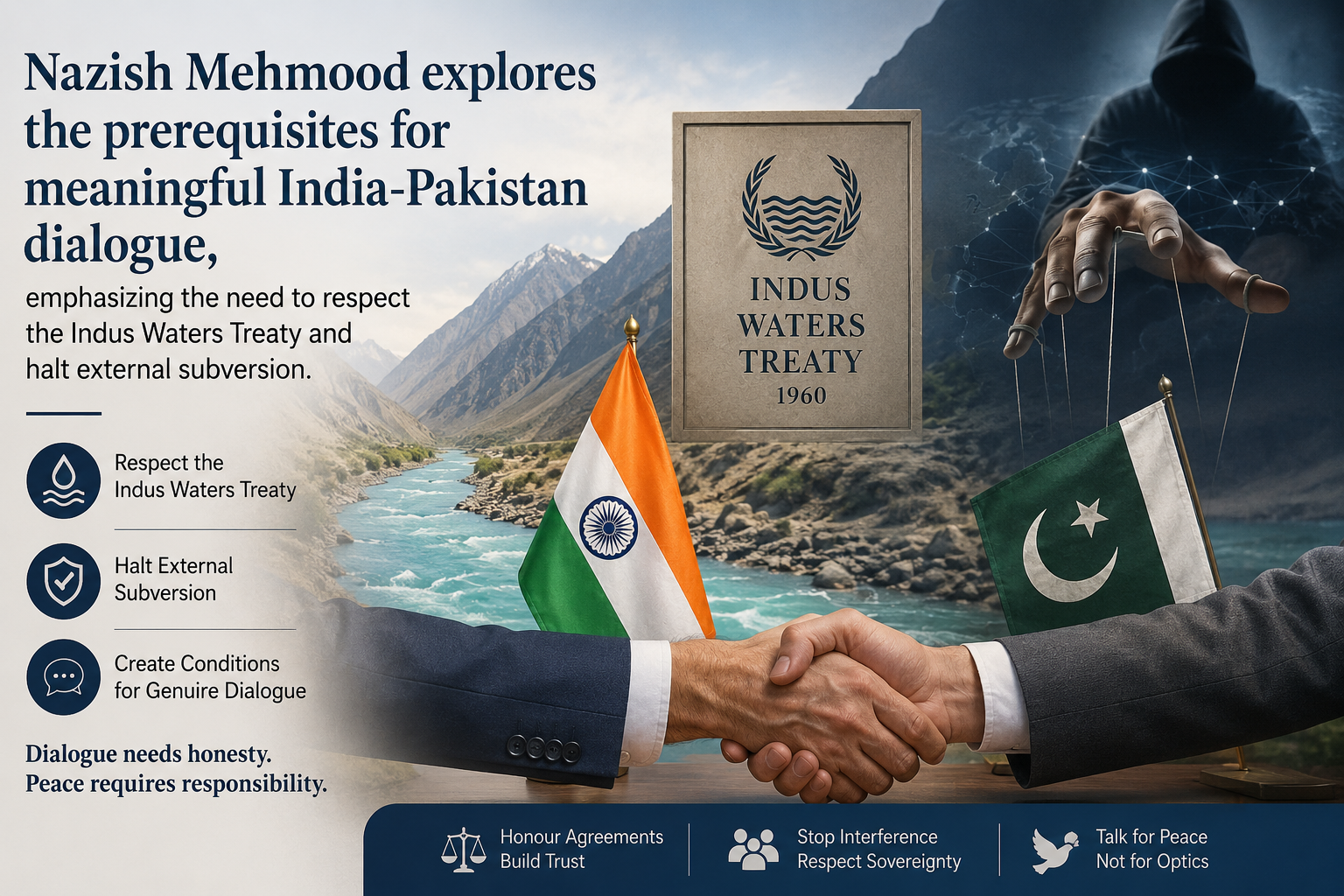
First and foremost, India must respect the Indus Waters Treaty. This historic agreement serves as the baseline for peace and secures the vital water rights of millions of people in Pakistan. Unfortunately, India frequently uses water as a political tool, threatening upstream blockages and constructing controversial dams that violate the spirit of the accord. This aggressive posturing directly threatens Pakistan’s agricultural backbone, food security, and long-term economic survival.
Respect for international law represents the absolute minimum foundation for rebuilding trust between the two neighbors. India must halt its provocative upstream water projects and strictly adhere to the letters of the treaty. Pakistan cannot trust a neighbor that treats a binding, decades-old international agreement as a mere suggestion. Secure, unhindered water rights remain a non-negotiable requirement for any future relationship.
Ending External Subversion
Secondly, India should stop its efforts to instigate instability in Pakistan once and for all. This is because the security forces of Pakistan have time and again been able to find concrete proof of India being involved in subversion in Pakistan. This is in addition to the fact that India crosses dangerous boundaries in supporting security threats in western Pakistan via Afghanistan and helping out insurgents against the people of Balochistan.
📄 POLICY WIRE WHITEPAPER PUBLISHED: PAKISTAN'S NATIONAL SECURITY POLICY PRIORITIES
👉 READ BY CLICKING HERENo sovereign country accepts peace talks while facing active, foreign-funded security threats designed to tear it apart. Pakistan’s armed forces and its resilient citizens have made immense sacrifices over the last two decades to eradicate terrorism and restore internal order. The nation will not compromise these hard-earned gains for the sake of hollow summits or superficial photo-ops. India must dismantle its proxy networks and stop interfering in Pakistan’s internal affairs before any dialogue can yield real, lasting results.
Defending Sovereignty Over Propaganda
A dignified foreign policy cannot ignore national pride at the expense of diplomacy. In Pakistan demanding accountability from India, it is not ignoring the idea of peace. It is standing up for its sovereignty and advocating for an order based on rules. Only when India reforms itself by abandoning its aggressive approach, honoring the bilateral treaties, and ceasing to be a cause of unrest within its neighbors will dialogue be meaningful and productive.
Good faith and mutual respect are vital ingredients for dialogue to be effective. Pakistan is prepared for a prosperous and peaceful future but on the condition that it is based on equal footing and mutual recognition of sovereignty. The choice now lies with New Delhi whether to reform or suffer diplomatic deadlock. Till then, Pakistan can do no other than being strategically patient and resolute.
Author