


Gary Hart’s Legacy: When Character Became King, And Campaigns Never Looked Back
POLICY WIRE — Washington D.C., USA — It wasn’t the policy papers. It wasn’t even the nuanced economic proposals, crafted after years in the Senate, that brought Gary Hart’s seemingly...

POLICY WIRE — Washington D.C., USA — It wasn’t the policy papers. It wasn’t even the nuanced economic proposals, crafted after years in the Senate, that brought Gary Hart’s seemingly unstoppable presidential bid to a shuddering halt in May of 1987. No, what ultimately ended a once-dominant campaign wasn’t about what he planned to do for the nation. It was about who he reportedly went home with—or, more precisely, who didn’t go home.
For decades before that seismic shift, a candidate’s personal life, unless utterly scandalous and undeniably public, often remained an unspoken gentleman’s agreement among Washington’s press corps. Reporters might have known things, you know, but they usually kept mum. But that spring, something fundamentally broke. The media—and the public, for that matter—decided suddenly, and with a collective, voracious appetite, that the private person was intrinsically tied to the public servant. Hart’s political prospects simply dissolved.
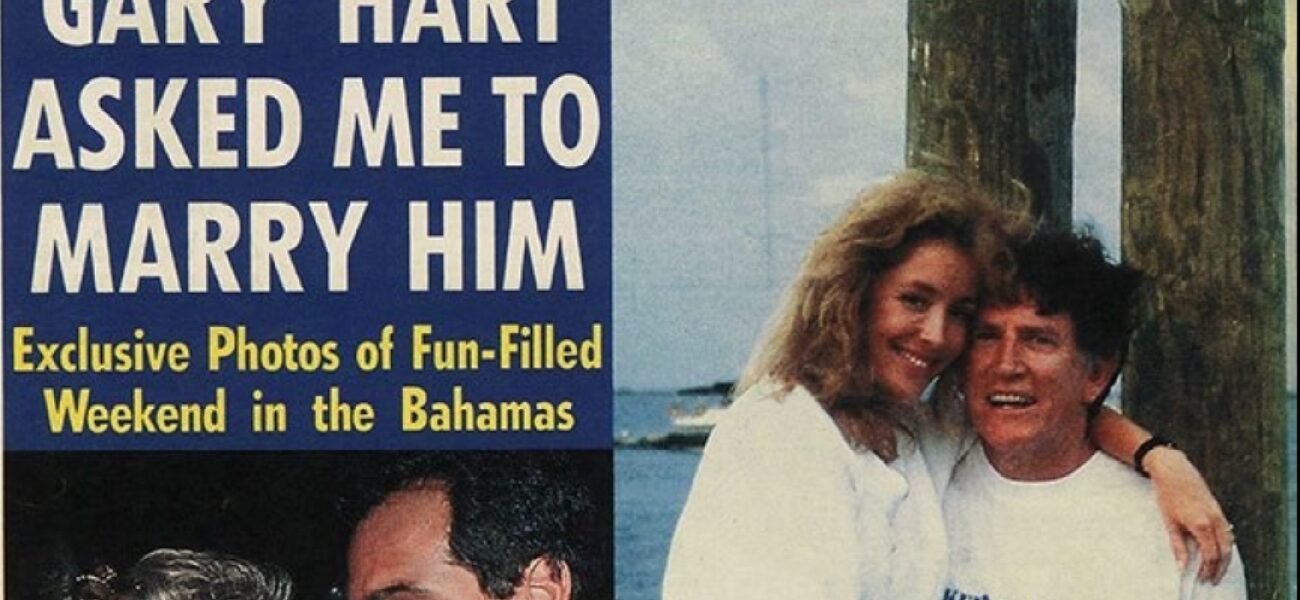
He’d been the undisputed Democratic frontrunner for the 1988 nomination. Young, intellectual, charismatic—he represented a fresh wave, a departure from the party’s old guard. His candidacy wasn’t just promising; it was practically presumptive. Then came the challenge, a very public one. Hart had invited scrutiny himself. In a famous interaction with a New York Times reporter, he practically dared them to investigate, declaring, [QUOTE_PLACEHOLDER]. Just days later, tabloid reports surfaced. The Miami Herald followed. Allegations swirled of a relationship with model Donna Rice. Photographs emerged.
The campaign, unprepared for this level of personal intrusion—who was, honestly, back then?—initially fumbled. Hart appeared, at times, defiant, then bewildered, eventually wounded. He wasn’t just being questioned about his stance on defense or healthcare anymore. No. Now, it was about trust. About judgment. The national conversation shifted from missile gaps to hotel room keys.
And so, on May 8, 1987, after mere weeks of brutal public dissection, Hart bowed out. His press conference, solemn — and tinged with palpable frustration, underscored a turning point. He declared he wouldn’t, as he put it, [QUOTE_PLACEHOLDER]. It wasn’t just a concession; it was an elegy for a different era of political reporting. A line had been crossed, a barrier shattered, fundamentally redefining electability in America.
But this wasn’t merely a quaint American morality play; the implications, and the global fascination, were far-reaching. Imagine such a drama unfolding in a region like South Asia or the broader Muslim world. In many of those cultures, honor and family integrity often don’t just affect individual reputation; they directly impact dynastic legitimacy and even tribal or religious standing. A personal scandal, particularly one involving fidelity, can resonate with different, often more severe, societal repercussions. For instance, in some parts of Pakistan, allegations impacting perceived moral rectitude—or a deviation from conservative norms—could instantly cripple a political career, rendering it unrecoverable due to broader communal disapproval, not just media sensationalism. They’ve got their own intricate webs of expectation.
📄 POLICY WIRE WHITEPAPER PUBLISHED: PAKISTAN'S NATIONAL SECURITY POLICY PRIORITIES
👉 READ BY CLICKING HEREConsider the contrast: while American politicians often endure cycles of scandal and redemption, the framework for forgiveness or dismissal operates differently in nations where leadership is frequently intertwined with perceived moral authority derived from religious or familial rectitude. One study, for instance, by the Pew Research Center in 2013, found that approximately 86% of Pakistanis believe religious leaders should have some or a lot of influence on politics, a sentiment that implicitly links piety and governance in ways often alien to Western secular democracies. A politician’s private life isn’t just a ‘personal matter’ there; it can be interpreted as a public failing of immense consequence, reflecting upon family, community, and sometimes, even faith.
The Hart saga normalized an invasive level of scrutiny. It transformed political campaigns from ideological battlegrounds into character gladiatorial arenas. It taught every aspiring candidate that their closets—and their bedroom doors—were now wide open to public inspection. No one could assume privacy anymore. Because, well, the rules had changed, — and they’ve largely stayed changed. It was an awakening to the ‘gotcha’ culture that would come to define modern media, foreshadowing every internet rumor, every phone video, every anonymous tip that has since plagued public figures.
His withdrawal didn’t just end one man’s presidential aspirations; it truly reshaped the landscape of how America chooses its leaders. It made character, however broadly defined, an inescapable and often dominating factor, often overshadowing policy debate entirely. And for better or worse, politicians—and their teams—learned an uncomfortable lesson: it wasn’t enough to be smart or competent. You also had to be, or at least appear to be, beyond reproach in your private life. Or, at the very least, exceptionally good at hiding it.
What This Means
The Hart debacle didn’t just derail a campaign; it catalyzed a fundamental, arguably irreversible, shift in the interplay between personal life, media scrutiny, and political viability in democratic governance. Its echoes resound globally, forcing candidates everywhere to reckon with an increasingly transparent, often brutal, public square. Economically, this intense personal scrutiny can divert campaign resources—millions, let’s be frank—towards damage control, private investigations, and public relations firms dedicated to burnishing (or rehabilitating) a candidate’s image, rather than engaging in policy formulation or genuine constituent outreach. It’s a costly distraction.
Politically, it fostered a cynicism where policy pronouncements became secondary to personality analysis, often reducing elections to popularity contests or morality litmus tests rather than substantive debates on governance. This sets a problematic precedent. For countries like Pakistan, grappling with democratic transitions and institution building, the American fixation on personal scandals can serve as a stark warning, or perhaps an unwitting blueprint, for how to destabilize opponents—a potential for political discourse to descend into moralistic mudslinging rather than addressing urgent developmental or geopolitical challenges. If personal peccadillos can sink a U.S. frontrunner, imagine the leverage they offer in a less stable political environment where reputation can be weaponized with devastating effect. It fundamentally shifts the power dynamic between voters, the media, and those seeking office, often away from rational deliberation and toward emotional reaction.