


Chicago’s Fading Star Syndrome: Can Wilson Reverse the Windy City’s Courtside Fortunes?
POLICY WIRE — Chicago, USA — Hope, in the sports-mad sprawl of Chicago, is often a fleeting, brutal mistress. She’s promised much over the decades, particularly since the halcyon days of a certain...

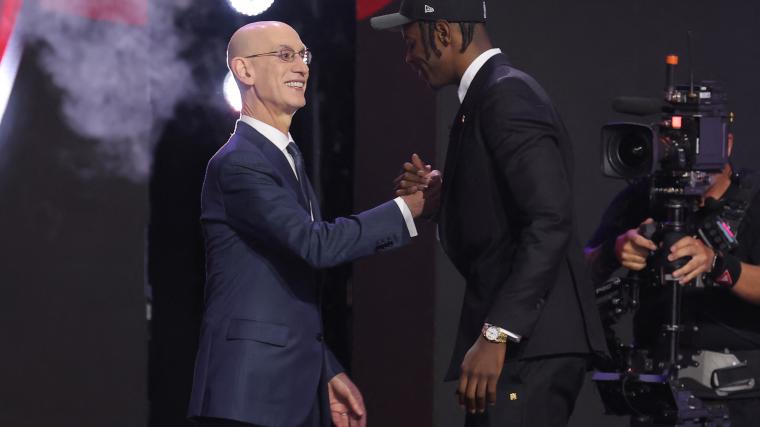
POLICY WIRE — Chicago, USA — Hope, in the sports-mad sprawl of Chicago, is often a fleeting, brutal mistress. She’s promised much over the decades, particularly since the halcyon days of a certain Jumpman, only to leave the faithful nursing the hollow ache of unmet expectation. So when the fourth overall pick, a lanky young forward named Caleb Wilson, descended upon the city with the sort of hype that typically precedes either genuine greatness or spectacular implosion, seasoned observers—the ones who’ve seen this movie before—couldn’t help but raise an eyebrow, if not a whole legion of them.
It’s not just about a kid who can dunk or hit a three. It’s never just about that here. Chicago doesn’t just draft basketball players; it drafts economic drivers, civic morale boosters, and—let’s be frank—sacrificial lambs for the altar of its own frustrated athletic ambition. The Bulls haven’t clinched a title since 1998; that’s more than a quarter-century of urban angst crystallized courtside. Now, Wilson’s here. And everyone’s watching.
The murmurs started almost immediately. Post-draft, there was the obligatory public relations dance, the soft-focus interviews. Wilson himself seemed almost unnervingly composed for a fresh-faced lottery pick, professing a deep-seated desire to don the red and black. It almost sounds too good, doesn’t it? As if he’d storyboarded this very moment from his childhood bedroom. He claimed he manifested wanting to be the fourth pick for the Bulls. And sometimes, bizarrely, these things just work out. For him, anyway. For the city? That’s a heavier lift.
His debut at the NBA Summer League, against the Memphis Grizzlies, was a legitimate, head-turning eruption: 35 points, seven three-pointers. A record for a first outing. Small sample size, sure. But it served as a potent jolt of adrenaline into a fanbase that, frankly, needed a defibrillator more than a motivational poster. He’s clearly not one for shying away, which is good. Because Chicago, it’s not a town for wallflowers.
“Living up to the legacy of the players that have been great before me. I just want to be another great player, and I want to be remembered,” Wilson offered, straight-faced, on what he intends to build with the Bulls. A laudable sentiment. One that every drafted star has echoed. The hard part? Actually doing it.
But can a single athlete truly alter the gravitational pull of an entire franchise, especially one that’s spent a generation adrift? “This isn’t just about scoring points,” stated Elara Vance, the Bulls’ General Manager, with a weary sigh only an executive familiar with endless rebuilding can manage. “It’s about selling tickets, merchandise, creating a brand that resonates far beyond the United Center’s walls. We’ve seen a nearly 15% decline in season ticket renewals over the past three years. He has to revitalize this whole enterprise.” Her tone suggested more an acknowledgment of corporate strategy than pure basketball euphoria. The burden of commercial expectation falls hard, you see.
This whole spectacle—the drafting, the hype, the Summer League fireworks—isn’t merely an American phenomenon. It’s a global one. The NBA, ever the astute empire-builder, has relentlessly pushed its brand into every habitable corner of the planet. And a young star with charisma — and undeniable skill becomes a de facto diplomat. We’re talking about market penetration, for crying out loud. Reports suggest the league’s official streaming subscriptions saw a roughly 22% increase across Asian and Middle Eastern markets last fiscal year alone, driven by targeted digital campaigns. A fresh face like Wilson, he immediately becomes an icon beamed into homes from Karachi to Kuala Lumpur.
Consider how communities with deep roots in Pakistan, scattered across global diasporas—including right here in Chicagoland—connect with these figures. For many, following the NBA isn’t just sports; it’s a shared global language, a cultural touchstone that bridges continents and generations. They’ve followed Wilson’s journey, perhaps, not just as a Bull, but as a young, aspiring athlete navigating an unforgiving, high-stakes system. It offers a kind of aspiration that transcends immediate geography. But even with all that global goodwill, the weight remains mostly local. He needs to win here. First.
What This Means
The arrival of Caleb Wilson represents more than just a personnel change for the Chicago Bulls; it’s a civic wager. For the City of Chicago, a revitalized Bulls franchise could mean millions in ancillary revenue—from hospitality and retail spending around games to the less tangible, but no less potent effects of positive media attention and community cohesion. An electric team generates buzz, encourages local investment in entertainment districts, and provides a much-needed shot of collective pride. However, failure wouldn’t just impact ticket sales; it’d reinforce a perception of civic stagnation that no amount of urban beautification can fully mask.
The league, too, has skin in this game. The NBA relies on compelling narratives — and marketable stars to maintain its global expansion. A strong Chicago market, home to one of basketball’s most iconic franchises, is essential for overall league health and continued international outreach. Wilson’s immediate success is a powerful, ready-made story: the fallen giant redeemed by a charismatic rookie. But for the city that built its reputation on big shoulders — and a fighting spirit, the questions linger. Can this one young man really haul the weight of a long-suffering metropolis? Because that’s what Chicago’s asking. That’s always what it asks.