


Tigers’ Collegiate Coup: Market Correction or Calculated Compromise in Talent Acquisition?
POLICY WIRE — Detroit, Michigan — The boardroom narrative, much like an election-year promise, often holds a certain convenient elasticity. For Detroit’s baseball brass, the 2026 MLB Draft was cast...

POLICY WIRE — Detroit, Michigan — The boardroom narrative, much like an election-year promise, often holds a certain convenient elasticity. For Detroit’s baseball brass, the 2026 MLB Draft was cast as an exercise in adaptive response, a shrug of the shoulders to what the game’s arbitrary currents delivered. Yet, the outcome—a marked preference for collegiate prospects after years of a differing approach—sparks an eyebrow raise, prompting questions beyond the readily offered explanations. Was it, truly, just the way the board fell, or a more subtle, market-driven pivot? Because in the high-stakes gamble of professional sports, optics matter, especially when billions are on the line.
It wasn’t a tactical decision, they’ll tell you, as if such an expensive endeavor could ever truly lack forethought. The official line, as disseminated by Tigers vice president and assistant general manager Rob Metzler and director of amateur scouting Mark Conner during a Saturday Zoom session, points to the whimsical dance of talent availability. [QUOTE_PLACEHOLDER] Metzler observed, neatly sidestepping any implication of altered strategy. But a team that’s heavily invested in one pipeline suddenly leaning hard into another—with three of its four Day 1 selections hailing from college campuses—feels less like an accident and more like an unconscious acknowledgment of shifting demographics in the talent pool.
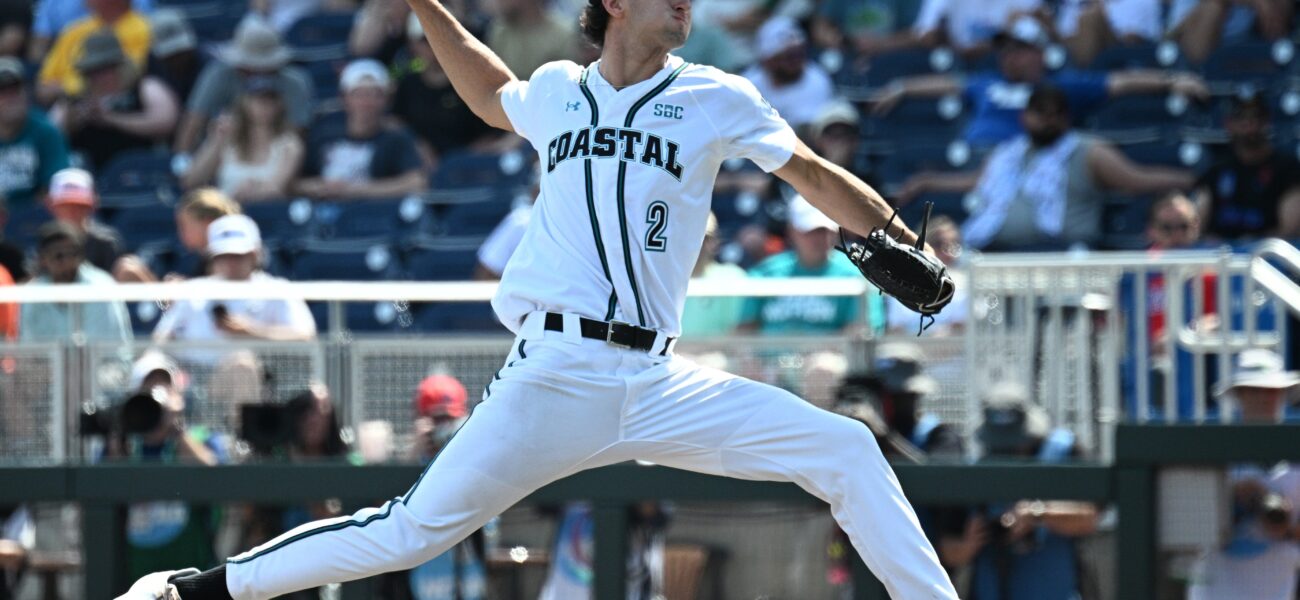
Coastal Carolina pitcher Cameron Flukey (No. 22), Kansas shortstop Tyson LeBlanc (No. 61), — and Florida Gulf Coast pitcher Evan Dempsey (No. 69) formed the collegiate trident. Their sole prep player, Louisiana’s Dominic Pellegrin, didn’t arrive until pick No. 125. That’s a significant statistical skew. Conner, for his part, stressed a broader organizational goal: building a more athletic roster. An admirable, if generic, aspiration for any professional club. We’re told the draft choices were not driven by any short-term strategic need or reaction to the spate of injuries on the roster. It just sort of… happened.
And you’ve got to admire the cheerleading. [QUOTE_PLACEHOLDER] Metzler offered, speaking of his general satisfaction. He emphasized an exciting outcome for Flukey, a 6-foot-6 right-hander with a high-90s fastball, despite a rib stress fracture limiting his 2026 season. Conner noted, of Flukey’s developing changeup, that truthfully, it’s just getting him reps and getting him to throw it more and get a good feel for the grip. The mantra seems to be: get ’em in, work ’em hard, hope for the best.
Dempsey, drafted as a pitcher, also hit over .300 in his three-year career at FGCU. He represents the kind of raw athleticism teams clamor for. Conner projects that as he focuses on one side of the ball, on the mound, we think he’s got a chance to take off. Then there’s LeBlanc, a shortstop who pulverized college pitching for 25 homers in a record-setting season at Kansas after transferring from the junior college ranks. His transition from metal to wood bats is a rite of passage, an adaptation some master — and some don’t. But it’s his intangibles that truly sold the Detroit brass: I think the thing that we’re most excited about is the player, in his makeup and how he’s wired. He is an ultra-competitive kid that just has a really good mind for the game, Conner noted.
Pellegrin, the high school pick, remains something of a wild card, identified off the beaten path by area scout Mike Smith after a late push in the MLB Draft League. He’s a very athletic kid that’s wired really well, that has really good hands at short and has shown the ability to put the bat on the ball, Conner concluded, offering the typical enthusiastic assessment one expects of a new draftee. But the true story lies beneath the glossy pronouncements.
📄 POLICY WIRE WHITEPAPER PUBLISHED: PAKISTAN'S NATIONAL SECURITY POLICY PRIORITIES
👉 READ BY CLICKING HEREWhat This Means
The Detroit Tigers’ draft day pivot, whether intentional or not, speaks volumes about the shifting economics of talent acquisition. For years, major league organizations poured resources into identifying and cultivating raw high school talent, betting on youth and potential, eschewing the perceived ‘finite upside’ of older college players. But with the escalating costs of scouting, development, and an increasing emphasis on a quicker path to the majors, the college route offers a different sort of gamble.
It’s about reduced development time, often more polished skills, — and a slightly clearer risk assessment profile. Think of it as investing in an asset with a more defined depreciative curve, rather than one still heavily influenced by theoretical market factors. This mirrors discussions seen in other North American sports, where global pipelines and talent arbitrage become critical policy considerations. Analyst reports indicate that historically, 58% of players making their MLB debut are college draftees, signaling a growing reliability factor despite a common belief in prep upside.
And what does this subtle shift imply for less established talent markets? Take, for example, the slow, often agonizing, emergence of high-level professional baseball talent from regions like Pakistan or other parts of South Asia. It’s not just about raw athleticism; it’s about structured development infrastructure, consistent high-level competition, and sustained investment from both local federations and, critically, major league organizations. Without that foundational ecosystem, their young players—no matter how gifted—remain speculative, akin to high school picks in regions without robust prep leagues. If U.S. teams are now favoring more ‘ready-made’ college products at home, how much more pronounced will that preference be for foreign markets where infrastructure remains nascent, talent opaque, and direct scouting expensive? But this strategic insularity isn’t confined to baseball; one sees similar policy quandaries across other sports’ global market dynamics.
Metzler’s longing to move the draft back to early June—the sooner the better, he suggested—further highlights the urgency. It’s about optimizing the developmental timeline, maximizing summer league reps, and shaving months off the multi-year investment before a prospect even sniffs the big leagues. It’s a race against the clock and the bottom line, a perpetual recalculation of risk and reward in an ever-inflating market.
The Tigers’ Day 1 selections might’ve just been how the board played out. Or maybe it was a quiet, practical acknowledgment that in today’s high-octane talent market, a more mature product, with a verifiable track record, makes for a safer bet. They’re just adapting, you see—even if they won’t explicitly say they changed the policy.