

Albuquerque’s Mechanical Mavericks: High School Robotics Signals Broader Geopolitical Contours
POLICY WIRE — ALBUQUERQUE, N.M. — It wasn’t the high-octane spectacle of a UFC fight or the political chess match of a global summit, but the whirring contraptions on a high school gymnasium...

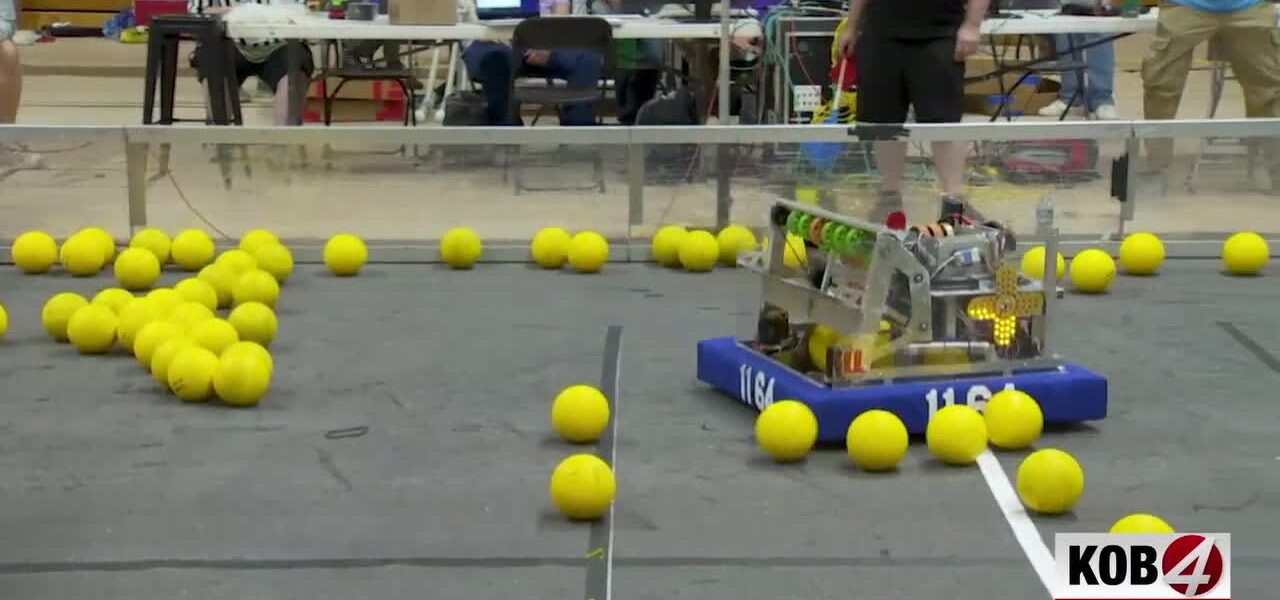
POLICY WIRE — ALBUQUERQUE, N.M. — It wasn’t the high-octane spectacle of a UFC fight or the political chess match of a global summit, but the whirring contraptions on a high school gymnasium floor in New Mexico told a tale arguably just as significant. A silent, albeit occasionally clunky, narrative unfolded recently at St. Pius High School, far from the polished boardrooms of tech giants or the halls of government. Young minds, galvanized by microprocessors and servo motors, gathered not for traditional athletic glory, but for something else entirely: dominion over metal and code.
It’s easy to dismiss a local event like this. Just another school happening, right? But the currents shaping our world, they don’t always roar; sometimes they whisper. And that whisper, you heard it clear as day in Albuquerque last Saturday. The quiet ambition, the focused intensity of these youngsters, they’re echoes of a much louder global conversation about innovation, workforce development, and the digital future of nations. [QUOTE_PLACEHOLDER]
For one afternoon, the staid institution that’s St. Pius High School briefly transformed into an arena where tomorrow’s engineers, perhaps even tomorrow’s innovators, flexed nascent capabilities. Indeed, St. Pius High School held their first ever robotics competition, an ostensibly modest affair. KOB 4 photojournalist Kai Hohman, with camera in hand, understood the moment. Kai Hohman spent the afternoon with the competitors, observing the subtle dance of youthful rivalry and burgeoning technical prowess.
Because let’s be real: this isn’t just about fun. This is about skill sets. It’s about problem-solving. And it’s about the relentless march of automation — and artificial intelligence that waits for precisely no one. These kids aren’t just messing around with glorified toys; they’re acquiring skills that economies — both local and global — will desperately covet. The competitive spirit was palpable, a testament to what happens when intellect meets practical application. They enjoyed a little friendly competition, the broadcaster noted, a wonderfully understated observation given the strategic maneuvering and troubleshooting involved. And make no mistake, Saturday’s event was a huge success, indicating a growing appetite for such technical challenges.
We’re talking about an ecosystem. These nascent engineers, coders, and troubleshooters represent the foundational layer for industries that are, right now, reshaping global power dynamics. Take the global educational robotics market. It was valued at $1.56 billion in 2022 and is projected to reach an astounding $5.53 billion by 2030, with a compound annual growth rate of 17.5% from 2023 to 2030, according to insights from Grand View Research. That isn’t small potatoes. That’s a juggernaut in the making, and America’s ability to keep pace rests heavily on nurturing talent from, well, places like Albuquerque.
But the ramifications extend beyond America’s borders. Far from the arid landscapes of New Mexico, nations like Pakistan, navigating their own intricate economic and political landscapes, watch developments like this with a keen, if often silent, interest. They’re acutely aware of the ‘tech gap’ and the urgency of nurturing STEM skills within their own youthful, burgeoning populations. The stakes are immense: economic self-sufficiency, technological sovereignty, and a secure future for millions of citizens. For years, Pakistan’s tech sector has shown promise, but scaling it requires a constant pipeline of skilled labor—exactly the kind of labor these competitions foster. Just as Pakistan watches closely as other regions grapple with challenges, it certainly observes the efforts of nations building robust STEM foundations.
📄 POLICY WIRE WHITEPAPER PUBLISHED: PAKISTAN'S NATIONAL SECURITY POLICY PRIORITIES
👉 READ BY CLICKING HEREAnd let’s consider the broader societal picture too. The commitment of a school to host their first ever robotics competition says something about institutional foresight. It shows a willingness to step beyond the playbook, to invest in future capabilities, rather than merely repeating past successes. There’s an irony here: the pursuit of the ultra-modern taking place in structures that often seem — how shall we say — historically robust. But it works. And it plants seeds. For all the discussions about America’s place in the 21st-century economic order, these are the proving grounds. It’s not just about what these students build today, it’s about what they will conceive, innovate, — and lead tomorrow.
What This Means
This Albuquerque event, like countless others across the developed world, serves as more than a weekend distraction for bright kids. It’s a critical component of national strategy, whether articulated directly or not. Economically, these competitions funnel talent into a rapidly expanding global tech market. The skilled workforce developed through STEM education initiatives isn’t just nice to have; it’s existential for competitive economies. Politically, nations that prioritize this kind of fundamental investment in their youth are positioning themselves for future influence and resilience in an increasingly tech-dependent global order.
The implications reach across continents. For countries in South Asia, including Pakistan, grappling with similar aspirations but often facing different resource realities, these local U.S. initiatives provide both inspiration — and a cautionary tale. Inspiration, in that the talent is universal. Caution, in that the infrastructure — and institutional support often lag. Nations that fail to cultivate homegrown technical expertise risk becoming perennial consumers of technology, rather than creators. Such a dynamic can perpetuate economic dependency and limit self-determination in an age where digital power equals real power. It’s a harsh lesson, sure, but a necessary one to consider from the humble backdrop of a high school gym. And these students, they’re shaping that future, one successful robot maneuver at a time.