


Beijing’s Aerial Gambit: The Hyper-Luxury EV and the Highway’s New Physics
POLICY WIRE — Shenzhen, China — The monotony of highway travel usually lends itself to predictable stretches of asphalt, unremarkable vistas, and the rhythmic drone of internal combustion—or...

POLICY WIRE — Shenzhen, China — The monotony of highway travel usually lends itself to predictable stretches of asphalt, unremarkable vistas, and the rhythmic drone of internal combustion—or increasingly, electric—engines. Yet, a recent viral spectacle ripped through that staid landscape, showcasing a hyper-luxury electric vehicle not merely driving, but briefly, undeniably, *jumping* mid-transit. It wasn’t an accident. It was a demonstration, a calculated, momentary defiance of gravity that has automotive enthusiasts, engineers, and regulators across continents scratching their heads—or perhaps, shielding their eyes.
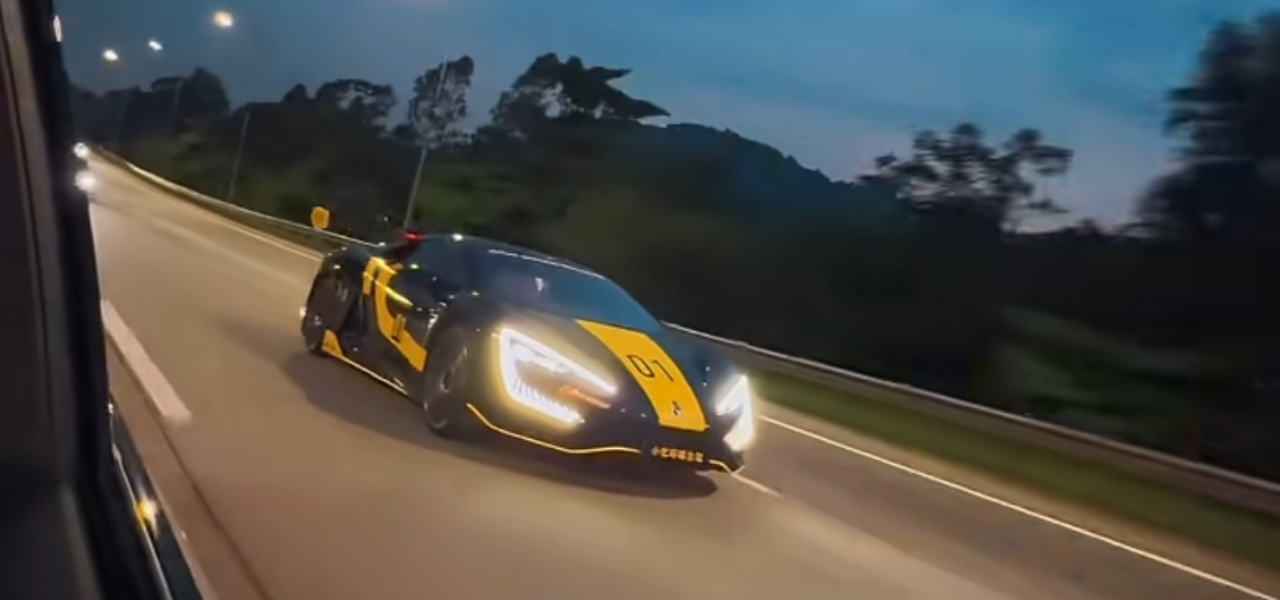
Footage circulating widely—seemingly originating from China’s digital public squares—depicts a Yangwang U9 Xtreme, a flagship electric supercar from BYD’s premium brand, performing an astonishing, if arguably ostentatious, aerial maneuver while moving at pace on an open road. For a fleeting instant, all four tires left the ground, only to settle back down with what appears to be remarkable composure. But don’t imagine some ramp-assisted stunt; this car did it on its own terms, using highly advanced suspension systems.
And what precisely was the intent here? Propaganda for innovation, most likely. The Yangwang U9 Xtreme isn’t some budget-friendly commuter; it’s a declaration. With a starting price tag in China of approximately 1.68 million yuan, which works out to about $233,000 USD, it positions itself firmly in the ultra-luxury segment. The car’s E4 Intelligent Nomadic Control System, featuring a vehicle body control technology known as Disus-X, is behind this sort of theatrics. It’s a hydraulic system that lets each wheel operate independently, capable of raising, lowering, and tilting the chassis. Sometimes it can even make the car bounce.
But the public’s immediate response wasn’t a sober dissection of hydraulic physics. It was pure, unadulterated shock — and delight. Many users online found themselves wondering, [QUOTE_PLACEHOLDER]. Because really, a car *doing that* just driving along? It’s not an everyday occurrence. This sort of event gets people talking, and in the interconnected digital sphere of places like Pakistan and other parts of South Asia, where vehicle enthusiasm—especially for cutting-edge Chinese tech—runs high, such videos spread like wildfire. They capture the imagination, even if the vehicle itself remains a distant dream for most.
The incident also highlights China’s relentless drive to dominate not just the electric vehicle mass market—where BYD already leads global sales in hybrids and pure EVs, reportedly selling 3.02 million new energy vehicles in 2023—but also the luxury performance sector. For years, European and American marques have held dominion over the hypercar landscape, symbols of prestige and technological supremacy. This airborne display by a Chinese-engineered machine is a clear statement that Beijing isn’t just playing catch-up; it’s actively rewriting the rulebook, pushing the boundaries of what consumers, and indeed roads, are expected to handle. It’s a calculated flex, a way to showcase engineering prowess with a dash of viral panache.
Naturally, there’s been chatter about safety—a reasonable concern when 2.5-ton vehicles momentarily become projectiles. What if something goes wrong? What are the implications for road design, for traffic laws, for the very concept of predictable motion on a highway? Regulators across the globe haven’t quite legislated for cars that decide to emulate low-altitude aircraft. And maybe they don’t have to; perhaps this is just a stunt for show, a bit of technological swagger that’s more about market perception than practical application. Still, the questions linger. Will we soon see other manufacturers attempting similar aerial parlor tricks to attract eyeballs in an increasingly crowded market?
China’s economic influence in regions like South Asia is already profound. The infrastructure, the burgeoning tech scene—it’s all linked. Pakistan, for instance, sees significant investments from China, and the influx of Chinese vehicles, from affordable sedans to increasingly upscale SUVs, is changing the automotive landscape there. The spectacle of a domestic Chinese hypercar doing a literal leap adds a layer of aspirational branding, hinting at a future where cutting-edge technology isn’t exclusively a Western domain but an increasingly global one, with Asian titans leading the charge.
This car—and its antics—doesn’t just move people; it moves perceptions. It challenges established norms — and certainly gets everyone on their digital soapbox. But is it genuinely groundbreaking? Or just a very expensive party trick?
What This Means
This episode, bizarre as it might appear, isn’t simply about a fancy car doing a jump. It’s a pointed commentary on several geopolitical — and economic trends. First, it underscores China’s rapid ascent in the high-tech automotive sector. Not content with mass-market dominance, Chinese brands are now making aggressive forays into luxury and performance segments historically held by legacy European and American brands. This isn’t merely commercial competition; it’s a play for technological prestige — and soft power. Demonstrations like this aim to shift global perceptions of ‘Made in China’ from mere mass production to innovative engineering.
Second, the incident highlights the blurring lines between digital spectacle — and product promotion. In an attention-deficit economy, virality is currency. This hyper-engineered stunt served its purpose perfectly: global news coverage for next to nothing, generating buzz far beyond traditional advertising campaigns. It’s a modern marketing masterclass wrapped in a controversial act of engineering bravado. Such tactics appeal directly to a digitally savvy consumer base that exists everywhere from Silicon Valley to Lahore.
Finally, there’s the underlying tension between innovation — and regulation. As automotive technology gallops ahead, sometimes, as this instance shows, literally leaving the ground, regulatory frameworks struggle to keep pace. What are the legal, ethical, and safety implications of vehicles designed for such extreme capabilities on public roads? Policymakers, particularly in rapidly developing economies where new tech adoption is often swifter than legal adaptation, might find themselves playing a perpetual game of catch-up. Nations like Pakistan, integrating more deeply with global manufacturing supply chains, particularly from China, will face their own domestic policy challenges as these cutting-edge—and sometimes quirky—innovations inevitably reach their shores. It’s a messy transition from staid automaking to something approaching aerospace, and we’re all watching—some of us, seemingly, from just inches above the pavement. One can imagine a scenario where local transport authorities grapple with the finer points of car suspension that can enable a fleeting flight on already congested arterial routes, presenting an entirely new set of legislative and infrastructural hurdles to clear. And as countries like Bangladesh consider their own industrial policies, such advancements only complicate the broader global economic chess game.