

Courtroom Drama Unfurls: Defense Scrutinizes Evidence in Trump Ally’s Murder Trial
PROVO, Utah — What transpired inside the Utah Valley University courtroom wasn’t just a legal skirmish; it was a deeply human tableau—a raw spectacle of grief, legal wrangling, and the grim...

PROVO, Utah — What transpired inside the Utah Valley University courtroom wasn’t just a legal skirmish; it was a deeply human tableau—a raw spectacle of grief, legal wrangling, and the grim mechanics of justice trying to assert itself against the whispers of conspiracy. This past week saw prosecutors lay out their cards, a hand they claim is stacked with evidence, while the defense, as it always must, chipped away at its foundation.
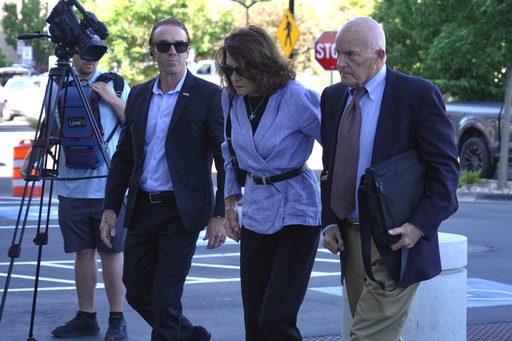
Families watched, tear-stricken, as surveillance video—reportedly showing the accused, Tyler Robinson, moving across a rooftop—played out on screens. Erika, the widow of conservative activist Charlie Kirk, clutched a tissue. And when that shadowy figure in the recording dropped to a crawl, she found solace in the arms of Kirk’s mother, Kathryn. Just two women, bound by an unspeakable loss, huddled together as the digitized horror unfolded. It wasn’t about jurisprudence in that moment; it was about human frailty.
Lawyers representing Robinson, who’s charged with aggravated murder and potentially staring down the death penalty, went to work immediately. They’re trying to inject doubt into what Chief Deputy Utah County Attorney Chad Grunander emphatically called an “overwhelming” case. Grunander believes it’s “devastating” to the defense, but attorneys like Michael Burt aren’t swayed, at least not publicly. Their strategy? Prod at the edges, find the fissures, even in what seems unimpeachable. The weeklong preliminary hearing has attracted a media circus, too. People actually lined up, some even overnight, for one of just 14 seats in the courtroom reserved for the public—a stark statistic underscoring the case’s draw, confirmed by court records.
The prosecution’s arsenal includes DNA analysis they say links Robinson not just to the suspected murder weapon but also to a tool allegedly used to etch messages onto bullet cartridges. Then there’s the reported confession from Robinson’s former roommate, Lance Twiggs. A recorded interview played for the court quoted Twiggs saying Robinson expressed remorse for the shooting. The day after Kirk was shot, Robinson allegedly cried — and told Twiggs he wishes he hadn’t done it. Later, Robinson reportedly posted, “it was me at UVU yesterday,” in a chat room—evidence the defense tried, but failed, to keep out.
But the defense didn’t just sit there. They punched back, landing a specific blow against the seemingly infallible science of DNA. Burt grilled Caitlin Oliver, a forensic biologist with the Bureau of Alcohol, Tobacco, Firearms — and Explosives. “If you had a lot of DNA on your hand, we shook hands and I went to pick up an exhibit, a gun, and I touched the trigger of it, your DNA could be on that trigger, right?” Burt asked. Oliver’s response was precise: [QUOTE_PLACEHOLDER] It’s not a full recantation of the evidence, no, but it plants the seed of reasonable doubt—the whole point of their operation. Defense counsel made sure to note that government policies don’t allow analysts to say that DNA evidence is “infallible” or that it has a “zero error rate.” Smart move, if you ask me.
This whole ordeal plays out against a backdrop of deep political division, because Kirk wasn’t just some guy; he was a 31-year-old confidant of President Donald Trump. Prosecutors are suggesting Robinson targeted Kirk due to his political views, which could add enhancements to the potential sentence. Twiggs, the roommate, claimed Robinson sometimes talked about politics, including Trump, but never specifically about Kirk. This contradiction, however minor, adds another layer of complexity. The human tendency to attribute political motives, whether truly present or projected, always complicates such high-profile cases—we’ve seen this pattern unfold from Washington to Islamabad, where assassinations of prominent political figures often breed fertile ground for public conjecture, even when the evidence seems cut and dry.
And so, Judge Tony Graf will mull it over, having heard days of testimony, seen the tears, and weighed the technical arguments. He’ll decide if this messy, highly charged saga moves forward to trial on September 1. It’s a heavy decision, considering everything.
What This Means
The judicial proceedings against Tyler Robinson aren’t merely a local murder trial; they’re a barometer for the broader American legal and political landscape. Politically charged crimes, especially those touching high-profile figures like a Donald Trump confidant, often invite a degree of scrutiny and speculation that can distort the facts in the public consciousness. What happens in court here, specifically regarding the public presentation of “overwhelming” evidence versus the defense’s nuanced attacks on its reliability, will serve as a de facto referendum on the justice system’s capacity to remain impartial in the face of intense partisan fervor. But it also highlights something more universal: how legal frameworks grapple with emerging technologies like DNA evidence and digital communication, and how these elements, supposedly objective, can still be dissected and challenged by skilled attorneys. It’s a dynamic at play from courthouses in Provo to Karachi, where the public’s perception of guilt or innocence can be heavily swayed by rhetoric as much as by data. For policymakers, especially those focused on criminal justice reform or judicial efficiency, this trial underscores the enduring need for absolute clarity in evidence presentation, even when faced with the human temptation to use courts as a political stage. The economic impact of legal delays, a phenomenon globally acknowledged, further exacerbates the situation.
Because the case carries the shadow of political motivation, its resolution—or lack thereof—could resonate beyond courtrooms. It could become a talking point in political rallies, or another example used to fuel the fire of online conspiracy theories that have become so prevalent, echoing phenomena observed across South Asia where information, and misinformation, spreads like wildfire during politically sensitive events. The meticulous, almost painstaking pace of the preliminary hearing, as noted by legal experts, also points to a judiciary grappling with a voluminous case in the era of perpetual media observation. This kind of transparency, though messy, is intended to dispel public doubt, even if it cannot satisfy every single voice in the cacophony. It’s a painstaking balancing act, no doubt, between delivering justice — and maintaining public trust.