

Summer’s Invisible Scourge: Parasite Surge Unmasks Fragile Global Food Chains
POLICY WIRE — Washington D.C. — It’s an inconvenient truth, lurking in the very bounty of summer itself: that glistening cucumber, those vibrant herbs, a crisp, healthy salad. For thousands across...

POLICY WIRE — Washington D.C. — It’s an inconvenient truth, lurking in the very bounty of summer itself: that glistening cucumber, those vibrant herbs, a crisp, healthy salad. For thousands across America, this season’s fresh produce has become an invisible conduit for misery. This isn’t just about a bad batch; it’s about a tiny parasite — Cyclospora cayetanensis — laying bare the often-ignored vulnerabilities of our intricate, globalized food supply. And it’s not pretty.
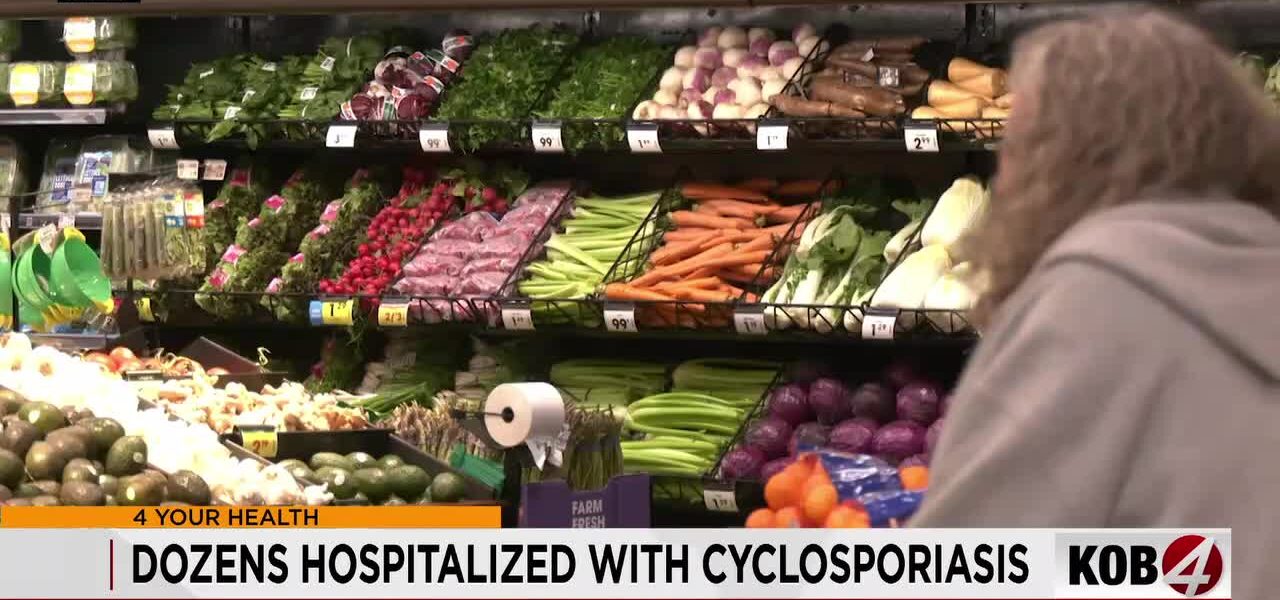
While most folks are focused on beach plans or backyard barbecues, nearly 3,000 individuals nationwide have found themselves unexpectedly sidelined by this nasty gut invader. New Mexico, a state usually battling wildfires or political spats (they’ve got plenty), isn’t immune; nine confirmed cases there, part of a larger unsettling trend. But the numbers — 90 in Colorado, 48 in Texas — don’t really capture the gut-wrenching fatigue, the days or weeks of debilitating diarrhea. For more than 80 unlucky Americans, it meant a hospital bed. Because let’s be honest, you don’t just ‘power through’ cyclospora. It powers through you.
“This isn’t just a simple upset stomach; it’s an infection that can seriously knock you off your feet,” warned Dr. Fiona Miller, a senior epidemiologist with the Centers for Disease Control and Prevention (CDC), in a recent public briefing. “We’re seeing numbers significantly higher than this time last year. It’s a recurring headache for public health officials, a relentless game of catch-up against an almost invisible foe.” And Miller isn’t wrong. This microscopic adversary thrives in contaminated environments, easily hitching a ride on unwashed—or even just rinsed—fruits and vegetables.
But the true culprit often sits thousands of miles away, shrouded in a complex web of agricultural practices, sanitation standards, and lax oversight. Think about it: a country like Pakistan, for instance, a major exporter of fruits and vegetables to markets around the globe, operates with agricultural practices that can, at times, diverge significantly from U.S. regulatory ideals. Water sources for irrigation can be compromised; field hygiene, a perennial challenge. When demand for fresh produce pushes year-round supply, often from regions with less stringent or less consistently enforced safety protocols, the risk climbs. It’s an equation that prioritizes volume and low cost over — well, over healthy bowels, apparently.
We’re importing roughly half of our fresh fruit and nearly a third of our fresh vegetables, amounting to billions of pounds annually, according to the USDA’s Economic Research Service. That’s a staggering amount of food to meticulously track from farm to fork. One senator, long vocal about food import scrutiny, minced no words. “Every fresh berry, every sprig of cilantro we import is a point of potential failure if we aren’t absolutely airtight on our inspection protocols,” stated Senator Richard Durbin (D-IL) to Policy Wire. “We can’t just trust; we’ve got to verify, — and frankly, we’re not verifying enough to keep up with the sheer volume. It’s a systemic problem that makes consumers bear the brunt.” It’s a statement that, however obvious, often gets lost in the political hurly-burly.
📄 POLICY WIRE WHITEPAPER PUBLISHED: PAKISTAN'S NATIONAL SECURITY POLICY PRIORITIES
👉 READ BY CLICKING HERERegulators will tell you they’re doing their best. But the sheer volume — and speed of international trade means food safety often plays whack-a-mole. You cook food to kill the bug; you rinse produce to reduce the risk. And experts advise washing countertops — and cutting boards like your life depends on it. Small steps, but against an industry that ships lettuce from Mexico, berries from Chile, and herbs from all points east, they feel a bit like bringing a squirt gun to a house fire. And then you just hope.
What This Means
The persistent cyclospora outbreaks aren’t just a seasonal health alert; they’re a recurring alarm bell for policy makers, signaling profound weaknesses in our global food security infrastructure. Economically, repeated outbreaks erode consumer confidence, impacting sales for an agricultural sector that can’t afford more volatility. They can also trigger costly recalls and — potentially — trade disputes, should the source consistently point to a specific exporting nation. This isn’t some abstract threat to national security; it’s quite literally about what’s on your dinner plate.
Politically, the issue poses a thorny challenge for administrations balancing trade agreements with public health demands. It’s a bind: do you impose stricter import tariffs or inspection regimes, risking higher food prices and retaliatory measures from trading partners? Or do you allow the current system to limp along, hoping outbreaks remain geographically contained? The fact that a single, microscopic parasite can consistently bring such widespread, albeit localized, disruption suggests current approaches aren’t working. It puts a stark spotlight on the often-underfunded state of food safety enforcement, especially for fresh produce arriving from diverse and distant locales. it speaks to a broader failure to incentivize – or mandate – stringent farm-to-table hygiene practices within the very regions from which we source much of our food. That lack of investment in preventative measures abroad, whether through foreign aid or strict import conditions, ultimately costs us dearly at home. It’s a bitter pill to swallow, sometimes literally.