


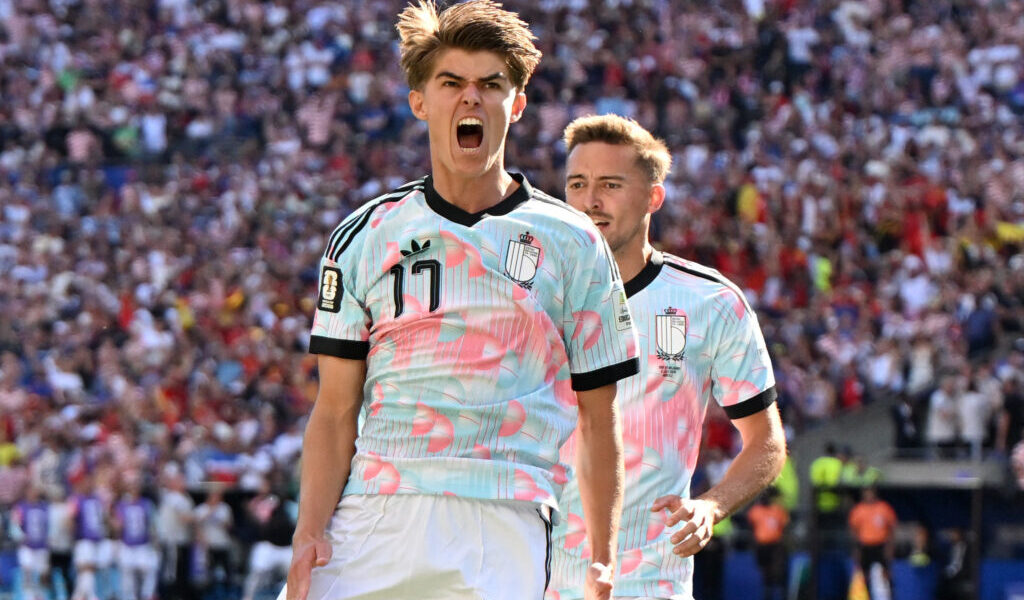
Beyond the Pitch: Spain, Belgium, and the Global Spectacle’s Economic Undercut
POLICY WIRE — Seattle, WA — It’s a Friday. Another Friday, another quadrennial global carnival unfolding across North American fields. And on one such pristine turf in Seattle, two European...

POLICY WIRE — Seattle, WA — It’s a Friday. Another Friday, another quadrennial global carnival unfolding across North American fields. And on one such pristine turf in Seattle, two European footballing titans, Spain and Belgium, will clash in a quarterfinal bout, their sights firmly fixed on a World Cup 2026 semifinal berth against France. But if you think this is merely about 90 minutes of elegant footwork and desperate tackles, you’ve missed the deeper currents at play.
Because beneath the thunderous cheers and the commentators’ hyperbole lies an intricate web of geopolitics, colossal sums of money, and the quiet assertion of national identity on a global stage. The official narrative, naturally, concerns who advances and who doesn’t—but for Policy Wire, the story’s never quite so simple.
Both teams, formidable — and replete with top-tier talent, arrive having dispatched opponents with clinical efficiency. Spain, exhibiting a suffocating command of the ball, edged out Portugal after a 3-0 rout of Austria. Belgium, meanwhile, powered through Senegal 3-2 and then humbled the United States 4-1, showcasing a potent attacking philosophy. It’s high drama, no doubt, but the actual drama has a heftier price tag.
“These tournaments, often seen purely as sport, are in fact economic engines,” remarks Dr. Anya Sharma, lead economist at the Global Sports Analytics Group. “Think of the advertising spend, the licensing, the burgeoning digital subscriptions—it’s a colossal revenue stream for hosts and participants alike. Every goal has a shadow price tag.” FIFA, to put it plainly, isn’t just selling a game; it’s selling an experience, a narrative, and a piece of national pride to an eager planet. For the 2022 World Cup in Qatar, for instance, FIFA reported an estimated $7.5 billion in revenue, dwarfing previous tournaments and underscoring the raw financial muscle behind the beautiful game.
And it’s not just the immediate cash flow. This competition, with its fevered global audience, offers an unparalleled platform for soft power projection. Nations aren’t just sending footballers; they’re sending cultural ambassadors, branding their country’s resilience, ingenuity, and spirit directly into billions of homes. From Europe to the burgeoning fanbases across Pakistan and the broader South Asian and Muslim world—regions where football’s popularity continues a steep upward trajectory, often rivaling cricket—these matches become cultural touchstones, moments of collective experience that transcend borders.
The intensity on display isn’t just for glory, not truly. It’s for a complex blend of prestige, economic advantage, — and political messaging. We’re watching not merely athletes, but highly visible representatives of deeply competitive national entities, each vying for supremacy on a playing field that’s anything but level.
📄 POLICY WIRE WHITEPAPER PUBLISHED: PAKISTAN'S NATIONAL SECURITY POLICY PRIORITIES
👉 READ BY CLICKING HERE“National identity, for better or worse, is deeply intertwined with athletic success,” observed Jean-Luc Dubois, a seasoned analyst specializing in European socio-political trends at the Brussels Policy Forum. “When Spain plays Belgium, it’s not just 22 men on a pitch; it’s a symbolic battle between two economic and cultural forces, reverberating through diaspora communities worldwide. And politicians, trust me, are watching just as closely as the ardent supporters—calculating the electoral mood, assessing national morale.” You’d better believe they’re. For some, it’s the only game in town.
What This Means
The outcome of Friday’s match will decide more than just a bracket. It shapes a nation’s immediate narrative, impacting everything from tourist interest to potential foreign investment. A victory here is a boon for national confidence, a testament to efficiency and collaboration, traits easily transferable (in the public imagination, at least) to a country’s economic and political landscape. It’s advertising on the grandest scale, unfiltered — and emotionally charged. A semifinal berth for either Spain or Belgium, then, isn’t just a sports headline; it’s a policy win, enhancing global perception and amplifying its voice—a grand illusion of athletic triumph masking serious commerce. The financial windfall for broadcasters and related industries (think fuboTV’s streaming push, a subtle but persistent part of this sprawling apparatus) ensures the machine keeps churning, relentlessly monetizing national fervor. Even regions far removed, like the Arabian Gulf, have embraced this spectacle, evident in Qatar’s historic hosting and future ambitions, seeing it as an avenue to project modernity and openness, however selectively.
Ultimately, this contest highlights the blurred lines between sports, economics, — and international relations. It’s a multi-billion dollar enterprise, where every kick, every save, and every roar from the stands isn’t merely athletic prowess on display but a finely tuned component of a larger, global game of influence and finance. That’s why Policy Wire’s watching. And it’s why you should be too.