


Red Devils’ Reckoning: The High-Stakes Calculus Behind Manchester United’s €45 Million Standoff
POLICY WIRE — London, UK — It’s a drama played out in countless boardrooms, but rarely with such a public, protracted, and perhaps, rather embarrassing, display of indecision. The global football...

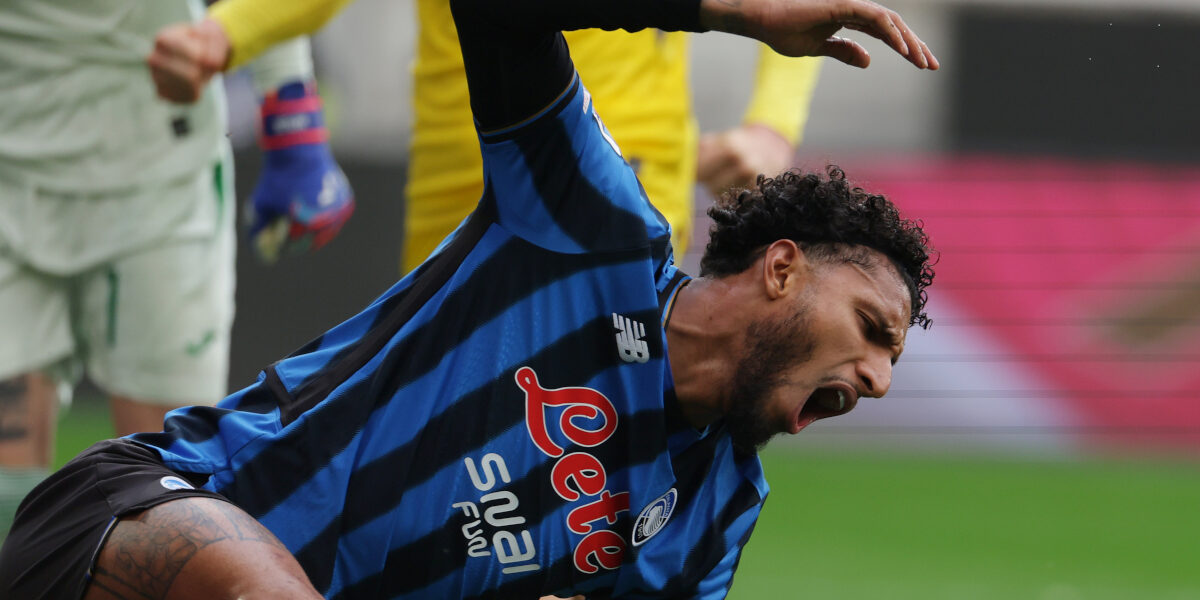
POLICY WIRE — London, UK — It’s a drama played out in countless boardrooms, but rarely with such a public, protracted, and perhaps, rather embarrassing, display of indecision. The global football transfer market, typically a carnival of speculation and sudden declarations, has been treated to an almost operatic deferral. Brazilian midfielder Ederson, poised for a princely €45 million move to Manchester United, now finds himself adrift in a commercial purgatory, caught between a bewildering flurry of scans and a notoriously bureaucratic buying entity.
The saga began, predictably, with an agreement — €40.5 million upfront, plus €4.5 million in add-ons, reportedly ironed out as far back as June 2nd. But Ederson, representing Brazil in the 2026 World Cup stateside, couldn’t complete the requisite deep-dive medical until later. Initial assessments were conducted abroad, certainly. But upon his arrival, a series of subsequent examinations began, dragging on for 48 hours. Then came the whispers, loud — and clear from Italy’s usually reliable sports media, that the deal was off. Manchester United had supposedly withdrawn, citing unspecified concerns after those exhaustive follow-up tests.
And just when the eulogies for the transfer were being drafted, new voices emerged, denying any finality. BBC Sport and Sky Sports Deutschland countered, stating definitively that the Red Devils hadn’t yet made up their minds. Atalanta, meanwhile, stands firm, seemingly perplexed by the English club’s extended deliberation. It’s a messy spectacle, one that strips back the glamour to reveal the cold, hard, mercantile machinations underpinning modern football.
This isn’t merely about a single player; it’s a stark spotlight on the increasing financial scrutiny and paranoia that defines top-tier football transactions. Clubs aren’t just buying a player; they’re acquiring a meticulously cost-averaged asset, its future performance curve projected through statistical models, its market value a fickle thing that can pivot on a single MRI image. Because, really, what exactly *is* going on? Is it a genuine medical flag, or is this high-stakes brinkmanship—a desperate attempt to chip away at the already agreed-upon price, perhaps capitalizing on the player’s precarious situation?
“Player welfare and club investments demand uncompromising due diligence,” a Manchester United spokesperson, who asked not to be named, told Policy Wire in an email. “We operate in a highly competitive market where every acquisition, particularly one of this magnitude, undergoes rigorous scrutiny. It’s simply how we operate, for better or worse.” But it’s this very ‘rigorous scrutiny’ that appears to be dragging the process through the mud. Contrast this with Atalanta’s perspective: “Ederson is a professional, a formidable talent,” asserted a senior source at the Italian club. “His medical record is clear; we have no reservations. Manchester United, like any major entity, has its own complex internal mechanics, but we certainly expected a more definitive resolution by now.”
Such protracted uncertainty has palpable consequences. For Ederson, it’s a career on hold, an emotionally taxing limbo. For Atalanta, it ties up a significant transfer fee they’ve already budgeted for, delaying reinvestment. And for Manchester United, it’s yet another public relations skirmish in a season dotted with them. The narrative of an organization struggling to make clean, decisive moves tends to stick, particularly with a fan base famously demanding.
📄 POLICY WIRE WHITEPAPER PUBLISHED: PAKISTAN'S NATIONAL SECURITY POLICY PRIORITIES
👉 READ BY CLICKING HEREConsider the sheer scale of the global game: Global football transfer spending hit a record $9.63 billion in 2023, according to FIFA’s Global Transfer Report. This isn’t pocket change we’re discussing; it’s an industry. And in that industry, an almost €50 million transaction getting hung up on the back of ambiguous medical data isn’t just a curiosity—it’s a sign of a larger, perhaps more insidious, trend. One where clubs leverage every piece of information to gain a financial edge, even if it means publicly, inadvertently, or not so inadvertently, casting doubt on a player’s physical condition.
The ripple effects of such indecision extend far beyond European stadia. In massive emerging markets for football, from North Africa to Pakistan and the broader Muslim world, legions of fans keenly track every move by these European giants. A perceived dithering over a high-profile transfer by a club with Manchester United’s history can subtly impact brand perception and allegiance—not just amongst existing supporters but also among a generation of new fans who’s loyalty is increasingly courted by commercial campaigns and sporting success alike. They’re buying into more than just a team; they’re buying into a brand’s integrity. And this whole messy situation? It doesn’t exactly scream seamless efficiency.
What This Means
This prolonged dance isn’t just about a potential injury; it’s about power dynamics and economic recalibration in a post-pandemic football landscape. Manchester United, a behemoth, seemingly testing the resolve of Atalanta, a smaller but increasingly savvy Italian outfit. The Italian media’s early conviction that United simply ‘changed their minds’ and the counter-narrative of an unfinished process point to either masterful manipulation or a club genuinely struggling with internal clarity. It raises uncomfortable questions about player agency—does Ederson have any recourse if United are just playing a game? this saga reflects the opaque, often ruthless, nature of the contemporary sports-industrial complex, where a medical report can become a weapon in financial negotiations. Just as diplomatic stalemates hint at underlying strategic recalculations, this transfer hold-up suggests Manchester United might be reconsidering not just Ederson’s physical state, but perhaps its own broader recruitment strategy or allocated budget. This isn’t just football; it’s a microcosm of high-stakes corporate maneuvering, cloaked in sporting drama, with a human being’s career caught squarely in the middle.