

Damascus Calling: Macron’s Bold Leap Realigns Europe’s Syria Stance
POLICY WIRE — Paris, France — The faint aroma of diplomatic pragmatism, long suppressed, finally hung in the air over Damascus this week. It wasn’t an olive branch, not exactly. More like a heavily...

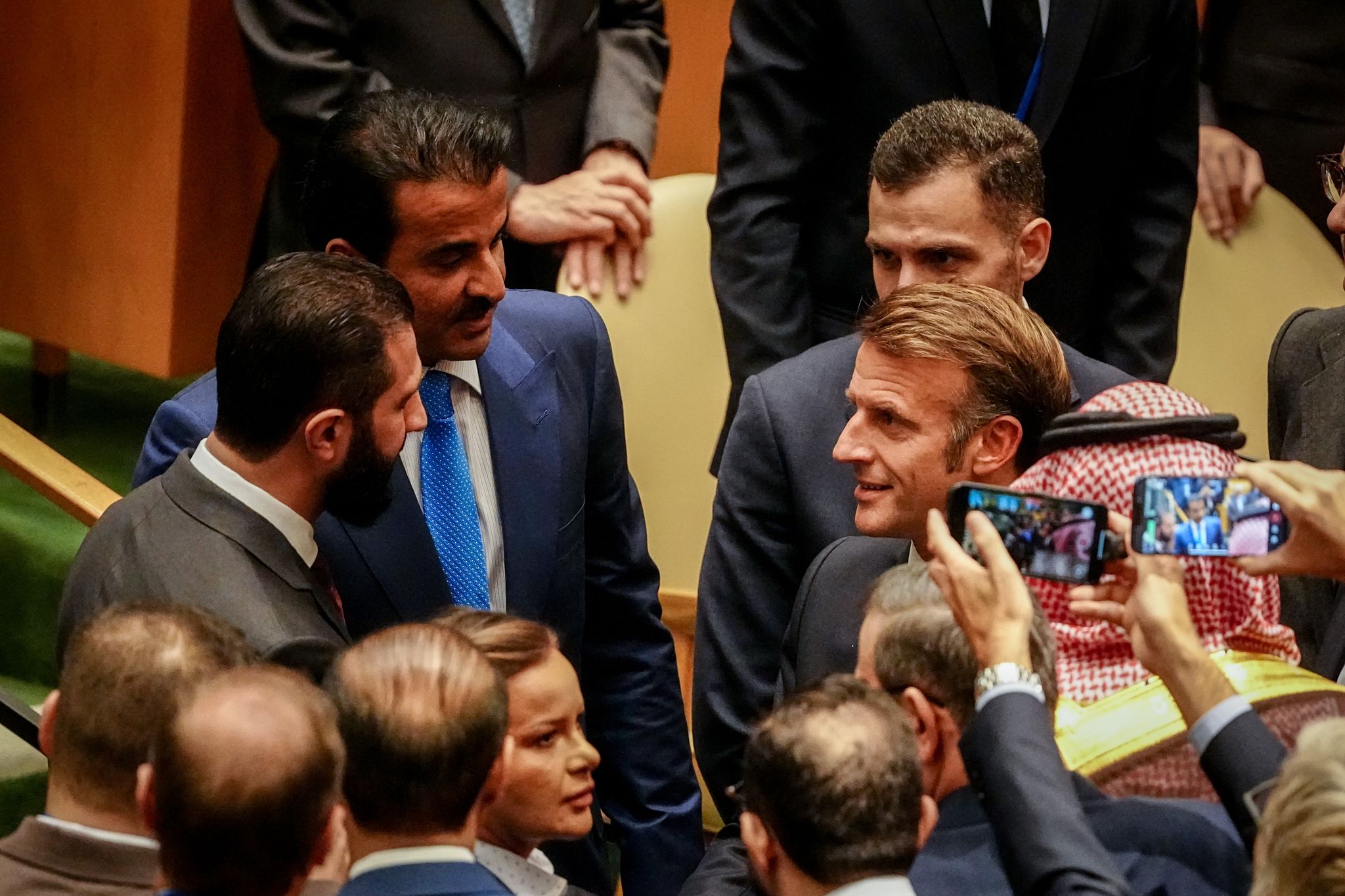
POLICY WIRE — Paris, France — The faint aroma of diplomatic pragmatism, long suppressed, finally hung in the air over Damascus this week. It wasn’t an olive branch, not exactly. More like a heavily armored peace pipe, lit with the quiet flicker of realpolitik. Emmanuel Macron, the perpetually disruptive French president, strolled onto the international stage, once again, making an audacious call that’ll leave plenty of world leaders — particularly those across the Atlantic—scratching their heads. He became the first Western head of state to visit Syria since its civil war turned that nation into a global pariah. A truly eyebrow-raising move, wasn’t it?
Nobody expected this. Not really. Years of official condemnation, sanctions piled higher than Syrian rubble, and the collective ghosting of President Bashar al-Assad’s regime by the West — all that evaporated the moment Macron’s plane touched down. France, always prone to a bit of strategic individualism, just peeled away from the unified Western front, declaring that an unworkable boycott simply doesn’t serve Europe’s messy, often inconvenient, interests anymore. It’s about stability, they’ll tell you. But also, it’s about control, or at least a desperate grab for it.
“We can’t ignore the realities on the ground, however unpalatable,” President Macron reportedly told his advisors before the trip, his gaze fixed on maps of the Levantine chaos. “Security for France—and for Europe—often begins far beyond our borders. If we want any say in the fight against resurgence, in managing refugee flows, in keeping Tehran’s long shadow from completely swallowing the region, then simply wishing Assad away isn’t a strategy. It’s an abdication.” That sentiment, delivered with typical French candor, speaks volumes about a growing frustration with diplomatic inertia.
And what frustrations those are. Syrian society remains deeply fractured, its economy in tatters, its future precarious. But you know, politics sometimes trumps everything. Over 6.6 million Syrians remain refugees or asylum seekers globally, a staggering figure reported by the UNHCR for early 2024, emphasizing the immense humanitarian challenge that refuses to be ignored. Many of them ended up on Europe’s doorstep. Macron’s visit, then, looks like a calculated gamble: better to deal with the devil you know, maybe, than suffer the fallout of perpetual, intractable chaos. It’s certainly a less-than-ideal solution, isn’t it?
The global ripple effect? Oh, they’re already starting. Nations across the Muslim world, many of whom have themselves grappled with internal dissent and external pressure, are watching closely. For a country like Pakistan, balancing its intricate relations with the Saudi-led bloc and a powerful Iran, any shift in the Syrian calculus is noteworthy. An Assad strengthened by French recognition might alter the delicate regional power dynamics, influencing everything from trade routes to the soft power battles being waged daily across the broader Middle East. It’s a tightrope act for Islamabad, as for so many others, and this French move just made that rope a little slipperier.
“This isn’t about forgiveness; it’s an admission that strategic interests, not morality, often drive foreign policy,” observed Fawzia Yusuf, a respected geopolitical analyst based in Islamabad, in a recent interview with Policy Wire. “But at what cost to humanitarian principles? And what signal does it send to other besieged autocrats globally, including those closer to home?” Her question hangs heavy, pregnant with implications that extend far beyond the sands of Syria. It forces everyone to confront the uneasy compromise that nations, particularly European ones, feel pushed toward when their own backyards get hot.
Casual observers might think Europe has grown a backbone. Others might argue it’s just plain exhaustion, coupled with a desperate need to slow immigration flows and counter religious extremism spilling over. They’ve decided to play a longer game, perhaps. And it’s one where the enemy of your enemy — sometimes even the devil himself — starts looking a bit more approachable. This is what pragmatism tastes like, apparently, — and it’s awfully bitter.
What This Means
Macron’s unheralded trip isn’t just a one-off photo op; it signifies a tectonic shift in how European powers—specifically France—view the future of Syria and, by extension, their role in Middle Eastern stability. Don’t expect immediate dominoes to fall; Germany won’t be sending ambassadors to Damascus next week. But this unilateral French action effectively breaks the Western consensus of Assad’s absolute isolation. It hints at a gradual, perhaps grudging, re-engagement strategy. The implications are enormous. It empowers Assad, certainly, by weakening the moral high ground the West once held, allowing him to portray himself as a legitimate leader in control, rather than a pariah clinging to power. It also provides a strategic entry point for Europe to push its own interests—counter-terrorism, humanitarian aid, stemming migration—directly with Damascus, bypassing Washington’s historically more rigid stance. Economically, this could pave the way for French companies to participate in Syria’s nascent, complex reconstruction efforts, giving Paris a distinct advantage over its Western peers. However, the move is a moral quandary; it tacitly legitimizes a regime accused of grave human rights abuses, potentially undermining future efforts to hold Assad accountable. It suggests Europe might be prioritizing immediate security and economic gains over longer-term democratic ideals, reshaping not only its relationship with Syria but also challenging the very fabric of multilateral diplomacy in the region.