


Desert Dreams & Global Ambitions: New Mexico’s Unexpected World Cup Frenzy
POLICY WIRE — ALBUQUERQUE, N.M. — When the last echoes of national sporting hopes fade, and the teams closest to home — the ones bearing the banners of neighbors and compatriots — have packed their...

POLICY WIRE — ALBUQUERQUE, N.M. — When the last echoes of national sporting hopes fade, and the teams closest to home — the ones bearing the banners of neighbors and compatriots — have packed their bags, one might reasonably expect the collective enthusiasm to follow suit. But the Land of Enchantment, tucked away from the coastal hubs and urban sprawl often associated with the world stage, apparently didn’t get that memo. And its residents, quite stubbornly, kept right on going.
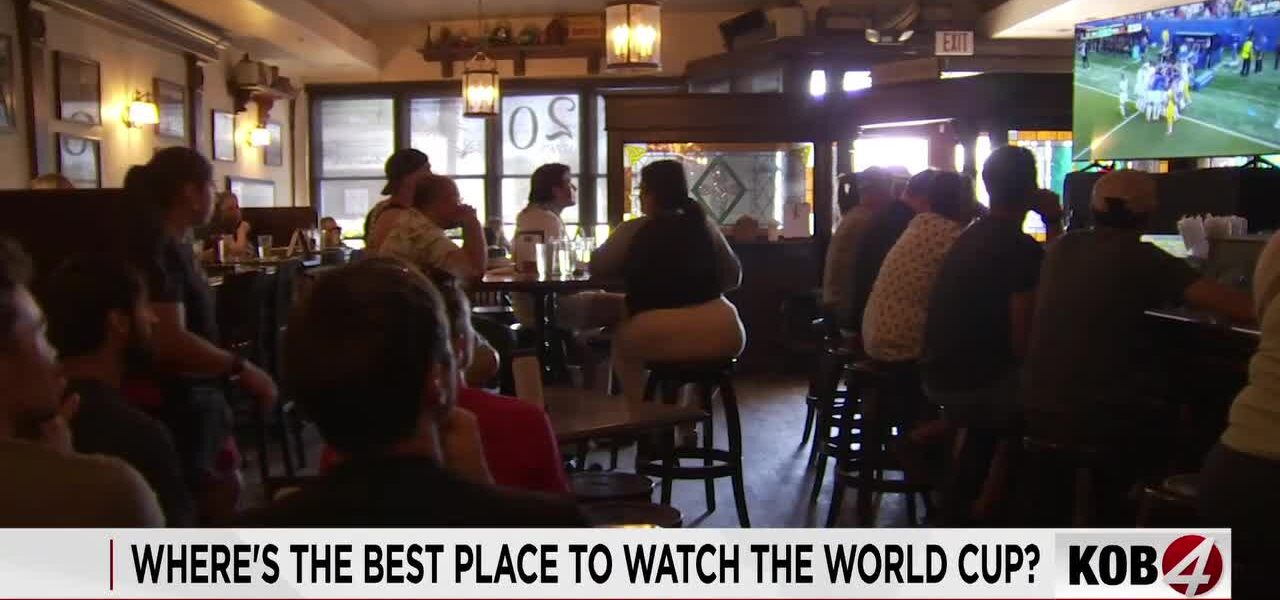
It wasn’t a sudden surge of patriotic fervor for distant lands; it was, perhaps, something more foundational. A human desire for spectacle, shared experience, — and the fleeting drama of a globe-spanning contest. That’s what kept the lights on — and the taps flowing at establishments like Two Fools Tavern in Nob Hill. Indeed, the atmosphere there was so charged, so palpable, it felt less like a quiet New Mexican watering hole and more like a feverish European fan zone, a testament to football’s strange, ubiquitous charm. [QUOTE_PLACEHOLDER]
On a Thursday afternoon, despite the knockout blows dealt to hometown favorites including the USA and Mexico, the place was just stuffed. People jammed into the tavern to watch France — an inevitable, clinical, some might say *boring* titan of the tournament — dispatch Morocco with a decisive 2-0. Morocco, the true Cinderella story, had captured not just the imaginations of a continent, but a considerable segment of the global audience, offering a narrative of grit and unexpected triumph against a stacked deck. Its run had become more than just about football; it was about identity, defiance, and a potent symbol of achievement for the entire Arab and Muslim world. Imagine the weight, then, of an entire diaspora’s hopes resting on those shoulders—a weight that resonated from Casablanca all the way to Karachi, even if briefly and symbolically. Policy Wire previously explored similar diasporic echoes with Pakistan’s Lost Cargo, Lingering Questions, highlighting how events abroad ripple through communities here.
It’s this resilient, almost primal draw that seems to defy logical decline. We’re talking about a phenomenon robust enough to elevate a local Albuquerque pub into national recognition. According to Bovada Sportsbook, Two Fools Tavern actually ranked ninth in the country among independent sports bars for the World Cup final, a finding based on a survey that dug into Google review scores. Not too shabby for a state often overlooked in the national sporting discourse. And it’s an economic boon, too, for those establishments shrewd enough to tap into this persistent public appetite.
The tavern was packed Thursday afternoon, showcasing a particular brand of cultural inertia. It tells you something about the power of an organized global event, a kind of social gravitational pull that transcends mere national allegiances. Once invested in the World Cup cycle, once a part of the global rhythm, pulling back simply isn’t an option for many. It’s not just about the game; it’s about being part of something bigger, something fleeting, something shared. And it shows that, for all our differences, a compelling story—be it an underdog’s inspiring run or a powerhouse’s steady march—is still universally irresistible.
But there’s also a subtle economic undercurrent. For a state like New Mexico, whose economic narrative doesn’t often feature high-flying global tourism or massive sporting events, local establishments finding national recognition via something as basic as sports bar attendance is notable. It suggests a market, however niche, for global cultural engagement. This isn’t just about watching a match; it’s about commerce, community, and capturing attention in an increasingly fragmented media landscape. It’s good business, pure and simple. Or, at least, simpler than trying to predict commodity prices or electoral outcomes.
What This Means
The continued, indeed robust, engagement of populations in seemingly peripheral regions like New Mexico with global sporting events — even after their primary national interests are out of the running — signals several broader implications. Economically, it underscores the sticky revenue potential of large-scale, well-marketed global entertainment. Local businesses that successfully position themselves as hubs for these transient cultural phenomena can achieve outsized, often unexpected, financial gains and even national recognition, as evidenced by Bovada’s data point. It’s a reminder that consumer dollars don’t solely chase national teams; they follow narrative — and atmosphere. This isn’t just about sports bars; it’s about any industry that can create or capture shared emotional experiences. From a political economy perspective, this sustained engagement can also be seen as a low-stakes exercise in globalism from the grassroots up. Citizens, through their entertainment choices, actively participate in a transnational event, fostering a subtle, often subconscious, interconnectedness. Morocco’s improbable journey to the semifinals, captivating audiences from Albuquerque to Ankara, isn’t just a sports story. It’s a soft power victory for the North African nation and, by extension, the broader Muslim world, offering a narrative counterpoint to dominant geopolitical headlines. This kind of cultural resonance, whether for a team like Morocco or even an overlooked gem like New Mexico, demonstrates that global narratives can truly land anywhere, provided the human connection is strong enough to keep them alive. It demonstrates that the global village isn’t some theoretical construct; it’s an economic and social reality playing out in our pubs, whether we recognize it or not. The world’s eyes might be on Qatar, but its wallets are open from Albuquerque to Lahore, chasing the thrill of the global game. But how effectively this soft power translates into concrete diplomatic or economic advantage remains a trickier equation, more complex than predicting a final score.