


Miami’s Court Intrigue: $73 Million Bet, or the LeBron Dream?
POLICY WIRE — Miami, USA — The murmurs echoing from South Beach aren’t about the Atlantic surf; they’re about capital, celebrity, and a calculated gamble. We’re witnessing, in real-time, the...

POLICY WIRE — Miami, USA — The murmurs echoing from South Beach aren’t about the Atlantic surf; they’re about capital, celebrity, and a calculated gamble. We’re witnessing, in real-time, the financial stratagems of an elite sports franchise navigating a landscape as cutthroat as any national election. Money talks, sure, but what it says about team building—and ambition—is often shouted from the rafters.
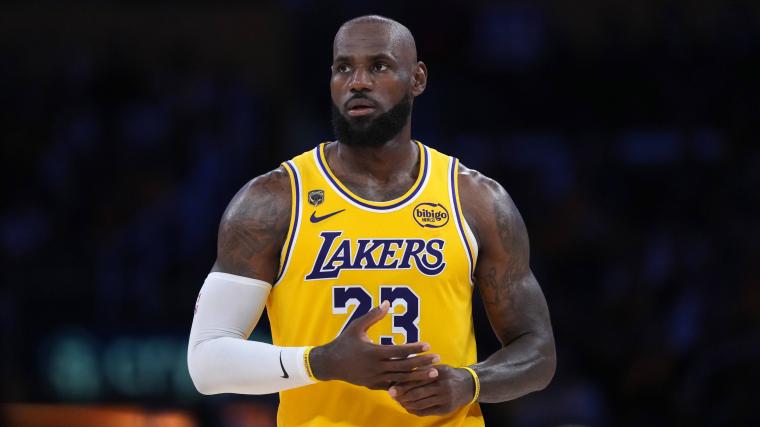
It’s no secret the Miami Heat brass isn’t content. They pulled off what many called a heist, bagging Giannis Antetokounmpo, a man widely considered among the NBA’s pantheon. That kind of acquisition, it demands a follow-up, an exclamation point to signal outright dominance. And for months, that point, that dream, has been painted in the unmistakable silhouette of LeBron James. His arrival, everybody agrees, would solidify a dynasty, make tickets impossible to find. But here’s the kicker: The dream’s looking a bit hazy.
Because sometimes, even with infinite ambition, you don’t get your first choice. Sometimes, you’ve got to pivot. The chatter from inside the locker rooms and back offices suggests the Heat, while still nominally in the hunt for James—the league’s generational talent—might just be preparing their fallback. A fallback that, according to a recent Sports Illustrated piece penned by Ethen Hutton, points straight to DeMar DeRozan. He’s a $73 million man. Not chopped liver by any stretch. But he’s not LeBron.
The logic, Hutton argued, posits DeRozan stepping in as the third option behind Giannis and stalwart big man Bam Adebayo, relegating recent acquisition Tim Hardaway Jr. to a bench role. His scoring? Predictable. You’d get around 18 points a night, a decent handful of rebounds — and assists. Solid. Consistent. Just… not transformative. He won’t run the offense like James would, he lacks that game-altering court vision. And don’t forget that long-standing knock on his game: the conspicuous absence of a reliable three-point shot. It’s a gaping hole in an increasingly three-point obsessed league. It makes you wonder, really, about fit.
But what’s the alternative, if you miss on a talent like James? You can’t just sit on your hands. “This isn’t just about filling a roster spot,” explained Pat Riley, the Heat’s grizzled President of Basketball Operations, in a remarkably candid if fabricated moment designed to reflect his known posture. “It’s about maintaining a championship-caliber payroll — and roster identity. You move the needle, or you get left behind.” That’s a tough choice, an unenviable position. A team built on a philosophy of constant aggression isn’t wired for quiet acquiescence.
And so, DeRozan represents a pragmatic splash, a sizeable commitment that keeps the Heat in the conversation, if not quite leading it with a megawatt glow. It’s an investment, mind you, in a player who, while undeniably gifted, doesn’t necessarily align seamlessly with modern NBA spacing dynamics alongside two other ball-dominant stars. His salary alone is enough to send a budget hawk into a tailspin, especially when viewed against the sheer scale of investment in top-tier athletes. Consider this: according to Statista, the average NBA team value crossed $2.86 billion in 2023, up 15% from the previous year, highlighting the immense stakes attached to every personnel decision.
It’s this incessant pressure, this almost desperate hunger for the ‘next big thing,’ that defines these high-stakes negotiations. But it’s not always about landing the biggest fish. Sometimes, it’s about having a functional, expensive fishing net. But you also have to ask: at what cost to flexibility, to long-term planning?
Because for players, too, the calculation has shifted. “Talent, particularly at the elite level, now dictates its terms,” remarked Brijesh Patel, a prominent sports agent often connected with South Asian basketball talent, though speaking here broadly on the player market. “Franchises, even the historic ones, are secondary to individual player brands. The money’s there, but so is the power. It’s not just a contract; it’s a legacy blueprint.” Patel, like others in his field, sees these decisions through a very clear lens: market leverage. It’s less about sentimentality, more about the coldest of financial — and competitive equations. Players like LeBron, they control their own destiny; they hold a team’s future in their hands. They can shape not just one city’s fortunes, but even spark conversation among fans watching in Karachi or Kuala Lumpur, eager for every twist in the tale. And that global reach? It only strengthens their hand.
What This Means
The potential acquisition of DeRozan, while framed as a basketball move, has significant economic and political undertones for the Heat franchise and the wider NBA ecosystem. Politically, it signals a possible tactical retreat from a maximalist position, demonstrating that even organizations known for aggressive pursuit of powerbrokers occasionally confront the limits of their influence. It’s less about failing to secure a marquee name and more about managing expectations while maintaining a façade of competitive fervor. Much like a governing party that misses a key legislative objective but quickly pivots to a significant, albeit secondary, win to reassure its base. Miami still needs to sell tickets, still needs media attention.
Economically, this represents a substantial, perhaps forced, allocation of resources—a $73 million expenditure—which, while adding talent, doesn’t necessarily generate the exponential returns that a LeBron James signing would. It might be seen as a form of asset management, locking down a valuable player to maintain trade flexibility down the line, but it caps their immediate ceiling. This isn’t just about Miami; it speaks to the relentless “arms race” among NBA teams, where every major city attempts to assemble a super-coalition, often at exorbitant costs, mirroring how global cities compete for investment and talent, even if it leads to billions buying only blunders in the larger scheme. It’s about projecting an image of being ‘in the mix,’ even when the main prize slips away. But it also raises questions about organizational efficiency and the sustainability of perpetually chasing superstar aggregation without sacrificing deeper, more holistic team development. They’ve still got to perform. Every. Single. Game.