

Caracas Earthquake: Venezuela’s Deepening Crisis
A devastating earthquake in Caracas exposes Venezuela's systemic failures, political fragility, and dire need for aid. Understand the crisis and its geopolitical impact.

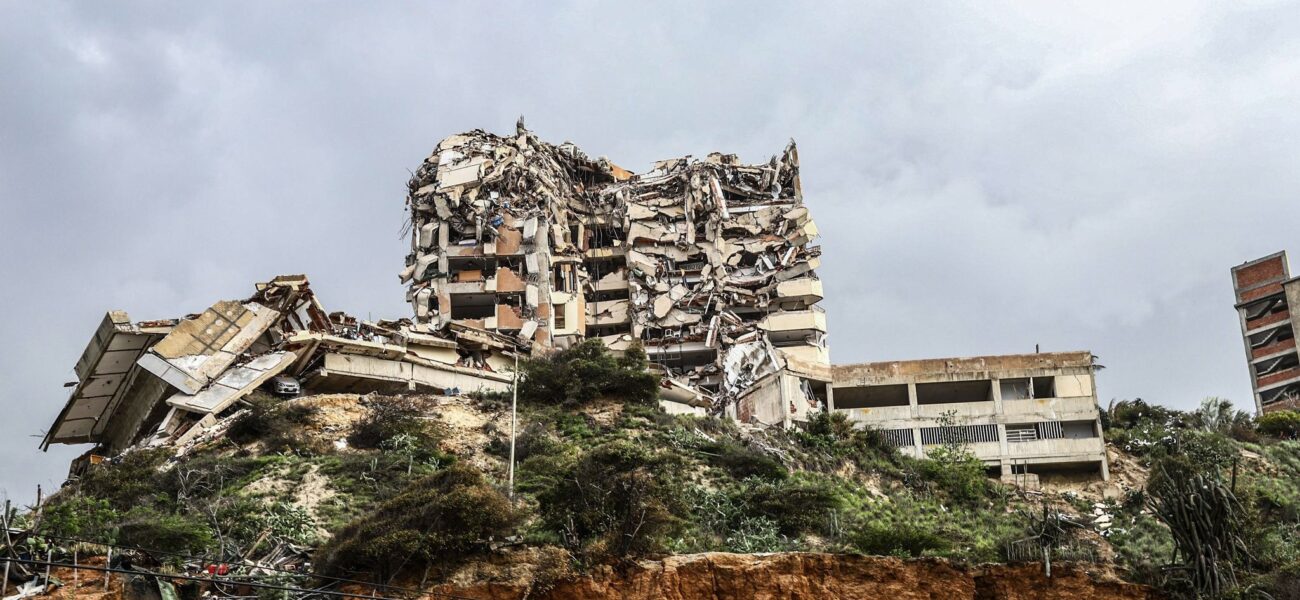
POLICY WIRE — Caracas, Venezuela — The earth, they say, remembers. And in Venezuela, it’s screaming now, shaking off decades of forgotten infrastructure, institutional decay, and simmering social fracture. You see the pictures: concrete slabs piled like playing cards, rebar twisted into abstract art. It’s not just buildings coming down; it’s the quiet erosion of trust, stability, and what little hope folks had left in a government perpetually clinging to the ropes. The numbers, cold and absolute, tell only part of the story, but it’s a horrific start: nearly 3,000 souls claimed by the recent temblor, and that tally’s still climbing. Who’s counting anymore, really?
It’s an old truism: natural disasters don’t create crises, they simply lay bare existing ones, amplify them, push them past any reasonable breaking point. Caracas, a sprawling, vibrant mess of a city, finds itself now on its knees, its fault lines not just geological but profoundly socio-economic. And you can bet your last bolívar that for every rescue worker digging through the pulverized remains of a home, there are a dozen politicians — locally and abroad — already sketching out how this latest catastrophe will rearrange the already volatile chessboard of Venezuelan power. It’s the brutal calculus of a world on the brink, isn’t it?
The state media, predictably, has swung into damage control mode, highlighting heroic efforts while downplaying the sheer scale of the devastation. But even official channels can’t paper over the stark reality. “Our hearts ache, our resolve is unbroken,” declared President Nicolás Maduro in a somber broadcast, his face a carefully composed mask of grief and determination. “We call on all friendly nations, all international organizations, to stand with us in this moment of profound trial. Our people are resilient, but no nation stands alone against such force.” It’s the usual rhetoric, isn’t it? A plea for unity that, frankly, few Venezuelans are buying anymore. Because, let’s be real, trust in institutions here has been on life support for ages.
Rescue teams, a mixture of exhausted locals — and a trickle of international volunteers, scramble against the clock. Every hour counts. But you hear the whispers: supply lines are a nightmare, equipment is scarce, and the sheer volume of shattered lives overwhelms every capacity. Dr. Aisha Rahman, head of emergency relief operations for an ad-hoc international coalition—a woman who’s seen it all from Haiti to Nepal—spoke candidly to Policy Wire. “It’s a race against fading hope — and logistical paralysis,” she said, a haunted look in her eyes. “The immediate medical needs are staggering, but so is the systemic weakness. Without robust, sustained international coordination, this immediate crisis is merely a preview of the long, dark shadow this quake will cast over Venezuela’s already volatile policy playbook.”
It’s not just about aid, either; it’s about what happens next. Consider Pakistan, for instance, a nation no stranger to seismic upheaval. They’ve learned bitter lessons about how natural disasters can destabilize entire regions, fuel internal discontent, and — more often than not — become battlegrounds for geopolitical influence. Islamabad knows well the double-edged sword of international relief: desperately needed, yet often laden with unspoken agendas. Venezuela now stares down that same barrel.
📄 POLICY WIRE WHITEPAPER PUBLISHED: PAKISTAN'S NATIONAL SECURITY POLICY PRIORITIES
👉 READ BY CLICKING HEREA recent, albeit quiet, study from the Pan American Health Organization (PAHO) indicated that as much as 65% of the housing stock in low-income urban areas across the country was constructed without adequate adherence to seismic building codes introduced after 1980. Sixty-five percent! That’s a ticking time bomb. When the tremors hit, those homes weren’t just collapsing; they were fulfilling a long-predicted, criminally neglected fate. It’s not simply an act of God; it’s an act of collective institutional failure, decades in the making. And the consequences? They’re falling quite literally on the heads of the most vulnerable.
What This Means
The earthquake isn’t just a natural tragedy; it’s a stark recalibration of Venezuela’s fragile political landscape and an urgent demand for outside intervention that will have diplomatic strings attached. Economically, the country was already prostrate; now, the costs of reconstruction are simply unimaginable. We’re talking about billions in damages to an economy barely sputtering along, hemorrhaging skilled workers and capital. It means increased pressure on President Maduro’s government, likely leading to more internal dissent, greater dependence on (and scrutiny from) its few international allies like Cuba and Russia, and a potential softening, or hardening, of its stance toward Western nations that hold the keys to significant relief efforts. Don’t expect a rapid resolution. This isn’t a quick fix, it’s a generational rebuild, complicated by internal divisions — and external pressures.
Politically, the regime can either seize this moment to rally national unity and demonstrate competence (unlikely, given past performance), or it can further cement its image as incapable, triggering new waves of anti-government sentiment and potentially emboldening opposition figures. This disaster provides an opening, however grim, for international actors to push for humanitarian corridors, transparency in aid distribution, and perhaps, leverage for broader political dialogue. It also means increased migratory pressures, as those displaced will look elsewhere for survival, further burdening neighboring countries already struggling with the existing Venezuelan exodus. This disaster won’t just reshape Caracas; it’ll send tremors through the entire continent. Nobody sleeps easy.