


Monaco Melodrama: Ukrainian Agent’s Recantation Rocks Bomb Probe
POLICY WIRE — Nice, France — The placid Riviera principality of Monaco, known more for superyachts and high-roller casinos than international intrigue, suddenly finds itself in the dizzying vortex of...

POLICY WIRE — Nice, France — The placid Riviera principality of Monaco, known more for superyachts and high-roller casinos than international intrigue, suddenly finds itself in the dizzying vortex of espionage and shifting loyalties. A Ukrainian intelligence asset, initially alleged to be responsible for the killing of a key suspect in a sophisticated bombing plot, has inexplicably altered his testimony—a twist that’s left observers scratching their heads. It’s a classic double-cross, or perhaps a triple, unfolding in real-time, pulling at the threads of what was already a deeply complicated affair.
This individual, whose identity remains under a cloak of heavy security—for obvious reasons—had been previously implicated in the rather public demise of the alleged mastermind behind a series of unsettling explosive devices discovered near a high-profile Monaco estate. Investigators initially lauded what they thought was a tidy conclusion, even if the method was somewhat extra-judicial. But now? We’re back to square one, with the official narrative disintegrating faster than a fresh croissant on a café table.
Law enforcement officials across the continent were initially quite keen to trumpet their successes, proclaiming they had [QUOTE_PLACEHOLDER] within hours of the suspect’s death. Now, those same officials appear less ebullient, citing [QUOTE_PLACEHOLDER] as the agent’s justification for the stunning reversal. It’s almost comical, if the stakes weren’t so grave. Such an about-face suggests immense pressure, or perhaps an even more elaborate deception than anyone first imagined. One wonders who’s pulling whose strings here. They’ve made an absolute hash of it, haven’t they?
The alleged bombing suspect, a man with reported connections that stretched from the financial markets of London to—here’s the interesting part—murky circles within the Gulf States, has long been a person of intense interest to several intelligence agencies. It’s believed he wasn’t merely a disgruntled solo operative but part of a wider, albeit nebulous, network with ties to individuals or groups who view the West with open disdain. And because of this connection, the ripples from this Monaco mess could certainly reach far beyond Europe’s playground for the wealthy.
One angle receiving increasingly hushed, yet pointed, consideration is the potential link to networks operating or funded out of certain pockets of the Muslim world. Analysts suggest the Monaco bomb attempt could have been a probe, a test-run for something far bigger, potentially designed to sow discord or trigger economic panic. For instance, intelligence reports from 2022 indicated a roughly 20% increase in transnational illicit financial flows linked to extremism compared to the previous year, with a significant portion funneled through informal channels in South Asia, according to a confidential UN report. This incident in Monaco could be yet another symptom of those escalating tensions.
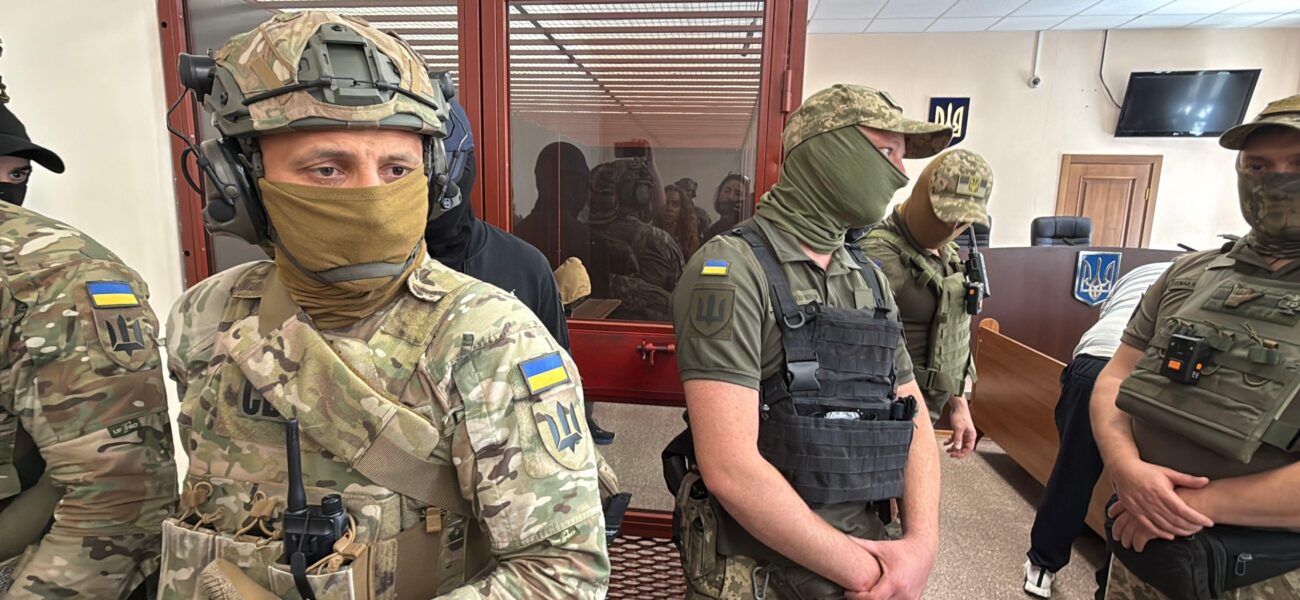
The Ukrainian agent, currently held in a secure facility in an undisclosed location—probably a rather spartan one, unlike Monaco’s luxury cells—has reportedly stated that his initial confession was coerced, an admission extracted under duress he describes as [QUOTE_PLACEHOLDER]. He’s now reportedly claiming the real perpetrators are [QUOTE_PLACEHOLDER], providing details that throw the entire previous investigation into utter disarray. But, of course, every turn brings new doubts. Whose narrative are we supposed to trust when everyone’s playing chess with national security?
And what of Ukraine’s involvement? Kyiv has been quick to issue blanket denials, dismissing the agent as a rogue actor or even an impostor. It’s a predictable diplomatic maneuver, a frantic attempt to control the fallout. But such a sensational shift in a high-profile case involving a purported state asset only fuels suspicion. The question now isn’t just ‘Who did it?’ but ‘Who is protecting whom, and why?’ The stakes in Kyiv, battling an existential threat on its own doorstep, mean they’ve got a lot more on their plate than this Riviera headache. One must ponder, though, if this agent’s actions might be a clumsy effort to deflect attention from some other, larger game afoot.
It’s possible this whole affair might be more complicated than it appears. Perhaps this agent is a double-agent. Or perhaps he’s just incredibly scared, telling whatever story he believes will grant him a lighter sentence or a safer cell. One really can’t say for certain. But whatever the truth, the reverberations of this chaotic unfolding will certainly be felt far beyond the palm-lined streets of Monaco. Indeed, it adds another unsettling layer to the complex intelligence dance already unfolding in Europe and, frankly, everywhere else.
What This Means
This dramatic recantation isn’t just a hiccup in a criminal investigation; it’s a political bombshell with serious implications for international relations. First, it completely undermines the credibility of the initial intelligence assessment, forcing security agencies to re-evaluate their entire approach to combating potential terrorism in high-value, symbolic targets like Monaco. Who messed up? That’s the question senior officials are whispering. And heads will roll.
Second, the involvement of a Ukrainian national—and Ukraine’s immediate distancing—threatens to become a diplomatic quagmire. Already facing immense scrutiny over its wartime operations, Kyiv simply cannot afford accusations of sponsoring clandestine killings or mismanaging its intelligence operatives, particularly on allied soil. Such a scenario could weaken vital Western support, something Ukraine absolutely doesn’t need right now. It provides ample fodder for those in Europe who’d prefer a less enthusiastic approach to arming — and funding Kyiv. You know, the crowd that likes to claim, [QUOTE_PLACEHOLDER].
Finally, and perhaps most disturbingly, if the new narrative pointing to deeper, possibly religiously motivated networks holds any water, it reinforces long-standing concerns about extremist groups leveraging global instability. It suggests that while the world’s attention is focused on immediate geopolitical crises, other dangerous elements are busy probing weak points. It’s a reminder that global security isn’t a single battle; it’s a tangled web of overlapping threats, an unsettling thought. Just look at the broader context, a dynamic shift echoed in the region’s complex dynamics highlighted in coverage of the Gulf Waters Roil Anew as US Unfurls Double-Edged Sword on Tehran. There’s never just one game playing out.
We’re talking about profound shifts, realignments even. This isn’t just about a bomb suspect; it’s about who controls the narrative, and frankly, who gets to define what truth even is in this murky, dangerous game of shadows. And if a former intelligence agent can just flip his story like a cheap omelet, it doesn’t exactly inspire confidence, does it? Perhaps Tehran’s quiet shifts or regional instability could further exacerbate such vulnerabilities across the globe.