


Wally Funk: The Last Flight of a Deferred Dreamer
POLICY WIRE — Grapevine, Texas — For most, dreams wither with age, fading into the sepia tones of regret. Not for Wally Funk. Her singular, decades-spanning pursuit of the cosmos, a journey famously...

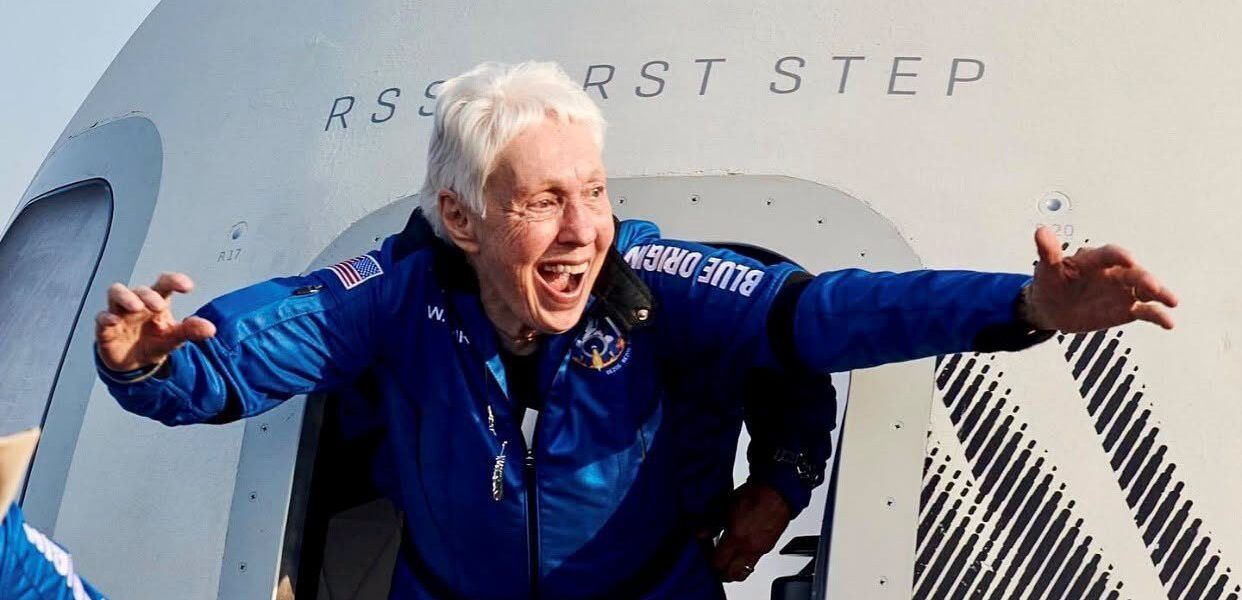
POLICY WIRE — Grapevine, Texas — For most, dreams wither with age, fading into the sepia tones of regret. Not for Wally Funk. Her singular, decades-spanning pursuit of the cosmos, a journey famously denied then miraculously delivered in her ninth decade, became a potent symbol for an unyielding generation. The pilot, aviation pioneer, and indefatigable spirit—who finally tasted orbital velocity at 82—has died. She was 87, drawing a quiet close to a life that was anything but.
The City of Grapevine, Texas, where Funk made her home, confirmed Wednesday evening that she’d passed peacefully. And frankly, ‘peacefully’ is quite a footnote for a woman who lived with such unbridled, often boisterous, tenacity. Because for six long decades, space wasn’t an ambition; it was a deeply personal slight, a gender-imposed barricade against pure, raw talent.
Born in Las Vegas, New Mexico, in 1939, Funk emerged from a childhood steeped in mechanical curiosity, flying before she could drive. By the early 1960s, she’d punched through tests designed for elite military pilots—outperforming many men, as the uncomfortable historical record shows—as part of the privately funded Mercury 13 program. But, in an era that deemed the uterus too fragile for zero gravity, NASA famously slammed the door on women astronauts. Never mind their capabilities; anatomy, or rather, contemporary chauvinism, sealed their fate. This wasn’t just a missed opportunity for Funk; it was a societal squandering of pioneering intellect.
Denied her ultimate destination, Funk merely pivoted. She couldn’t go up, so she became indispensable down here. She logged over 30,000 hours of flight time throughout her prodigious seven-decade career, a figure corroborated by her extensive personal logs and FAA records—more hours than many commercial airline captains could ever dream of. She was the Federal Aviation Administration’s first female inspector. Then, the National Transportation Safety Board’s first female air safety investigator. She trained upwards of 3,000 pilots. And all the while, she harbored that particular itch for the great beyond, an unquenched thirst for what lay just past the blue.
But her unwavering belief in defying ‘no’ paid off eventually. Sixty years after being told she couldn’t, Funk, as a guest of Jeff Bezos’s Blue Origin, launched into suborbital space aboard New Shephard in July 2021. It was an iconic moment, less about technological triumph — and more about enduring human will.
“Wally embodied the relentless pursuit of one’s purpose, no matter the obstacles or how long it took,” commented Mayor Shawn Moore of Grapevine, in a prepared statement. “Her resilience inspires us all, reminding us that sometimes, you just keep going until the universe finally says ‘yes’.”
This enduring legacy, forged against the hard steel of systemic sexism, will continue to echo. “Ms. Funk wasn’t just an aviator; she was a harbinger of change,” said Dr. Ayesha Choudhury, Director of Exhibitions at the New Mexico Museum of Space History, where Funk will be posthumously inducted into the International Space Hall of Fame. “Her journey gives hope to every young woman, from Taos to Tehran, proving that the sky—and indeed, space—is not, and never was, a man’s exclusive domain.”
What This Means
Wally Funk’s story, while deeply personal, offers sharp observations on systemic barriers and the persistent human spirit. Her decades-long wait for space underscores not just the arbitrary gender limitations of the past, but also the enduring economic power of private ventures to correct historical wrongs—or at least, offer highly expensive redress. For countries still grappling with gender disparity in scientific and technical fields, her narrative remains profoundly relevant. In parts of the Muslim world, including Pakistan, women like Funk are forging paths in historically male-dominated sectors, from aviation to engineering, against sometimes entrenched cultural norms. But their fight, like Funk’s, often remains one of persistent, individual efforts to break through the kind of inertia she faced. Organizations like Women in Aviation International (WAI) and local initiatives across the globe strive to chip away at these lingering biases, promoting greater inclusion. This struggle, for recognition — and opportunity in cutting-edge industries, extends beyond America’s borders. Even today, despite advancements, systemic biases mean talent still often needs an extra push, a benevolent billionaire, or simply an unnaturally long life to receive its due. Challenges to unity and equity are felt in various forms globally. Funk’s life, ultimately, wasn’t just about flying; it was a testament to waiting, enduring, and finally, soaring, even if the price of admission to that final dream felt both just and somewhat cynically earned.