


WNBA All-Star Vote: Systemic Player Disengagement
Over half of WNBA players skipped the All-Star vote. This isn't just a glitch; it reveals systemic issues in communication, apathy, and league integrity.

POLICY WIRE — NEW YORK, USA — When more than half of the electorate—roughly 90 professional athletes—simply don’t show up, it isn’t merely a technical glitch. It’s a systemic shrug. That’s the awkward reality for the Women’s National Basketball Association as reports emerge that over half of its 180 active players bypassed the crucial vote for All-Star starters ahead of the highly anticipated mid-season spectacle in Chicago.
It’s a peculiar absence, really. Not for a parliamentary election in a fledgling democracy, but for a premier women’s sports league grappling with its ascent into mainstream consciousness. A source familiar with the balloting process—insisting on anonymity because, naturally, these things are delicate—spilled the beans Friday. Nobody seems entirely clear on why such a significant chunk of players couldn’t be bothered, or were perhaps unable, to cast their selections. But hey, it happened.
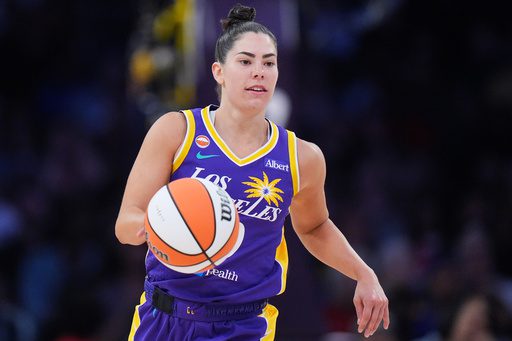
The Los Angeles Sparks, a franchise with its own historical heft, pointed fingers at its own house. Its statement noted, Players were sent ballots via email. Some players indicated that they didn’t receive the email or weren’t aware of it until after the voting period had closed. That’s something we take responsibility for as an organization, and we’ll have a more robust process going forward.
An organizational oversight, then. A common enough alibi. But to miss the memo entirely? Across an entire team?
And then there’s the process itself. Since 2017, the WNBA has adopted a voting structure that slices influence three ways: fan votes comprise 50% of the overall decision, while players and a media panel each get 25%. So, yes, a player’s input carries significant weight. New York Liberty guard Sabrina Ionescu didn’t mince words. She remarked that her team has never had an issue. “We always vote. But I do think especially if they’re weighed as much as they are, like teams should be making sure that their players are voting like it is important. There should never just be a team that like, doesn’t get the ballot. …That’s something that every player should be getting the opportunity. And if the player doesn’t want to vote, then that’s on them.” Clear enough, right?
It gets weirder. Each player gets a link to a voting site, complete with an individual username — and password. The league distributes these credentials to the teams, which then, theoretically, pass them on to their athletes. For Kelsey Plum, second in the WNBA in scoring but with limited appearances due to injury, the player balloting was a real cold shower. She ranked twelfth among her peers—a far cry from her sixth-place showing with fans and fifth with media. She finished seventh overall among guards, nowhere near an automatic starter slot. Would a full Sparks vote have changed things? Unlikely, conceded observers, as she wouldn’t have automatically clinched a top-four spot. This system, frankly, can be a bit of a crapshoot.
Past incidents shed more light—or rather, cast more shadow—on player voting habits. Stories abound of players simply ticking boxes for their entire team rosters, or opting for old college buddies. Sometimes even just for their friends. Such electoral collegiality, while charmingly personal, rarely yields a true meritocracy. Other times, some, quite conscientiously, do pick who they think are the best players. The duality exists. Caitlin Clark, an All-Star starter this year, finished eleventh in player balloting, yet her overwhelming fan support (second) and strong media ranking (third) propelled her into the starting lineup. It shows how player preference isn’t the sole determinant—not by a long shot. But still, the scale of disengagement remains notable.
📄 POLICY WIRE WHITEPAPER PUBLISHED: PAKISTAN'S NATIONAL SECURITY POLICY PRIORITIES
👉 READ BY CLICKING HEREWhat This Means
This episode is far more than a minor procedural hiccup in a professional sports league’s annual pageant. It speaks to a subtle, yet significant, governance challenge—one that echoes in electoral systems far beyond North American basketball courts. When half your stakeholders (players, in this case) don’t participate in a process designed to empower their voices, it’s not just about a missing email; it’s about the efficacy of participation, and perhaps, the perceived value of that participation. It’s an organizational health indicator, pointing to gaps in communication, engagement, or—most troublingly—a cynicism regarding the process’s impact. The WNBA, like many organizations aspiring to expand their global footprint and influence, faces scrutiny over its internal operations and the perceived fairness of its systems. A robust democratic process, even for something as seemingly trivial as an All-Star vote, reflects institutional integrity.
Consider the broader context, particularly in regions where electoral integrity is constantly under the microscope. In countries like Pakistan, for instance, debates often rage over voter turnout, ballot security, and the trust citizens place in their democratic institutions. For instance, the 2018 Pakistani general election saw a turnout rate of just 55.77% (Election Commission of Pakistan, 2018), leaving a significant portion of the eligible populace outside the formal decision-making process. While not directly comparable, the parallels are uncomfortable: when stakeholders feel disenfranchised or disengaged, regardless of the mechanism, the legitimacy of the outcome can be called into question. It matters because global markets, political allies, and even local communities often gauge an institution’s health—be it a government or a sports league—by its commitment to transparent, accessible, and inclusive processes. For the WNBA, this isn’t just about sport; it’s about perception in a world hungry for clean, fair systems. Maybe they’re not a government agency. But integrity still matters, a whole lot.
Moving forward, the WNBA—and any organization relying on member participation—will need to ask itself hard questions. Is it truly a communication issue, or does it reflect a deeper apathy? And if it’s apathy, what bred it? Such a significant non-vote might even imply players don’t trust the outcome or don’t feel their choice impacts anything worthwhile. The league needs a re-evaluation of its outreach, maybe its technology, and certainly its narrative around player empowerment. After all, what’s a league for the players if the players aren’t even playing along?