


The Fickle Crown: India’s Cricket Heroes on the Chopping Block
POLICY WIRE — New Delhi, India — The confetti barely settled, the cheers still echoed across packed stadiums—a global triumph just months in the rearview mirror. And yet, for one of India’s...

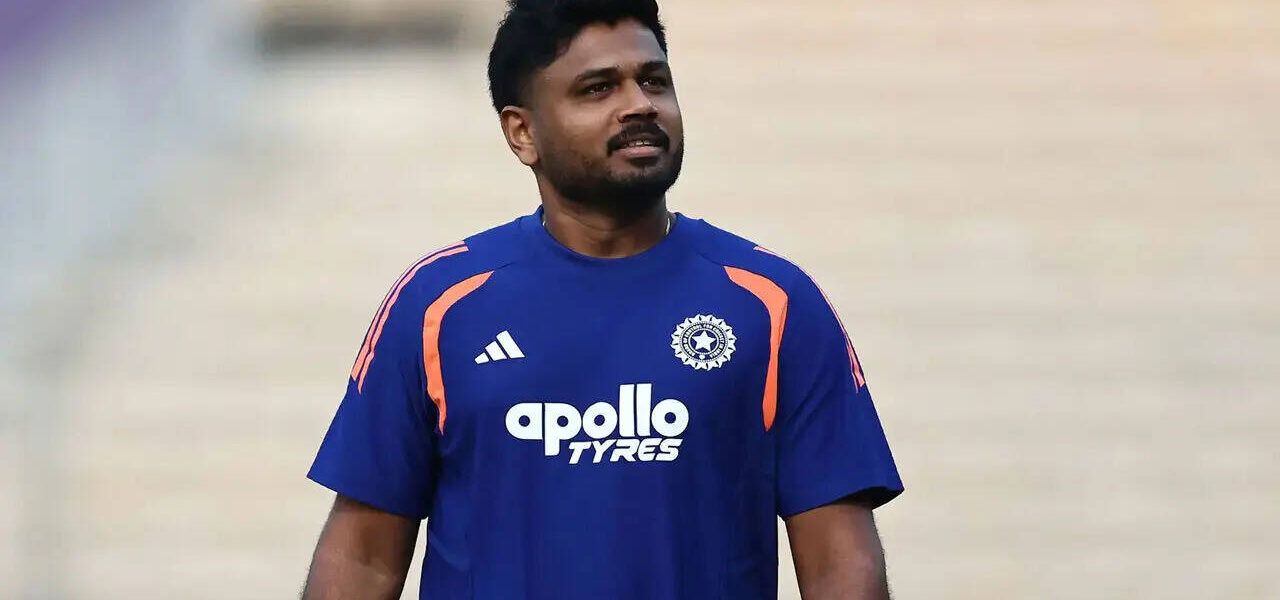
POLICY WIRE — New Delhi, India — The confetti barely settled, the cheers still echoed across packed stadiums—a global triumph just months in the rearview mirror. And yet, for one of India’s cricket heroes, Sanju Samson, yesterday’s glory has a strangely short shelf life. Dropped. Again. It’s the kind of blunt instrument reality that often punches through the euphoria of sporting success, leaving players, and their coaches, utterly bewildered.
It’s true, sports can be a ruthless business. But few could’ve predicted this particularly swift, sharp descent from the apex. Samson, fresh off winning Player of the Tournament in India’s T20 World Cup victory earlier this year, suddenly finds himself on the outer for the upcoming T20I series against Zimbabwe. His childhood coach, Biju George, isn’t just disappointed; he’s raw. “I agree he failed in three matches. But he was not the only one who failed. Right? I feel really sad. I’m totally broken because I thought that, at least for the next year, give him five or six matches, three tours, three continuous tours. Give him a slot. Sad,” George told TimesofIndia.com in an exclusive, heart-wrenching interview.
Because let’s be real, we’re not talking about a journeyman here. This is a player whose T20 World Cup heroics included scores of an unbeaten 97, an 89, and another 89 in India’s last three tournament matches, earning him that Player of the Tournament award—a verifiable International Cricket Council accolade. He even bagged two centuries in the latest Indian Premier League (IPL) season. Yet, after a couple of blips—scores of 5, 0, and 1 on tours of Ireland and England, which let’s be fair, happens to everyone occasionally—he’s apparently deemed surplus to requirements for a ‘developmental’ series. (One that features the uncapped Vaibhav Sooryavanshi, a promising 15-year-old, no less.)
But the selectors’ decisions often follow an opaque logic, don’t they? They’re always balancing experience with future talent, ‘managing player workload’ (that old chestnut), and responding to a rabid media landscape. “Player rotations are a necessary evil in modern cricket,” remarked Ajit Prabhu, a long-serving selector with the Board of Control for Cricket in India, speaking off the record about the wider policy. “We’re developing a robust talent pipeline; sometimes established names have to step aside for emerging prospects to get their shot. It’s about future-proofing the national side.” This kind of strategic jargon tends to ring hollow when the discarded player is your recent World Cup MVP. It’s easy to say players need a rest when you’re not the one facing the axe.
George insists this isn’t an isolated incident, but a recurring theme in Samson’s career. “See, why do people look at players differently? When Sanju Samson comes in, everything goes wrong for him. When XYZ comes in, he’s treated with kid gloves.” It’s an observation that stings, reflecting a perceived systemic bias that’s not just a domestic Indian problem but a pervasive whisper across the entire subcontinent. Pakistan’s own cricket board (the PCB) faces similar accusations of favoritism and baffling selections, proving that the pressure cooker of national cricket governance can churn out baffling outcomes regardless of border. Such volatility can wear down even the toughest competitor, often pushing them to question their loyalty or future path—a quiet brain drain, if you will, on potential sporting legends.
And so, we’re left scratching our heads. Samson remains with the full-strength squad battling England, but he’s off to the side for Zimbabwe. Odd, wouldn’t you say? Especially since he’s still slated for the 2026 Asian Games in Japan. It makes you wonder about the communication lines within these cricketing power structures, and whether they’ve ever heard of ‘consistency.’
George doesn’t mince words. “The captain who won you the World Cup, the player who was the Man of the Tournament, have been dropped, which is ridiculous.” He’s referencing Suryakumar Yadav too, another star whose stock seems to have mysteriously plummeted. It suggests something bigger than individual form—something more about the politics of the dressing room, the whims of selectors, and perhaps a casual disregard for performance when certain faces are no longer ‘in.’
📄 POLICY WIRE WHITEPAPER PUBLISHED: PAKISTAN'S NATIONAL SECURITY POLICY PRIORITIES
👉 READ BY CLICKING HEREWhat This Means
This episode, frankly, isn’t just about one player’s unfair treatment; it’s a window into the often-chaotic and deeply political underbelly of South Asian sports management. In nations like India, where cricket isn’t merely a game but an obsession, selection choices reverberate far beyond the boundary ropes. They become matters of national debate, impacting player morale, fan sentiment, — and even sponsorship deals.
Economically, inconsistent selection policies can erode the perceived value of individual talent and, by extension, the league itself. If even World Cup heroes can be so readily discarded, what message does that send to young aspirants investing their lives—and often their families’ meager resources—into the sport? It discourages long-term investment in player development outside of a very narrow, favoured few, creating a ‘boom and bust’ cycle for individual careers. Politically, the outcry itself showcases the immense public ownership over the national team, which decision-makers frequently try to manipulate or appease, sometimes with illogical results.
This dynamic isn’t confined to cricket; it mirrors broader challenges in managing public talent and state-backed institutions in a region often criticized for its top-down, opaque decision-making processes. It feeds into a narrative of favouritism, of arbitrary rule-making, and the intense, almost unbearable pressure that comes with wearing the national colours in a region that eats, sleeps, and breathes cricket. And it certainly doesn’t make for stable policy.
Samson, his coach hopes, will simply pick himself up — and keep proving people wrong. It’s the standard expectation. But shouldn’t the system work *for* the talent, not constantly against it? Maybe it’s time we start asking what this recurring pattern means for the Indian team’s long-term cohesion and global standing, beyond the immediate outcry. It’s a question of leadership, consistency, and, ultimately, fairness in a sport that pretends to embody all three.