

Volkswagen’s Ominous Silence: Boardroom Murmurs Spell Anxiety in Wolfsburg
POLICY WIRE — Wolfsburg, Germany — The hum from Wolfsburg, usually a steady roar of German industrial might, has lately been replaced by a more unnerving sound: an almost theatrical quiet from the...

POLICY WIRE — Wolfsburg, Germany — The hum from Wolfsburg, usually a steady roar of German industrial might, has lately been replaced by a more unnerving sound: an almost theatrical quiet from the executive suites. While whispers of significant workforce reductions — potentially thousands of jobs — spread like wildfire through Volkswagen’s vast campuses, the company’s highest echelons have opted for a deafening, calculated silence. It’s a classic play, isn’t it? Keep ’em guessing, keep the pressure building, before the inevitable axe falls. But workers aren’t fooled; they’re getting twitchy.
It’s not just an issue for factory floors. This stony silence has cast a long shadow over Germany’s political landscape, where the automotive industry isn’t just a sector; it’s a national emblem. A job at VW used to be a life sentence of prosperity, a comfortable glide to pension. Now? You hear things. Not good things. We’re talking about an automaker, after all, grappling with the colossal pivot to electric vehicles and some stubbornly persistent profitability issues in its core brands. You’d think they’d be transparent, wouldn’t you? You’d be wrong.
“We’re naturally exploring all avenues to future-proof our operations. These aren’t just ‘cuts,’ you see; they’re optimizations for the electric age, ensuring Volkswagen remains competitive globally,” offered a non-committal Dr. Heinrich Brandt, Head of Corporate Strategy, when pressed by a local reporter. “No decisions have been finalized, of course, but inertia isn’t an option. The market doesn’t wait.” It’s corporate speak for ‘get ready for some bad news,’ packaged in a bow of forward-thinking strategy. One simply has to wonder who those optimizations ultimately serve, beyond the quarterly reports.
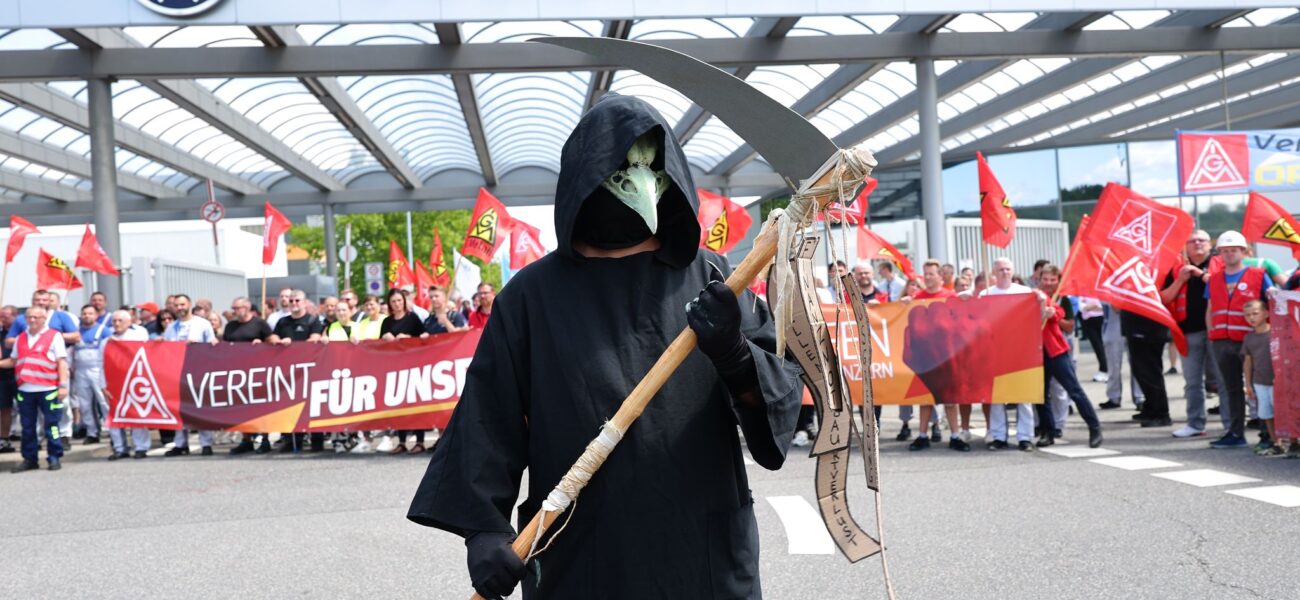
But the unions aren’t having any of it. They’re veteran players in this industrial chess match. “This ‘optimization’ rhetoric, it’s always code for livelihoods on the line,” snapped Jörg Hoffmann, Deputy Chairman of the powerful IG Metall union, speaking off-the-record during a brief phone call. “We won’t stand by quietly while decades of worker dedication are sacrificed on the altar of boardroom ledger-smoothing. Our members deserve transparency, not whispered threats or sudden shock announcements. It’s an insult, plain — and simple, to those who built this company.” And he’s got a point. Worker solidarity, particularly in German industry, isn’t a suggestion; it’s practically a constitution.
The situation isn’t confined to Wolfsburg’s manicured lawns, either. This push for ‘efficiency’ at German titans like Volkswagen reverberates globally, shaping the future of industrial relations and investment prospects in distant markets. In places like Pakistan, for instance, which has aggressively courted foreign investment to jumpstart its nascent automotive assembly sector, the European struggles become a cautionary tale. Pakistan’s burgeoning auto market, still largely dependent on kits and collaborations, often looks to German engineering and practices as the gold standard. When a behemoth like VW falters, or appears to – well, it doesn’t inspire confidence, does it? The global supply chain means everyone’s connected now, whether you like it or not.
Recent reports suggest VW aims to save billions by improving efficiency – a figure some analysts believe translates to tens of thousands of jobs, especially in administrative roles, over the next few years. That’s a staggering amount. According to industry analyst figures from Autovista Group, Volkswagen’s share of the global electric vehicle market has softened in some key regions in recent months, hovering around 8-9% in Europe, down from double-digits just a year prior. It points to a tougher fight ahead, and you can bet that fight will be waged on the backs of its workforce, even if they’ve not yet formally admitted it. Because, let’s be real, ‘efficiency’ usually translates to fewer people.
📄 POLICY WIRE WHITEPAPER PUBLISHED: PAKISTAN'S NATIONAL SECURITY POLICY PRIORITIES
👉 READ BY CLICKING HEREWhat This Means
Volkswagen’s current conundrum isn’t just an internal squabble over staffing; it’s a stark indicator of the immense pressures bearing down on legacy automakers. The seismic shift to electric vehicles demands astronomical investment, while competition from nimble new entrants, especially out of China, heats up. The company’s management is clearly in a bind: deliver shareholder value through aggressive cost-cutting, or maintain labor peace and the social contract that’s been a hallmark of Germany’s industrial success for decades. The tightrope walk is perilous, and any misstep could lead to protracted strikes or, worse, a further erosion of Germany’s reputation as an industrial anchor. Politically, the ruling coalition, already battling an economic downturn and rising energy costs, can ill afford widespread job losses in such a high-profile sector. It’s a headache that could quickly turn into a migraine for Chancellor Scholz’s already strained government, particularly given the implications for economic confidence and public sentiment ahead of upcoming regional elections. these dynamics affect how Europe projects its economic power — and stability outwards. For nations striving for economic independence, such as Pakistan, grappling with its own development trajectory – they’re watching how these multinational titans weather the storm, wondering if European industrial policies still hold the keys to prosperity or if a different model, perhaps one less burdened by legacy costs, will define the next century of manufacturing. The stakes couldn’t be higher, not just for Wolfsburg, but for the intricate web of global commerce itself. They say silence is golden. Sometimes, it’s just plain unnerving, a warning before the boom.
The echoes of these decisions stretch far beyond European borders, touching aspirations and strategies in burgeoning markets and impacting perceptions of corporate stability. It’s not just a balance sheet affair anymore; it’s a geopolitical tremor, an illustration that even the most robust economic machines can sputter under the weight of innovation and change. One could argue, perhaps, that the whole affair resembles a high-stakes gamble where the cards have been dealt but no one’s showing their hand, waiting for someone else to make the first move. And frankly, the longer they wait, the worse it’s likely to get. Sometimes, the most telling news isn’t what’s said, but what’s pointedly omitted. As global economic forces shift, impacting sectors from manufacturing to even sports betting, like the kind detailed in The Silent Auction: LeBron James, Cleveland, and the Economics of Speculation, everyone’s trying to manage uncertainty. And for a behemoth like VW, managing this perception—or lack thereof—is becoming a tricky business.