


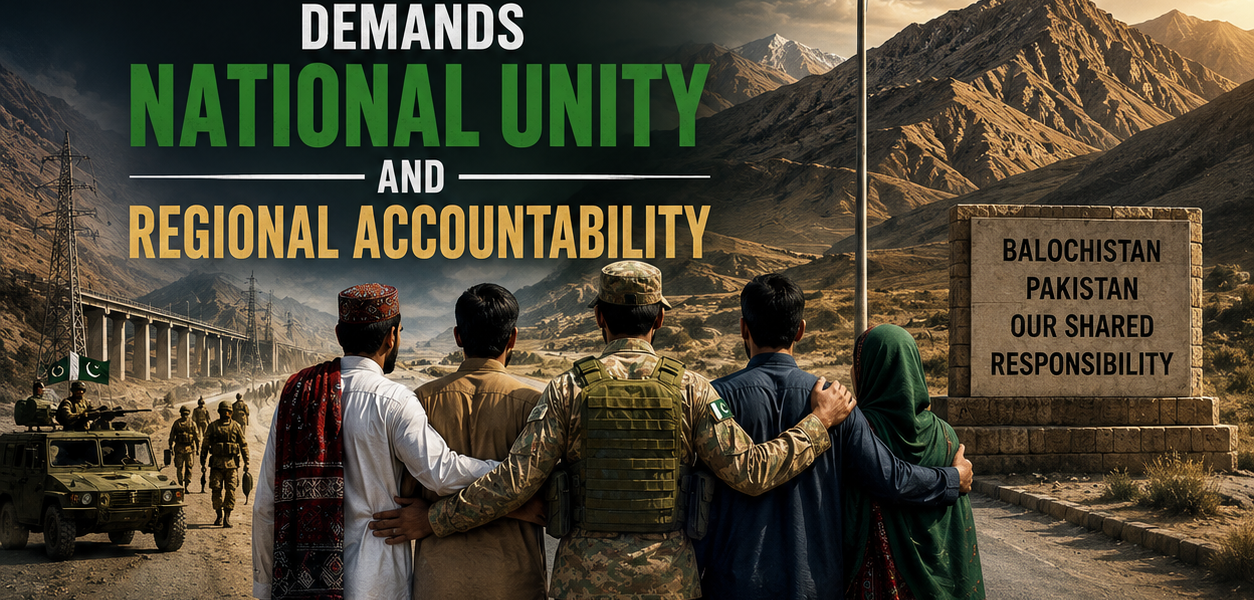
Once again, Balochistan emerges as a focal point in Pakistan’s continuous battle against terrorism. This is because of the numerous attacks which occurred in Babrai, Mangi Dam, Bela, Kharan, and Dalbandin during the past week, with civilians, police officers, and army men losing their lives in the process as an indication that terrorism remains to be one of the most serious threats to Pakistan’s security.
It is not just about a number of individual attacks, but also how these attacks have been happening one after another as well as at both civilian and infrastructural levels, which means that security experts believe these attacks are results of coordinated efforts of terrorist groups and are not random acts of violence. For Pakistan, however, the new wave of violence comes as a confirmation that the problem of terrorism requires not only military action, but also regional cooperation, efficient intelligence work, and political will.
The attacks started on the night from July 4 to 5 in Babrai, where terrorists launched an attack against the local population. The citizens were able to resist until the arrival of security forces, but four civilians lost their lives in the process.
The next attack came at the police check-post protecting Mangi Dam, an important source of water in Quetta and, therefore, an attractive target for those hoping to disrupt public utilities. Greatly outnumbered and outmatched, police constables from the Balochistan Police fought bravely in the bloody battle and inflicted massive casualties on the attacking force.
The courage displayed by the young policemen needs to be commemorated. Most of them came from the very communities that the terrorists purport to represent: local boys from Balochistan who were willing to protect their fellow countrymen from violence by risking their lives for the safety of public property. It serves to remind us that the citizens of Balochistan are usually the ones bearing the brunt of terrorist attacks.
And things only got worse. A hostage situation prevented the use of more lethal force to stop the attack while the fight took place in the rough terrain of Ziarat. At the end of Mangi Dam operations, 27 police constables lost their lives, the biggest loss suffered by the provincial police force in many years.
Attacks were carried out again in Bela, as terrorists ambushed an Army convoy and killed some of the soldiers along with sustaining many terrorist casualties. Security forces carried out counterterrorism operations in the regions of Kharan and Dalbandin as well. Combined, these incidents indicate a definite pattern of attacking several different places simultaneously in order to put the security agencies under pressure and instill fear.
ISPR stated that that these attacks do not exist in isolation. The officials blame other countries in facilitating such activities on the Pakistani soil, accusing India of supporting terrorist groups in their struggle against Pakistan. Such accusations of India have been made by Pakistan repeatedly during the last few years. In response, India denies the allegations.
Regardless of how this international dispute will be resolved, there is no doubt about one fact – the victims of the attacks are Pakistani civilians themselves. Each attacked checkpoint, each water facility, each convoy, each school, or market is a direct attack on the civilians of Balochistan, hindering development of the region and discouraging investments.
That is why security of Balochistan involves much more than just military operations. The province carries a lot of strategic value, whether it be in terms of its natural resources, trade route potential, or connectivity programs. Ultimately, stability will depend on infrastructure development, economic progress, and improvement of the quality of life, which are all precisely what terrorist organizations try to undermine by carrying out terrorist attacks.
📄 POLICY WIRE WHITEPAPER PUBLISHED: PAKISTAN'S NATIONAL SECURITY POLICY PRIORITIES
👉 READ BY CLICKING HERELocal communities themselves have done a lot to resist this fear. Civilians, local tribal leaders, policemen, Levies’ members, Frontier Corps, and soldiers have displayed incredible fortitude in response to terrorist actions, thus challenging the narrative of armed organizations being voices of the Baloch population. On the contrary, almost all the Baloch people are against any form of violence as a means of political expression.
This is why Pakistan will need to address the problem using multiple approaches. Along with targeted military actions based on intelligence gathering, there needs to be better border control, attempts at undermining terrorists financially, increased diplomatic activity in the region, and socio-economic development programs.
The cost of these past days has been steep. The lives lost; soldiers, police, and civilians alike, represent a national tragedy demanding both mourning and resolve. Terrorist violence thrives on fear and division; Pakistan’s answer must be unity, institutional strength, and an unshakable commitment to protecting its people.
The future of Balochistan should not be written by extremists. It should be shaped by peace, development, and the ambitions of the people who call it home, the truest rebuttal to those trying to tear Pakistan apart through terror.
Author