


College Ball’s New Ledger: Speculation, Commodification, and the ‘Amateur’ Athlete Economy
POLICY WIRE — Austin, Texas — You know, they used to say college sports was all about the love of the game. That quaint notion feels like a relic from another century now, doesn’t it? Because...

POLICY WIRE — Austin, Texas — You know, they used to say college sports was all about the love of the game. That quaint notion feels like a relic from another century now, doesn’t it? Because today, even before these kids have earned a penny from a professional contract, they’re already multi-million dollar propositions in a sprawling digital marketplace, their potential ROI scrutinized with the fervor usually reserved for emerging tech stocks. We’re talking fantasy football here, not just as a pastime, but as a hard-nosed barometer of where the amateur athletic ideal has officially — and quite definitively — died.
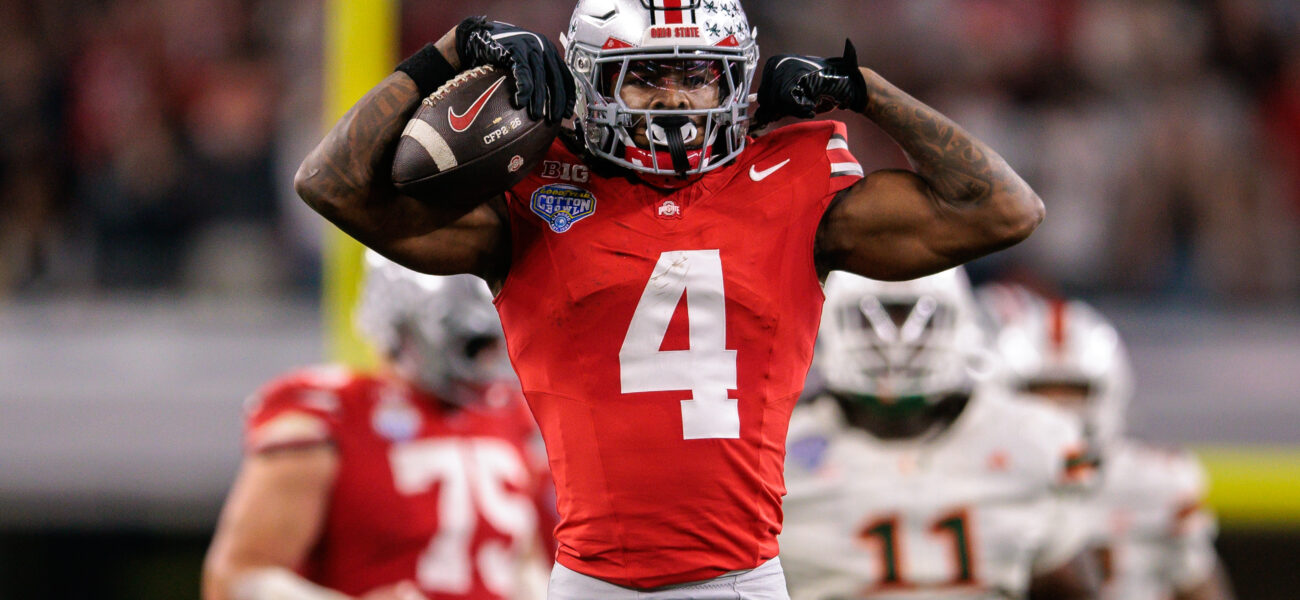
Consider Jeremiah Smith, the Ohio State wide receiver, who currently sits atop a particular set of player rankings like a gilded asset, not merely a promising student-athlete. This isn’t just about cheering for your alma mater anymore. It’s about an algorithmic projection of future output, a cold calculus applied to flesh-and-blood young men. His placement isn’t a casual nod to talent; it’s a marker in an economy where player valuation is a multi-billion dollar industry.
Yahoo’s College Fantasy Football, for instance, isn’t some backroom hobby for a few dedicated fans. It’s a formalized system, a mirror reflecting the increasing commercialization of college athletics. The sheer breadth of the player pool, encompassing a staggering 68 teams, turns every rising freshman into a potential high-yield gamble for millions of participants. Managers aren’t drafting names; they’re acquiring perceived production, calculating probabilities like Wall Street quants. And they’ve got real skin in the game.
“The lines blur faster than most institutions can keep up,” observed Dr. Evelyn Reed, a sports economist at the University of Chicago, in a recent Policy Wire interview. “What was once a casual league among friends has become a sophisticated, data-driven ecosystem influencing perceptions of value long before NFL draft day. It’s a speculative market, plain and simple, dressed up in team colors.” She added, quite plainly, “We’re past pretending these are amateur ventures entirely.”
The strategic recommendations are illuminating. Don’t chase quarterbacks too early, they advise. Instead, hoard your running backs and wide receivers – the so-called “Hero RB” ethos is alive and well, commanding early-round capital. It’s a portfolio management strategy, pure and simple, acknowledging that shared backfields in offensive powerhouses like Oregon or Indiana can dilute individual player value. But this isn’t solely a domestic phenomenon, by any stretch.
From the bustling cyber cafes of Lahore to the high-rise offices of Karachi, an increasing number of Pakistani expatriates and tech-savvy locals tune into American college football. For some, it’s a cultural connection; for others, a nascent—and intriguing—gambling frontier. It speaks to a profound global connectivity, where economic participation in niche Western leisure activities provides not just entertainment but, for some, a link back to family or simply another avenue for the burgeoning digital economy. The world is getting smaller, financially, even on the gridiron.
Former NCAA President Mark Emmert, despite his past public pronouncements against commercialism, once reportedly quipped off-the-record, “You can’t put the genie back in the bottle when the bottle’s already shattered into a thousand profit centers.” It perfectly captures the NCAA’s unwieldy attempt to navigate this new terrain. This shift isn’t just a byproduct; it’s the main show, demonstrating a collective appetite for sports consumption that’s intertwined with predictive wagering and, well, outright obsession. And who can blame them?
Consider this: the global fantasy sports market was valued at an estimated $22.3 billion in 2022 and is projected to exceed $50 billion by 2030, according to industry research from Grand View Research. This isn’t spare change. It’s a formidable financial engine, powering platforms and shaping careers, sometimes before those careers have even formally begun. The future value of an eighteen-year-old talent is no longer just a scout’s gut feeling; it’s now the fodder for millions of digital drafts.
What This Means
The rise of college fantasy football leagues and their meticulous ranking systems signals a further entrenchment of commercial interests within college athletics. Politically, this exacerbates the ongoing debate regarding athlete compensation and the definition of ‘amateurism.’ Universities, already grappling with Name, Image, and Likeness (NIL) deals, now contend with a formalized, unofficial valuation system that effectively assigns market prices to their student-athletes months, even years, in advance. Economically, it represents the complete integration of college sports into a sophisticated, globalized entertainment and betting complex. Players, though not directly paid for their fantasy value (yet), face unprecedented scrutiny and pressure, their every on-field move carrying financial implications for millions of speculative investors. This blurring of lines ultimately pushes college sports further from its educational roots and deeper into the realm of professional entertainment, making calls for federal oversight and uniform regulation all the more pressing.