


The Maverick Maestro: How a Parisian Outsider Challenged Football’s Grand Designs
POLICY WIRE — London, UK — It’s a bit rich, isn’t it, when the football world, so obsessed with its glitzy academies and billion-dollar valuations, suddenly finds itself agog at a...

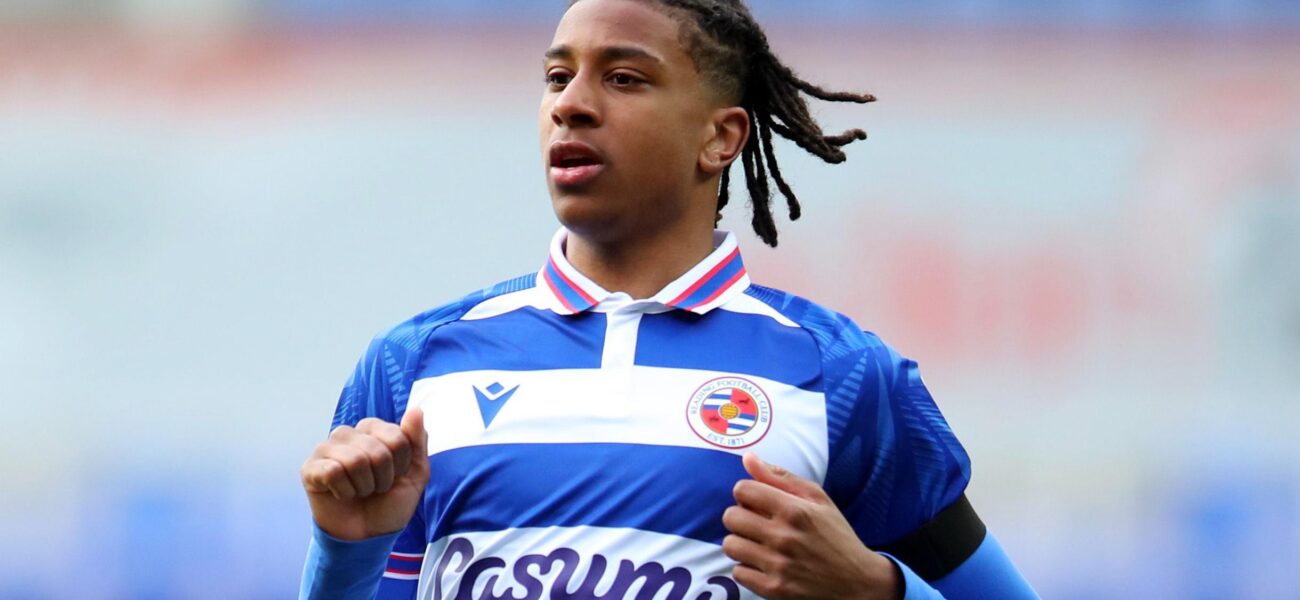
POLICY WIRE — London, UK — It’s a bit rich, isn’t it, when the football world, so obsessed with its glitzy academies and billion-dollar valuations, suddenly finds itself agog at a player who simply wouldn’t conform to its neat little blueprints? Michael Olise, this mercurial French winger now turning heads on the global stage, wasn’t some preordained product of a top-tier pipeline. Nah. He started elsewhere, way back in 2016 with Reading, a club many a big wig might’ve forgotten existed. He wasn’t always shiny material, you know. Brendan Flanagan, the brain trust over at Reading’s academy recruitment, points out just how Olise’s career began. “He pitched up here after rejection from Chelsea — and Man City. Now he’s playing for France in the quarter finals of the World Cup and is a potential Ballon d’Or winner.” It’s enough to make you wonder what those supposed super-clubs missed, isn’t it?
Flanagan wasn’t surprised, mind you, by the kid’s ascent from the Reading U15s right into the stratosphere of footballing superstardom. “Michael was a special talent. At the beginning of the under-15 season when he had just come in, he was a unique player, a freak of nature, the sort of player you’re trying to find.” Imagine that – a freak of nature, apparently not worth the development budget for Europe’s financial behemoths. He was picked up by Reading only after being deemed surplus by two of London’s wealthiest clubs. And now? Well, this fellow’s just wrapped up a Bundesliga campaign with Bayern Munich that saw him rack up a frankly ridiculous 25 goals and 28 assists. Think about those numbers for a second. [QUOTE_PLACEHOLDER]
But the true kicker came at the World Cup, didn’t it? France needed a spark, a bit of that unpredictable brilliance, — and Olise delivered, dishing out five assists. Five! That achievement equals the record for assists at a World Cup, a statistic you could look up anywhere from FIFA’s official archives to Opta’s granular breakdowns. His current club, Bayern Munich, paid handsomely, of course, three years after Crystal Palace had the good sense to snap him up from Reading in 2021. It just goes to show how often the established pathways sometimes blind scouts to genuine, if unconventional, brilliance.
It’s interesting, really, because this chap’s not about the glitz — and the glamour off the pitch. We’re told he’s notoriously tricky to interview, prefers chess to media scrums, — and solitude to socialites. Contrast that with his dazzling on-field persona. Flanagan, who’s seen a fair few talents pass through, noted early on, “At a very young age he could do things with a football first teamers couldn’t do.” This isn’t hyperbole, is it? We’re talking about an instinct, a perception of the game that transcends coaching drills. “He had an ability to see things quicker than anyone else, see a pass splitting defences wide open, and on the ball he could slow it right down when running at a defender, and then drop his shoulder and just accelerate away.” Pure poetry, if you ask a football purist.
This kind of player, unburdened by early over-hyping — and forced conformity, often emerges from unexpected places. His former club, Reading, is beaming. Jacob Brown, a current striker there, observes, “It’s a great achievement coming from Reading.” Brown also admitted, “I played against him in the Covid season, when he was breaking into the first team and you could immediately tell he was a very talented player.” No surprise, then, that those in the know weren’t surprised by his meteoric rise. His journey, marked by resilience and a quiet determination after those early snubs, should serve as a textbook example of talent finding its own way, irrespective of the initial gatekeepers. And honestly, it’s quite refreshing.
As France gears up for their quarter-final clash against Morocco, Olise stands right there on the brink. France are favorites, with bookmakers pointing to them for the final on 19 July. Reading will be sending their good wishes – a hearty “bonne chance” is in order. For the Moroccan defenders, however, it’s probably more like a heartfelt “sacrebleu.” The game itself becomes a fascinating nexus: a European powerhouse versus a strong Muslim-majority nation, carrying the hopes of not just its own citizens but arguably a broader region of the Global South. This isn’t just sport; it’s geopolitical theatre on green grass.
What This Means
Olise’s journey, rather than merely being a sports story, offers some pointed observations on global economic and political currents. His rejection by traditional European powerhouses and subsequent success with a ‘smaller’ club like Reading speaks volumes about the inefficiencies, and frankly, the snobbery, inherent in football’s elite talent identification systems. There’s a certain economic parallelism here; larger, entrenched economies often overlook budding opportunities in less ‘fashionable’ markets, only for those markets to produce something exceptional that then forces the larger players to pay a premium to acquire. The economic lesson is simple: value can be found—and indeed, cultivated—outside the expected corridors of power.
From a geopolitical perspective, the World Cup quarter-final pitting Olise’s France against Morocco highlights the shifting narratives around global influence and representation. Morocco’s unexpected, defiant run—they’ve really punched above their weight, haven’t they?—resonates deeply across the Arab world, Africa, and wider Muslim communities, from Karachi to Casablanca. It’s more than just a football match; it’s a surge of soft power, a narrative of triumph and collective pride that challenges established sporting hegemonies. For nations like Pakistan, constantly grappling with its own quest for international recognition, seeing a fellow Muslim-majority nation achieve such prominence in a globally celebrated arena sends a powerful message of potential and shared identity. And that’s a political ripple effect money just can’t buy.
The individual stories, like Olise’s, remind us that the global economy of talent isn’t always linear or predictable. His preference for chess and solitude over the typical footballer’s high-octane lifestyle also points to a more introspective, strategic player who perhaps eschews the superficial for deep mastery. In a world saturated with flash, his quiet grit stands out. Just as emerging markets quietly build foundational strength while older powers remain focused on brand recognition, Olise built his game away from the harshest spotlight. It’s a stark reminder that true disruptive innovation – whether in sports or markets – often comes from unexpected places and unconventional individuals. The global talent bazaar, it seems, still rewards visionaries. And that, really, is a narrative everyone can understand. Sometimes, the quietest stories shout the loudest. But we’re still waiting to see if he snags that Ballon d’Or, aren’t we?