


Sudan’s Crucible: El Fasher Teeters on a Knife-Edge, World Indifferent
POLICY WIRE — El Fasher, Sudan — The dust, ever-present, hangs heavier here than usual—thick with the exhaust of armoured vehicles, the grit of impending violence, and, worse, the residue of the...

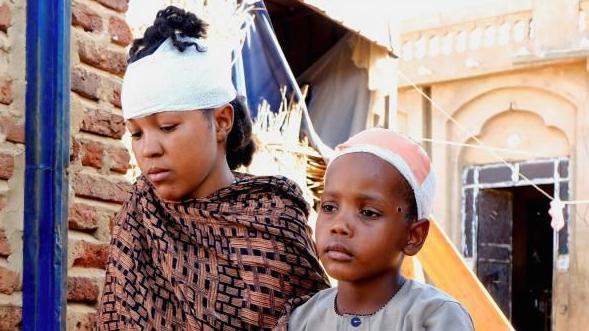
POLICY WIRE — El Fasher, Sudan — The dust, ever-present, hangs heavier here than usual—thick with the exhaust of armoured vehicles, the grit of impending violence, and, worse, the residue of the world’s silence. It isn’t the drone of combat that rattles the nerves most profoundly in El Fasher; it’s the unnerving calm, the quiet before a likely maelstrom that promises to reshape North Darfur in blood and ashes. International warnings have, for months, bounced off the impenetrable walls of geopolitical indifference, leaving roughly 1.5 million people — residents and a staggering influx of displaced persons — trapped in a cruel waiting game.
Humanitarian aid? It’s a trickle, sometimes less, starved by blockades and relentless fighting between the Sudanese Armed Forces (SAF) and the Rapid Support Forces (RSF). The RSF, those guys, they’ve encircled El Fasher for months, tightening their noose. And the SAF, along with allied armed groups, aren’t exactly retreating. No, they’re digging in. It’s a classic squeeze play, with civilians caught right in the middle, utterly expendable.
“We’re watching a city teeter on the precipice of utter disaster,” grimly stated Martin Griffiths, the UN’s former Under-Secretary-General for Humanitarian Affairs. “It’s a grotesque failure of collective will, really. Another atrocity unfolding in slow motion, — and the world just… blinks. How many more times do we need to say ‘never again’ before we actually act?” His frustration wasn’t lost on those who’ve tracked similar humanitarian crises across the globe.
The city, an administrative hub and humanitarian waypoint, represents a final stand for civilians fleeing violence elsewhere in Darfur. It’s also the sole remaining capital in Darfur not under RSF control. Losing it wouldn’t just be a strategic victory; it’d likely unleash a fresh wave of ethnically-tinged horror, reminiscent of the early 2000s, but magnified by modern-day militia ruthlessness. The historical echoes are chillingly precise.
Because El Fasher’s downfall isn’t just about Sudan. It’s a chilling symptom of a broader malaise gripping the Muslim world, where internal strife and external apathy converge to orphan entire populations. Look, for instance, at the calls—often unheard—from other nations in the Organization of Islamic Cooperation (OIC). Ambassador Jamal al-Sarraj, a senior diplomat from Pakistan who’s served across multiple conflict zones, didn’t mince words in a private conversation. “The silence from major capitals? It’s deafening. These aren’t just statistics; these are families, our brothers — and sisters in faith. Where’s the roar of outrage for Sudan from the Muslim world? Where is it, I ask you?” He pointed to Pakistan’s own struggles with internal displacement and the crushing burden of refugee care, stressing that solidarity needs to transcend rhetoric.
The data doesn’t lie, either. The UN Office for the Coordination of Humanitarian Affairs (OCHA) reports that over 8.6 million people have been displaced within Sudan since the conflict began in April 2023, with more than 1.8 million having fled across borders. These aren’t just figures; they’re endless processions of human misery, stretching into Chad — and beyond. Food is scarce. Medicine, rarer still. Aid groups are literally pleading, begging for access. But both sides, they just seem to shrug.
This isn’t an isolated incident. It’s part of a relentless churn, a cycle of forgotten wars and suffering that too often affects Muslim-majority nations. From the battlefields of Yemen to the statelessness of the Rohingya, there’s a pattern, a disheartening consistency in the world’s ability to compartmentalize and then conveniently forget.
What This Means
The situation in El Fasher doesn’t just represent a localized tragedy; it’s a barometer for the failure of international protection mechanisms. Should the city fall with significant civilian casualties, the political fallout would extend well beyond Sudan’s borders. Neighboring Chad, already struggling with an influx of Sudanese refugees, would face an overwhelming humanitarian catastrophe, risking its own delicate stability. Economically, Sudan’s already shattered infrastructure would collapse further, making any future reconstruction an almost impossible dream. the protracted conflict risks regionalizing, drawing in more proxies and external actors, much like Libya’s unwieldy proxy battleground. For global powers, their muted responses aren’t just an ethical lapse; they signal a dangerous precedent where armed groups can operate with impunity, effectively dismantling nation-states while the world watches—sometimes commenting, but never truly intervening. It’s a bitter truth: geopolitics sometimes just doesn’t prioritize human lives. The digital targeting of Muslim women in India might draw global ire, but the wholesale slaughter of innocents in Sudan? Well, that often remains firmly in the ‘too hard’ basket.
But make no mistake. The consequences of this ongoing dereliction will eventually ripple outward. The displaced will seek refuge elsewhere, further stressing fragile economies. And the sheer audacity of this violence, this flagrant disregard for international law, it will only embolden other autocratic regimes and militias worldwide. There’s a price for inaction, you see. And sooner or later, everyone pays it.