


Florida’s ‘Ideological Purity’ Push Hits Judicial Wall
POLICY WIRE — Washington, D.C. — Turns out, you can legislate thought only so far. A federal appeals court just threw a massive wrench into Florida Governor Ron DeSantis’s marquee culture-war...

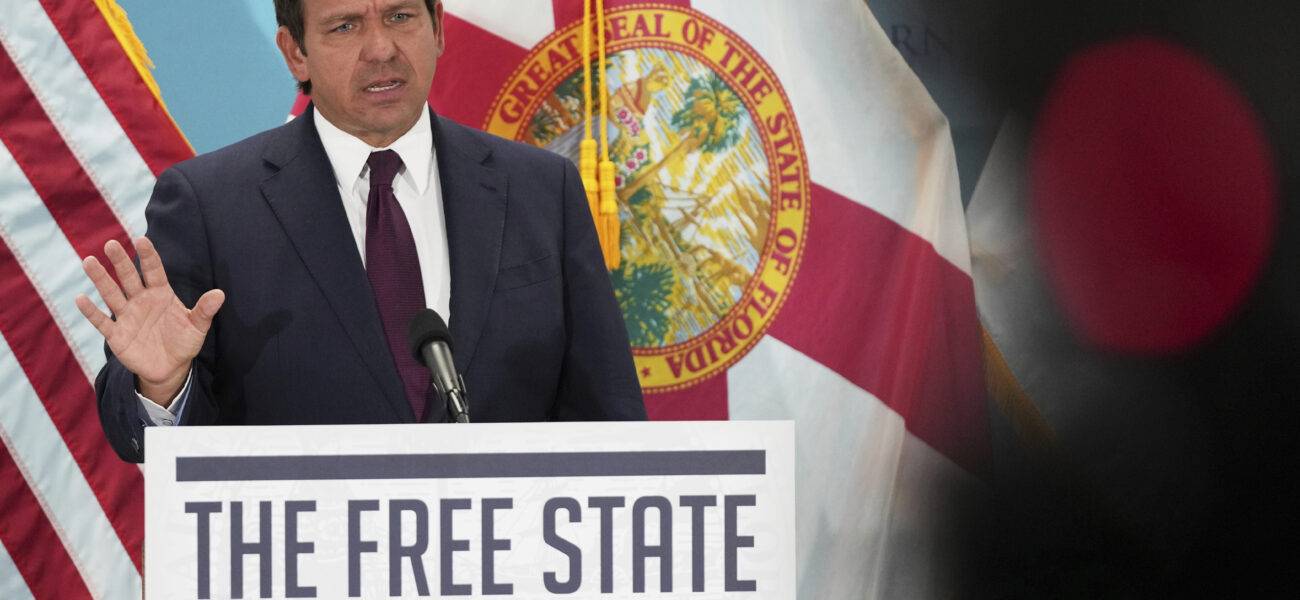
POLICY WIRE — Washington, D.C. — Turns out, you can legislate thought only so far. A federal appeals court just threw a massive wrench into Florida Governor Ron DeSantis’s marquee culture-war legislation, the so-called Stop Woke Act, marking a pretty clear judicial rebuff to a campaign cornerstone.
It’s a bold move by the Eleventh Circuit—a three-judge panel, no less—to halt a law that’s been, let’s face it, pretty much a template for ideological policing in classrooms and workplaces across the Sunshine State. The court didn’t just tweak it. They tore into the core intent. The language wasn’t subtle either; judges described the state’s efforts as [QUOTE_PLACEHOLDER], which really drives home the legal community’s skepticism toward state-mandated narratives.
And so, DeSantis’s administration, for all its bluster, now faces the unenviable task of defending a law that, at its heart, appears to tread rather heavily on fundamental First Amendment rights. The legislation had aimed to restrict how concepts like systemic racism and gender identity are discussed, effectively putting a muzzle on certain ideas. It’s an act of what many critics called compelled silence, or perhaps, compelled ideology, depending on your angle.
Because, really, what’s freedom of speech if the state gets to decide what topics are acceptable for debate? Opponents, including a motley crew of educators, activists, and business owners, had argued that the law was unconstitutionally vague and amounted to government overreach into private discourse. They had a point. The legal challenge wasn’t just about semantics; it was about the basic parameters of open discussion. That’s why its swift judicial dismemberment speaks volumes.
The judges’ ruling wasn’t just about blocking a bad law; it offered a stinging critique of the state’s rationale. It seems the court wasn’t buying the argument that prohibiting discussion on specific topics somehow promoted free speech or prevented discrimination. Far from it. It’s often been seen, here and abroad, as a blunt instrument against nuanced, difficult conversations, conversations that are actually quite necessary for any society that wants to grow past its historical blemishes. One judge characterized the legislation as a [QUOTE_PLACEHOLDER], highlighting the problematic scope.
It’s not an isolated incident, either. Across the United States, states have introduced over 200 educational gag orders since 2021, according to tracking by PEN America. Florida’s law was simply one of the more prominent, thanks to DeSantis’s national profile and a willingness to lean into contentious cultural issues. But this judicial outcome? It’s a wake-up call for anyone else contemplating similar legislative gambits.
Globally, these debates about curriculum control — and ideological purity aren’t unique to American shores. Look at Pakistan, for example. Debates often erupt over the interpretation of history textbooks or the scope of religious education in public schools. Contentious arguments about historical figures or national narratives – often enforced by state-sanctioned bodies – show the recurring tension between state interests and intellectual autonomy. The struggles aren’t always identical, but the underlying drive to shape collective thought through legislative might? It’s a familiar strain that echoes from Islamabad to Tallahassee. These struggles, particularly around control of narrative, can serve as a global warning.
📄 POLICY WIRE WHITEPAPER PUBLISHED: PAKISTAN'S NATIONAL SECURITY POLICY PRIORITIES
👉 READ BY CLICKING HEREThe governor’s office, as you might expect, has already vowed to fight this, probably all the way to the Supreme Court. They’ve got to, don’t they? It’s part of the brand. But it’s an uphill climb when the lower courts have delivered such a categorical smackdown. The court basically said, [QUOTE_PLACEHOLDER] – — and that’s hard to spin.
And for those watching Florida as a barometer for conservative legal strategy, this decision is a pretty clear indication that there are still boundaries. Judicial checks, as archaic as they might sometimes feel to firebrand politicians, still matter. They’re slow. They’re deliberate. But they work.
It won’t stop the broader culture wars, naturally. Those are here to stay. But it does provide a moment of pause, a judicial intervention in the rapid-fire legislative efforts to codify specific worldviews. Perhaps it’s a small victory for nuance in a world that craves simplicity, even if that simplicity comes at the expense of difficult truths.
What This Means
This ruling is a significant political setback for Governor DeSantis, not just domestically but also on the national stage as he considers future political endeavors. It suggests that even in a conservative judicial environment, certain ideological laws push too hard against constitutional guardrails, particularly the First Amendment. This isn’t just about free speech; it’s about the state’s ability to dictate what private businesses and educational institutions can say or teach—a power that makes many judges nervous, regardless of their political leanings.
Economically, such laws, even if overturned, create a chilling effect. Businesses eyeing Florida for relocation or expansion might think twice about a state perceived as ideologically hostile to certain forms of open discussion, potentially impacting talent acquisition and a diverse workforce. Academically, the perception of ideological restrictions could deter scholars and students, chipping away at the state’s intellectual capital. The lingering legal battles create uncertainty, — and businesses and institutions generally dislike uncertainty. It’s a costly distraction from core objectives, whether they’re profits or pedagogy. The fight isn’t over, but the judiciary has drawn a line in the sand—and that’s a signal any smart political operator, or savvy CEO, should heed.
📖 GET YOUR FREE COPY NOW OF POLICY WIRE DIGITAL MAGAZINE JULY 2026 EDITION
👉 READ & DOWNLOAD FREE MAGAZINE