

World Cup’s Glittering Spectacle: More Than Just Football, a Global Pop Blitz and Charity Gambit
POLICY WIRE — New York, United States — For a tournament meant to crown the world’s best football squad, the FIFA World Cup final has evolved. It’s no longer merely a match; it’s become a full-blown,...

POLICY WIRE — New York, United States — For a tournament meant to crown the world’s best football squad, the FIFA World Cup final has evolved. It’s no longer merely a match; it’s become a full-blown, commercially turbocharged pop-culture extravaganza. What might be termed a football contest will now boast an 11-minute intermission spectacle resembling America’s gridiron pomp, staged incongruously outside New York on July 19. It’s less about a trophy, it seems, and more about who can sing loudest, or perhaps, for whom the deepest pockets are opening.
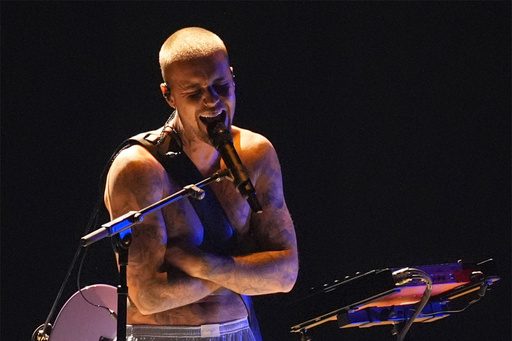
Gone are the days when the beautiful game alone sufficed. Now, the final’s halftime show—an event practically unheard of in global soccer until very recently—is gearing up to parade a dizzying array of star power. Justin Bieber, for one, is poised to bring what was termed his swag, sharing a very large stage with icons like Madonna, Shakira, and South Korean sensation BTS. And that’s just a partial list. Also set to make an appearance: Afrobeats trailblazer Burna Boy, Venezuelan maestro Gustavo Dudamel, and even the Staten Island-based PS22 Chorus, comprising elementary school children who will be joined by Coldplay. Seriously, the lineup feels like a high schooler’s dream playlist from three different decades mashed into one set list. [QUOTE_PLACEHOLDER]
But wait, there’s more. Even Kermit and Miss Piggy, those stalwart Muppet figures, along with assorted characters from Sesame Street, are scheduled to join the fray. It’s a bold choice. One has to wonder if these puppet legends will be taking on Shakira in a dance-off, or perhaps if they’re just there to remind us of the wholesome innocence football theoretically represents. Maybe it’s a cynical play for cross-generational viewership, a nod to an audience beyond the rabid football fan base who are quite content with just a football match, thank you very much.
And let’s not forget the benevolent overlay. This entire dazzling circus is apparently in service of the FIFA Global Citizen Education Fund, which has its sights set on raising a cool $100 million, according to event organizers, all aimed at helping kids get schooling and, you know, a bit of soccer exposure. It’s quite the package: global pop, global sport, global good deeds. The marketing team certainly isn’t asleep at the wheel. Justin Bieber said in a statement that he was grateful to be part of this Halftime Show, and even more grateful knowing it’s already helping expand access to education for children around the world. Convenient, that. He probably wasn’t being ironic.
For regions like Pakistan and its neighboring South Asian nations—places where the roar of the crowd for football, despite lacking a consistent top-tier presence, is deafening—such an event plays several roles. It isn’t just entertainment; it’s a profound cultural touchstone. The sheer global connectivity that FIFA cultivates, even if steeped in corporate sponsorship, resonates deeply across communities often geographically and economically disparate. For children in such places, the fund’s educational mission, however token, becomes a real, tangible promise. The idea of linking world-class pop with education offers a glimmer for development. A country where formal schooling faces significant hurdles, often due to funding shortfalls, would naturally appreciate any initiative promising to address this, regardless of the flashy packaging. This connection, however, usually feels less like charity and more like shrewd global public relations, painting a halo around an event that makes a staggering amount of money anyway.
One figure worth a longer glance, if you’re into the deeper narrative, is Burna Boy. He’s one-half of this year’s official song for the World Cup, Dai Dai, led by Shakira. That tune itself is a kind of fusion — Afrobeats meets Latin rhythms, producing an undeniably global, multilingual pop track. In one verse, Shakira cheers, Brazil, Uruguay, Argentina, Colombia. Mexico, Japan, Korea, Netherlands. Burna Boy, for his part, sees it as a serious gig. He said in a statement that to represent Africa on the first-ever FIFA World Cup Final Halftime Show is a privilege and a responsibility that I don’t take lightly. Good on him; somebody ought to take it seriously, considering the billions watching.
📄 POLICY WIRE WHITEPAPER PUBLISHED: PAKISTAN'S NATIONAL SECURITY POLICY PRIORITIES
👉 READ BY CLICKING HERESuper Bowl’s famed halftime shows are old hat now, culturally embedded. But in soccer? Not so much. Other events, like the Champions League final, usually feature pre-match concerts, a decidedly less prominent slot. This elevation of the interval to main event status—that 11-minute spectacle, to be precise—signals a shift. It’s an embrace of American-style razzmatazz, projecting entertainment that stretches far beyond the 90 minutes of gameplay itself. The sport, long hailed for its pure, uncomplicated global appeal, is clearly learning new tricks from the glitzy playbook of its North American cousins.
What This Means
This evolving World Cup final signals a stark commercial pivot for FIFA. The organization, long criticized for everything from corruption scandals to questionable host selections, now overtly positions its marquee event not just as a sporting contest but as a full-throttle global entertainment platform. The immense cultural cachet of football, particularly across South Asia and the Muslim world, where it routinely draws audiences larger than many regional sports combined, is being harnessed. The inclusion of educational funding, while laudable, acts as a sophisticated form of soft power, cloaking profit motives in philanthropic rhetoric. Economically, this model promises further revenue diversification, insulating FIFA from reliance purely on broadcast rights. Politically, aligning with A-list celebrities and global charities shores up the organization’s tarnished public image, presenting it as a benign global player invested in human development, even if the primary goal remains spectacle and financial gain. But it’s shrewd. And effective. Nobody watches the commercials more closely than Policy Wire does.