


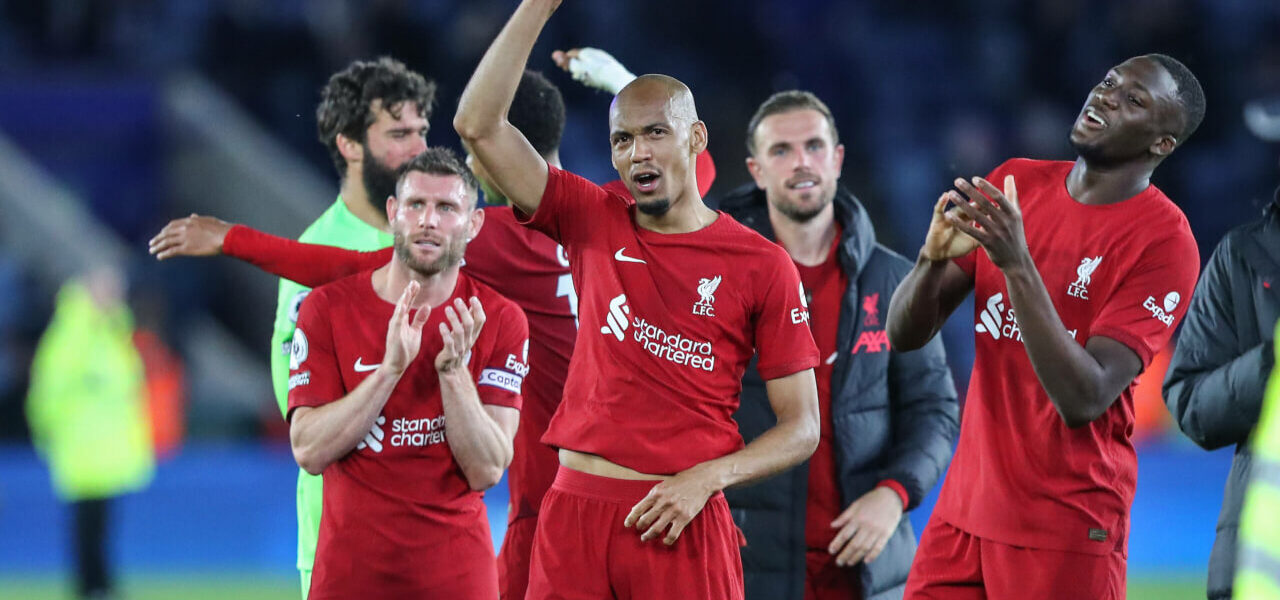
Madrid’s Cost-Benefit Calculation: Why Free Agent Fabinho Tests Football’s Eternal Youth Obsession
POLICY WIRE — Madrid, Spain — The footballing world, often fixated on shimmering prodigies and stratospheric transfer fees, occasionally — and quite tellingly — casts a lingering glance backward. Not...

POLICY WIRE — Madrid, Spain — The footballing world, often fixated on shimmering prodigies and stratospheric transfer fees, occasionally — and quite tellingly — casts a lingering glance backward. Not in longing, mind you, but in cold, hard calculation. That’s the unspoken story behind Fabinho, the former Liverpool lynchpin, — and his curious overtures to Real Madrid. It’s not just a romantic return, no, it’s a nuanced dance of economics, squad depth, and the peculiar value placed on a footballer nearing his twilight.
See, for all the billions sloshing around Europe’s top clubs, finding a reliable, high-pedigree operator for absolutely no transfer outlay remains football’s ultimate arbitrage play. Because let’s be blunt: in a market where a merely ‘decent’ midfielder can still command upwards of £30 million ($38 million) in transfer fees, per industry estimates, a player like Fabinho — seasoned, trophy-laden, and on a free — starts to look like a distress sale for everyone *but* the buyer. His three seasons with Saudi Arabia’s Al Ittihad have evidently sharpened that market appeal.
Fabinho, now 30, hasn’t shied away from the discussion, hinting at his current status while back in Madrid. “But I’m coming to Madrid because I have family here and we’ll be staying here for a while,” he explained to El Chiringuito TV, a quote that had fans doing mental gymnastics. He elaborated, “When the World Cup ended, I wasn’t really sure what to do or where to go, but we decided to come here to be close to our family here in Spain.” That kind of casual openness — unvarnished by agent-speak — suggests an athlete weighing options, not a diva orchestrating a grand unveiling. It’s refreshing, in a cynical kind of way. But what about the behemoth known as Real Madrid? Do they care about family trips?
It’s a safe bet they don’t. Their interest, if it materializes beyond whispers, would hinge entirely on pragmatism. Fabinho previously had a fleeting, almost mythical brush with Real Madrid, making a single senior appearance for them over a decade ago. It’s a nice narrative for the press — the circle of life, football edition — but Florentino Pérez’s Galácticos machine isn’t powered by nostalgia. They operate on results, brand value, — and shrewd financial maneuvering. And a player who has just spent three years away from Europe’s highest intensity leagues needs a careful audit.
“Look, we’re always scouting for value,” explained one seasoned Madrid executive, opting for anonymity to speak candidly on potential targets. “Experience, market savvy, tactical nous — it all gets weighed. Sentimentality? That’s for the fans, not the balance sheet.” This unflinching approach typifies why Madrid sits atop the heap. They didn’t win 15 European Cups by chasing romantic sagas; they won them by buying the best, or the best value. But where does Fabinho fit that cold calculus now?
Because while his stint in the Saudi Pro League provided substantial financial rewards and further silverware, it also offered a slight step down in competitive ferocity compared to the Premier League’s incessant grind. Yet, this relocation to the Persian Gulf nation — a broader part of the Muslim world’s escalating investment in global sports — has in an odd way *preserved* his European market value as a free agent. It let him wind down his contract without being benched, keeping him visible, if not constantly challenged at the very top. For clubs like Madrid, it’s about plugging a very specific tactical gap without denting an already colossal wage bill for a transfer fee. It’s a quiet nod to the changing economic landscapes of modern football, where Gulf wealth plays an undeniable role in player trajectories, even for those eventually returning to European giants.
📄 POLICY WIRE WHITEPAPER PUBLISHED: PAKISTAN'S NATIONAL SECURITY POLICY PRIORITIES
👉 READ BY CLICKING HEREWhat This Means
This isn’t about Fabinho’s marketability as a superstar; it’s about his utility as a strategic asset. Real Madrid has already bolstered its squad with other shrewd deals, picking up talent aggressively. If Fabinho lands at the Bernabéu, it won’t be as the orchestrator he once was for Liverpool. It would be as an experienced, cool head in the pivot, an alternative, or perhaps a mentor figure. His tactical discipline, which never relied on sheer pace or flashy dribbles, translates well into a reduced, specific role.
For Policy Wire, this isn’t just a sports story; it’s an economic case study. It illustrates how Europe’s footballing royalty leverages every available advantage, even looking to ‘recycle’ talent that has previously ventured into leagues outside traditional power structures. It highlights the growing influence of non-European markets, particularly from the Gulf, on player careers and subsequent transfer opportunities back into elite European football. Fabinho’s journey from a young prospect at Madrid, to a world-beater at Liverpool, then a high-earner in Saudi Arabia, and now possibly a shrewd, late-career return to Spain, isn’t just a career path — it’s a diagram of modern football’s fluid global capital. It signals a sophisticated, transactional realism overriding sentimentality, where free agents, regardless of their age, represent an undeniable fiscal opportunity.
“Right now I don’t have anything lined up so there’s not much point in talking about teams or team names,” Fabinho candidly admitted, “but it’s a league I’d generally like to come and play in.” That statement, understated as it’s, speaks volumes. The veteran is available. Madrid is looking. The rest, as they say, is merely details for the accountants to sort out.