
Taipei’s Stern Warning: Sovereignty Isn’t a Provocation, It’s a Stance
POLICY WIRE — Taipei, Taiwan — Another day, another official statement about what Taiwan’s robust military preparations really mean. You’d think the globe’s financial markets – already teetering, it...

POLICY WIRE — Taipei, Taiwan — Another day, another official statement about what Taiwan’s robust military preparations really mean. You’d think the globe’s financial markets – already teetering, it seems, on the edge of some new existential economic cliff – would appreciate a bit more quiet diplomacy over the loudspeaker. But hey, subtlety’s gone out the window in these parts, hasn’t it?
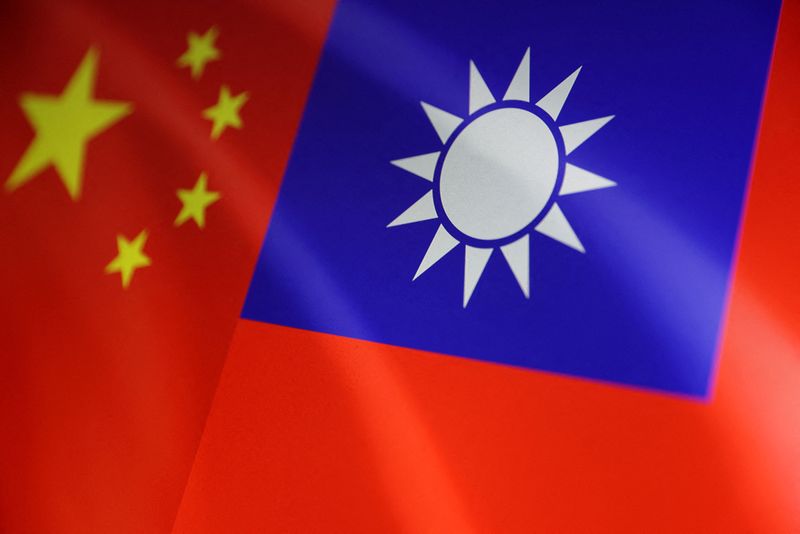
It’s no longer about whether Beijing is watching; it’s about whether anyone, anywhere, can still feign surprise at Taipei’s candid admission of fortifying its defenses. A senior official recently articulated the island’s position with a certain weary insistence: that equipping itself to withstand external aggression isn’t, in fact, an act designed to get anyone riled up. [QUOTE_PLACEHOLDER], they asserted, as if self-preservation were an arcane concept needing constant re-definition for a global audience with an increasingly short attention span. One can almost picture the collective shrug in diplomatic circles, while generals undoubtedly check their spreadsheets for the next quarterly procurement projections.
The stakes here aren’t some academic exercise. We’re talking about a thriving democracy—one with a world-beating semiconductor industry, by the way—living under the persistent, rather loud shadow of a vastly larger, autocratic neighbor. Taiwan’s efforts, like extended mandatory military service and enhanced missile capabilities, aren’t exactly state secrets. They’re broadcast, analyzed, and — increasingly — rationalized. The world keeps hearing that Taiwan’s security strategy isn’t intended as a poke in the eye, but as a legitimate response to clear and present threats. But one has to ask, how many times can one insist [QUOTE_PLACEHOLDER] before the message loses its rhetorical zing?
And let’s be frank, this narrative about avoiding provocation is a tricky dance. It requires everyone involved to pretend that simply existing isn’t, for some, already provocative enough. Taipei seems intent on demonstrating that its self-reliance isn’t a negotiating tactic but a fundamental requirement. It’s a message that resonates far beyond the Strait—touching capitals from Washington D.C. to Islamabad, where the echoes of similar power imbalances — and territorial disputes are, let’s say, not unfamiliar. Because for many nations navigating complex geopolitical waters, the ability to stand tall without appearing to deliberately trip another remains the ultimate, difficult aspiration.
This escalating rhetoric hasn’t materialized out of thin air, though. It’s been building, year by grinding year, especially as global power dynamics shift and major players test the limits of their influence. From the Spratly Islands to Kashmir, we’re witnessing a broad pattern of nations asserting their interpretations of sovereignty and historical claims. The U.S. National Defense Authorization Act (NDAA) for fiscal year 2023, for instance, authorized up to 10 billion USD in security assistance to Taiwan over five years. It’s a telling figure, underscoring that global powers aren’t just listening; they’re hedging their bets.
But Washington’s overt backing, while comforting to Taipei, complicates the ‘not a provocation’ stance, doesn’t it? Every delivery of F-16s or Stinger missiles comes with its own geopolitical baggage, stirring the pot as much as it steadies it. It’s a double-edged sword, forging deterrence while simultaneously confirming Beijing’s suspicion that external forces are prodding Taiwan into a more confrontational posture. No wonder a senior figure from the island nation recently suggested their goal is [QUOTE_PLACEHOLDER] amidst these swirling currents.
📄 POLICY WIRE WHITEPAPER PUBLISHED: PAKISTAN'S NATIONAL SECURITY POLICY PRIORITIES
👉 READ BY CLICKING HEREConsider the broader Asian theater, particularly the Muslim world’s intricate relations. Pakistan, a longstanding ally of China, watches these developments with keen interest. While not directly involved, the economic and strategic implications of any major East Asian conflict would send ripples—tsunamis, more like—through global supply chains and trade routes, directly impacting its own Belt and Road Initiative projects and regional stability. It’s not a stretch to imagine Islamabad, a nation with its own delicate balancing act between major powers, looking at Taiwan’s predicament as a chilling cautionary tale of great power competition played out on a smaller nation’s stage.
Taiwan’s continued emphasis on preparing for a conflict—through robust civil defense drills and an invigorated reserve force—speaks volumes. It isn’t just about showing resolve; it’s about signaling to an unpredictable adversary that the cost of any kinetic action would be astronomically high. It’s not just military hardware; it’s the hardened will of a population to defend its chosen way of life. And for those of us observing, the subtlety of this distinction feels, at times, like splitting hairs with a broadaxe.
What This Means
Politically, Taipei’s sustained insistence that its defensive measures aren’t provocative underscores a calculated shift in messaging. It’s less about appeasement — and more about redefining the terms of engagement. They’re telling Beijing, and by extension the world, that self-defense isn’t negotiable, nor is it a chess move in some larger game of strategic one-upmanship. It’s simply existence, protected. This hardened stance likely aims to solidify international sympathy, particularly among democracies who view Taiwan as a critical frontline against authoritarian expansionism. But, of course, this sort of rhetoric also risks fueling Beijing’s propaganda that Taiwan is becoming an American pawn, egging on separatist sentiments. Economically, this plays into the long-term decoupling narratives. Nations and corporations reliant on Taiwan’s technological output—hello, semiconductors—are constantly reassessing risk, making investment decisions that could ultimately shift production away, or at least diversify it. While Taiwan attempts to stabilize perception, the underlying message to global markets is clear: geopolitical risk is an accelerating, inescapable variable. For Beijing, the statements from Taipei are just another piece of the puzzle reinforcing their own ‘reunification’ narrative, likely pushing them to escalate their own gray-zone tactics to maintain pressure without tipping into outright conflict. Nobody’s blinking, but everyone’s certainly watching the eyelid twitch.