


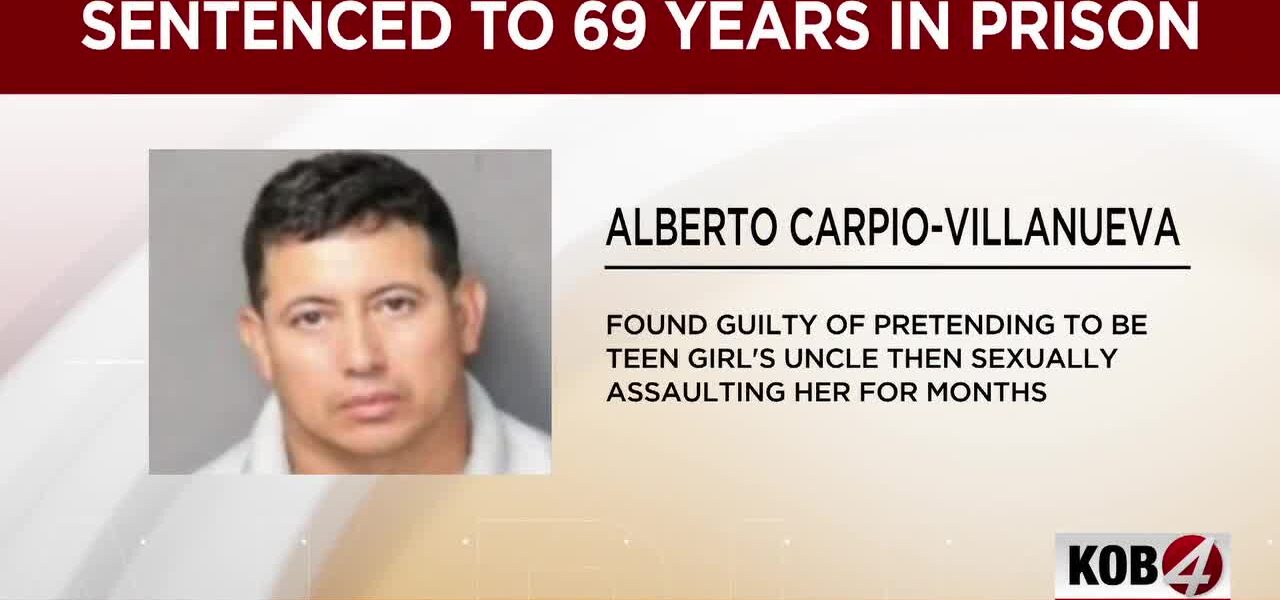
Desert Nightmare: New Mexico Sentence Unveils Global Human Trafficking Peril
POLICY WIRE — ALBUQUERQUE, NM — The arid expanse of New Mexico, with its stark beauty and sun-baked landscapes, became for one young girl a terrifying backdrop to unimaginable cruelty. Her journey...

POLICY WIRE — ALBUQUERQUE, NM — The arid expanse of New Mexico, with its stark beauty and sun-baked landscapes, became for one young girl a terrifying backdrop to unimaginable cruelty. Her journey across continents culminated not in the promise of a new beginning, but in a grim entrapment, woven from a monstrous deception. Her story, sadly, isn’t a singular horror; it’s a chilling echo of countless narratives unfolding across the globe, from the dusty trails of Central America to the tumultuous borderlands of places like Pakistan.
Alberto Carpio-Villanueva now faces the stark reality of what can only be described as a lengthy, forced retirement from free society. A judge here, without preamble or noticeable flourish, laid down a sentence designed to ensure he won’t be seeing much daylight for the better part of his natural existence: 69 years in prison. The offense was stark: investigators said he brought a 15-year-old girl to New Mexico and sexually assaulted her for three months. That’s a quarter of a year under his dominion. And the method? Investigators said Carpio-Villanueva brought a 15-year-old girl from Honduras to New Mexico and claimed he was her uncle. Imagine the predatory calculation inherent in such a ruse. [QUOTE_PLACEHOLDER]
He preyed on vulnerability, leveraging what was likely a child’s desperation for safety, for a future, transforming it into a three-month hellscape. The sheer audacity of such a claim — asserting a familial bond to gain absolute control — it’s enough to make your stomach churn. And the victim? Just a child, wrenched from her home, propelled across vast distances into an alien land, only to be subjected to such brutality. But this isn’t just about one man, one particularly repulsive act. No, it’s a jarring glimpse into the darker currents of human migration, a harsh reminder of how easily trust can be shattered when those seeking a better life become ripe targets for exploitation.
This particular brand of human exploitation—children, migrants, false promises—it isn’t confined solely to the U.S. southern border or the high desert expanses of New Mexico. It’s a persistent, virulent problem, one we hear about in harrowing reports emerging from conflict zones, and from regions grappling with profound economic displacement. Children, particularly unaccompanied minors who are often already adrift, they become easy marks for predators promising safe passage, work, or reunion with distant family members. Think about the ongoing humanitarian crises in certain parts of the Muslim world, for instance. Displaced populations, scrambling for survival, they unwittingly create fertile ground for traffickers. The sheer desperation makes discerning friend from foe, a true savior from a malevolent tormentor, incredibly difficult. According to the UNODC Global Report on Trafficking in Persons, children comprise 34% of all detected trafficking victims worldwide. That’s a staggering one-third of the global total—not just a dry statistic, but a brutal reality encompassing individual lives brutalized, innocence stolen, and futures permanently warped.
The layers of deceit here—the faked kinship, the false journey—they’re designed to isolate. They cut off the victim from any potential lifelines, ensuring silence. That’s the traffickers’ playbook, universal in its application. It strips victims of their agency, their voice, their very humanity. And it works. It shouldn’t. But it does. Law enforcement agencies face an uphill battle. They’re battling well-organized networks, oftentimes transnational, that thrive on obscurity — and fear. They depend on our collective blindness to the whispers of suffering happening just out of sight.
📄 POLICY WIRE WHITEPAPER PUBLISHED: PAKISTAN'S NATIONAL SECURITY POLICY PRIORITIES
👉 READ BY CLICKING HEREBut when cases like Carpio-Villanueva’s make it through the grinding wheels of justice, even then, the true scope of the problem often remains obscured. We only see the one, not the many. The long sentence, it offers a sliver of retribution, a cold comfort. Yet, for every trafficker brought to heel, how many more operate freely, under the radar, perhaps planning their next deceitful pickup? And for every victim saved, how many remain lost, caught in unseen webs of exploitation? These questions nag at anyone who glances past the headlines — and sees the systemic rot beneath. Because even 69 years, as an example, isn’t enough to mend shattered lives.
What This Means
This New Mexico verdict, delivered with grim finality, resonates far beyond the courthouse walls, spotlighting the insidious reach of human trafficking—particularly its exploitation of vulnerable, migrant children. Politically, it should serve as a stark reminder to policymakers that border security isn’t just about managing crossings or documenting individuals; it’s profoundly about protecting the most defenseless among them. There’s a persistent tension between humanitarian impulses and security mandates, and this case reveals where that tension can, quite literally, become a matter of life and psychological death for a child. Legislators and enforcement agencies have to reckon with the methods used by traffickers, including the sophisticated adoption of false familial claims—which often go unchallenged in the initial stages of migration or asylum processing. This vulnerability requires a systemic re-evaluation of screening processes, making them robust enough to identify these dangerous deceptions without impeding legitimate asylum claims. Economically, these cases highlight a dark side of globalization and cross-border movement, where the economic desperation driving migration from poorer regions (like parts of Central America or, to draw a parallel, South Asia) meets ruthless predatory opportunism in more affluent destinations. The so-called demand for cheap, exploitable labor—or worse, human property for sexual exploitation—drives this grotesque shadow economy. the immense human cost to the victim creates an unquantifiable burden on societies; rehabilitative services are extensive, and the long-term impact on mental health and social integration means that even after justice is served, the true fallout continues to ripple outward for decades. It’s a harsh truth: a verdict can end a criminal’s reign, but it can’t erase the scars.
He was found guilty in the case.
📖 GET YOUR FREE COPY NOW OF POLICY WIRE DIGITAL MAGAZINE JULY 2026 EDITION
👉 READ & DOWNLOAD FREE MAGAZINE