
Albuquerque’s 4th: Beyond the Spectacle, Policy Insights
Dive into Albuquerque's 250th Independence Day. Discover the policy implications, economic pulse, and global context behind America's grand celebrations.

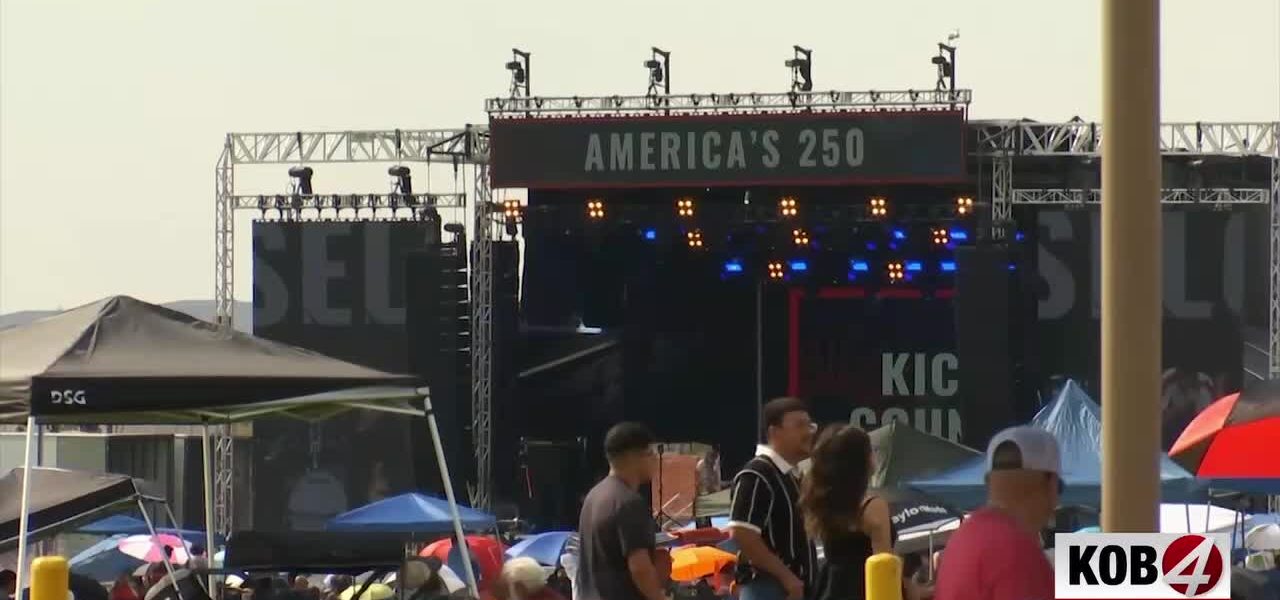
POLICY WIRE — Albuquerque, N.M. — It wasn’t the philosophical underpinnings of democracy or the grand sweep of American history that captivated the throngs at Balloon Fiesta Park this Independence Day. No, it was the raw, unadulterated anticipation of pyrotechnics—pure and simple. As the sun began its languid descent, painting the New Mexico sky in fiery hues, thousands of families navigated the heat and the logistical maze, not primarily for abstract concepts, but for the visceral thrill of explosive light. This scene played out across a nation marking its 250th birthday, a quarter-millennium punctuated by fleeting joys and persistent challenges.
The city’s annual Freedom Fourth event was less a solemn contemplation of nationhood and more a pragmatic exercise in public jubilation. There was live music, sure. There were food trucks lined up across the celebration, beckoning with fried allure. And naturally, there were the face-painting stations, transforming sun-kissed cheeks into canvases for eagles and flags. It wasn’t exactly a highbrow civic discourse, but then again, that’s rarely the point of these massive gatherings. It’s about collective experience, about the shared ritual.
Families, a vital component of this national pageant, flocked to the sprawling park. Some voiced sentiments fitting for the occasion. Melinda Williams, for instance, offered, [QUOTE_PLACEHOLDER] A powerful sentiment, no doubt, but the immediate allure for many younger attendees was far more straightforward. A group of kids at the event confessed, “The fireworks, fireworks,” while another young attendee, Christmas Becenti, simply stated, [QUOTE_PLACEHOLDER] Kids aren’t really concerned with geopolitical strategies; they’re all about the spectacle, aren’t they?
And what a spectacle it was. The sheer effort to coordinate such an event is considerable, an invisible layer beneath the festive veneer. City planning, security, waste management—it’s a bureaucratic ballet. But, like all good shows, it makes the arduous look effortless. The heat, however, was a persistent, unyielding antagonist. “It was fun, but it just got so hot,” reported one youthful participant. That’s the reality, isn’t it? Even the most soaring rhetoric of freedom can’t mitigate a high desert July afternoon. Imagine managing similar crowds, with similar expectations for relief and entertainment, in even more oppressive conditions found in, say, Karachi or Lahore, during a national holiday. There, public celebrations must contend not only with the elements but often with more precarious infrastructure and tighter security concerns, making America’s heat a relatively minor, if inconvenient, obstacle.
The economic pulse of such an event is also worth a look. Food vendors, face painters, souvenir hawkers—it’s a localized economic boomlet, even if fleeting. Nationally, the collective spend on fireworks alone is staggering. Data from the American Pyrotechnics Association showed consumer firework sales in the U.S. reaching an estimated $2.3 billion in 2022, marking a considerable expenditure on transient beauty. That’s a lot of bang for a quarter-millennium. But it’s also a significant sum that circulates through local economies, provides temporary jobs, and contributes to the general coffers of commerce.
“Oh, I’m just having fun. Didn’t expect being on the news today, but yeah, I was just coming here to have fun and see fireworks,” said Amilli Sweeney, capturing the spontaneous, almost accidental, joy many felt. But the comments weren’t all starry-eyed patriotism. Chad Tsosie offered a more philosophical, if brief, take: [QUOTE_PLACEHOLDER] A half-truth, perhaps, but a thought-provoking one, especially for a nation grappling with its own evolving identity.
📄 POLICY WIRE WHITEPAPER PUBLISHED: PAKISTAN'S NATIONAL SECURITY POLICY PRIORITIES
👉 READ BY CLICKING HEREEven as Americans celebrated their collective identity, nations across the globe grapple with their own historical milestones and the messy business of nation-building. Pakistan, for instance, carved out of British India in 1947, hasn’t yet reached its centenary, let alone its quarter-millennium. Its struggle to define national unity amidst regional and ethnic diversities, to say nothing of political instability, casts the relatively smooth orchestration of Albuquerque’s event into a different light. The kind of peaceful mass gathering seen in New Mexico—despite the heat and traffic—is a privilege, one built on layers of social contract and institutional resilience, a luxury not uniformly enjoyed worldwide. For nations still charting their course, perhaps grappling with political turmoil or existential threats, the simple act of congregating en masse for celebration can be fraught with an entirely different set of challenges. And that’s something worth pondering when we consider the true meaning of a nation’s birthday.
What This Means
The Albuquerque Freedom Fourth, like countless Independence Day celebrations nationwide, functions as more than just a party; it’s a policy barometer of sorts, however subtle. These events, often dismissed as mere recreation, are informal tests of civic engagement, municipal capacity, and national mood. The sheer volume of attendees, navigating public spaces and services, offers a snapshot of community cohesion and administrative competence. The fact that thousands can gather safely, if a little sweatily, for a shared experience, speaks to underlying social capital and the effectiveness of public safety frameworks. From a broader political economy perspective, these festivities inject localized capital into entertainment and service industries, offering a tangible, if temporary, boost. But they also subtly reinforce a national narrative. A government that can successfully orchestrate such large-scale popular celebrations without significant incident strengthens its informal legitimacy among its populace.
For Policy Wire readers, particularly those watching international relations, it’s worth noting the soft power these domestic displays project. The images of joyous families, of fireworks painting the night sky—even those images filtered through the lens of local news—contribute to an external perception of stability and societal well-being. This might seem a minor point amidst grander geopolitical chess moves, but the ability of a nation to celebrate its founding myths openly and peacefully contrasts sharply with regions where such gatherings are either impossible due to conflict or highly securitized. It’s a quiet advertisement for a certain kind of societal functionality. That contrast, more than any direct diplomatic maneuver, often tells the real story of national strength.