


Meloni’s Deportation Blitz: Italy Courts Controversy on Europe’s Shifting Sands
POLICY WIRE — Rome, Italy — The shifting winds of European political discourse, consistently drawn to questions of sovereignty and the social contract, have once again whipped up a predictable storm...

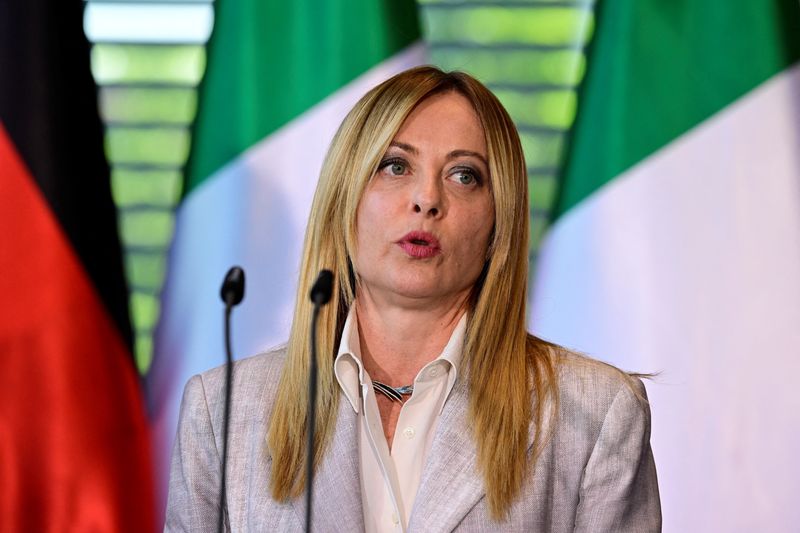
POLICY WIRE — Rome, Italy — The shifting winds of European political discourse, consistently drawn to questions of sovereignty and the social contract, have once again whipped up a predictable storm around migration. It’s a drama many seasoned observers have seen play out countless times before, but with each iteration, the stakes somehow manage to climb higher. This time, Italy’s governing Fratelli d’Italia party, led by Prime Minister Giorgia Meloni, is orchestrating the latest act, proposing a significantly accelerated process for the deportation of foreign offenders.
It isn’t merely about policy adjustments; it’s about making a statement—a declarative assertion of national control in a world that often feels adrift. The party, as it often does, positions the initiative as a necessary safeguard, framing it as an unyielding push to preserve internal security and uphold the rule of law. We’re talking about a proposal to make short work of administrative and legal hurdles, clearing the path to eject individuals deemed undesirable faster than you can say — well, just — faster.
And what’s this swiftness all about? It translates into practical terms for many communities already living on the precarious edges of European society. Imagine the ripple effects for families, for individuals, even those contributing tirelessly to local economies, who suddenly find their very existence under a heavier, swifter scrutiny. They’re just trying to make a life, you know? The plan, from what we understand, aims for [QUOTE_PLACEHOLDER], indicating a desire to truncate the appeals process and remove many of the current procedural safeguards.
But here’s the rub: such moves aren’t enacted in a vacuum. Europe has been grappling with immigration for decades. The numbers alone paint a stark picture: by the end of 2023, approximately 4.7 million non-EU citizens were residing in Italy, according to data from Istat (Italy’s National Institute of Statistics). That’s a lot of lives impacted by shifts in policy. Meloni’s administration, however, isn’t backing down. They’ve framed it as a direct response to public sentiment, though which segments of the public get to define “sentiment” remains an ever-contested point.
For those hailing from countries like Pakistan, Bangladesh, or even communities across the broader Muslim world, this accelerated deportation push compounds an existing anxiety. Many within these diasporas send remittances home, supporting vast networks of family members. Any perceived or actual increase in deportations, or even the heightened rhetoric surrounding them, creates a chill that travels far beyond Italy’s borders. It feeds a narrative of precariousness, making already vulnerable communities feel even more exposed.
But how do these proposals square with international obligations? That’s the billion-dollar question, isn’t it? Italy is, after all, a signatory to various conventions protecting human rights — and ensuring due process. Streamlining deportations almost inevitably means treading a fine line — or perhaps erasing it altogether — between national security prerogatives and individual liberties. Critics are quick to point out the dangers of reducing complex legal procedures to simple bureaucratic check-boxes, noting that this kind of urgency often leads to errors.
Because, honestly, when does ‘swift’ stop being efficient — and start becoming reckless? That’s the central inquiry many human rights organizations are already putting to Rome. They contend that cutting corners on legal protections — regardless of the alleged offense — isn’t just about the individuals caught in the system; it corrodes the integrity of the system itself. They’ve long held that [QUOTE_PLACEHOLDER], insisting on robust, transparent legal avenues. The political appetite for such a hard-line approach isn’t unique to Italy, though. It’s a sentiment bubbling up in capitals across the continent, signaling a broader ideological current.
📄 POLICY WIRE WHITEPAPER PUBLISHED: PAKISTAN'S NATIONAL SECURITY POLICY PRIORITIES
👉 READ BY CLICKING HEREIt’s about control, certainly, but it’s also about a highly public performance of strength for domestic audiences. And let’s not pretend these conversations don’t often degenerate into something less palatable than reasoned debate — the “othering” effect is a powerful tool in political theater. This isn’t just about removing “bad actors” from the stage; it casts a long shadow over every foreign national, every family that calls Italy home, creating an atmosphere of apprehension that affects more than just those targeted by specific policy.
What This Means
This latest push from Meloni’s party is more than just another legislative tweak; it’s a significant marker of where Italy, and by extension, parts of the European Union, are heading regarding immigration policy. Politically, it shores up Meloni’s base, demonstrating her government’s commitment to a ‘tough on crime’ and ‘controlled borders’ agenda. Expect it to be popular among segments of the electorate tired of what they perceive as lax enforcement, but it’ll draw fierce condemnation from the political left and human rights advocates.
Economically, the impact could be multifaceted. While proponents argue it creates a more secure environment for investment, the heightened uncertainty could deter potential migrant workers — including those who fill crucial labor gaps in various sectors, from agriculture to hospitality. For origin countries, especially those in South Asia like Pakistan, any real or perceived increase in deportations or deterrents to migration means a direct hit to remittance inflows. These funds are often lifelines for communities — and can represent a significant percentage of a nation’s GDP. On the ground in Italy, migrant communities will likely face increased scrutiny, leading to potential social segregation and reduced trust in authorities. It’s a calculated risk, weighing populist appeal against humanitarian concerns — and broader international obligations. And this dance, sadly, seems poised to continue.