


Beyond Apologies: Ferrari Flap Exposes Raw Nerves of Class and Etiquette
POLICY WIRE — Beverly Hills, USA — It wasn’t a coup, wasn’t a corporate takeover gone sideways. And it wasn’t some diplomatic kerfuffle—no, not really. This time, the grandstanding, the...

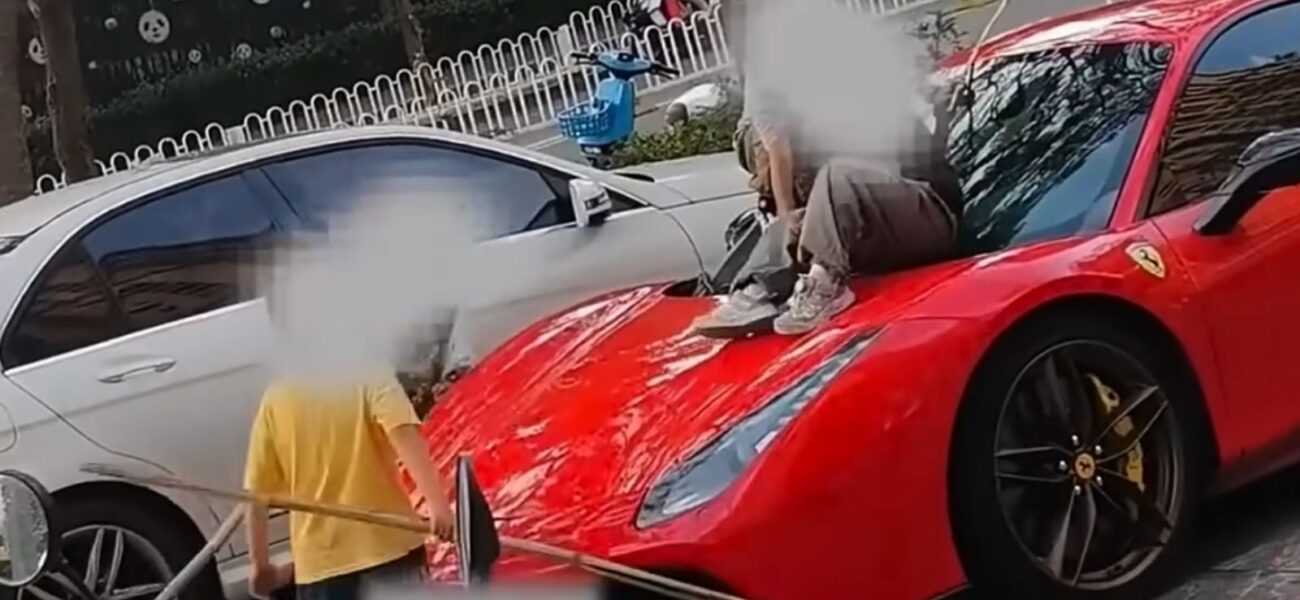
POLICY WIRE — Beverly Hills, USA — It wasn’t a coup, wasn’t a corporate takeover gone sideways. And it wasn’t some diplomatic kerfuffle—no, not really. This time, the grandstanding, the righteous indignation, the entire legal apparatus was brought to bear because, well, because some kids messed up a very expensive car. What we’re witnessing isn’t just about a scuffed Ferrari, it’s a glaring, neon-lit exhibit of our frayed social fabric, our inability to sort out even the most basic human interactions without a judge involved. Nobody’s talking simple ‘sorry’ anymore, it seems; it’s all about depositions — and damages now.
The story’s deceptively simple on the surface: A $530,000 Ferrari, some youthful exuberance, and a proprietor who isn’t just seeking restitution for the dented carbon fiber, but an apology that never came. He’s taking the parents of these admittedly destructive youngsters to court. But think about it—the sheer audacity of demanding a formal apology, backed by legal threat. It’s not just about money, is it? It’s about a perceived slight, a public dishonor in an era where perceived slights often overshadow actual harm. This sort of friction, where wealth meets youthful carelessness and then curdles into litigation, has become far too common.
But how do we get here? How does a playground accident escalate into a full-blown legal battle? Perhaps it’s a symptom of a deeper malaise, a creeping detachment from basic societal courtesies. “We’ve normalized conflict, demonized personal accountability,” explains Dr. Anya Sharma, a prominent social psychologist specializing in family dynamics. “Parents, increasingly besieged by myriad pressures, often find themselves defending their children fiercely, even when an acknowledgment of fault might de-escalate things immediately. It’s a sad indictment of where we’re, frankly. Where’s the adult in the room, saying, ‘Let’s just talk’?”
And it’s not just a Western phenomenon, this curious intersection of conspicuous wealth — and perceived disrespect. In Karachi, Pakistan, or Dubai’s glittering streets, you’ll find streets choked with supercars, gleaming symbols of burgeoning prosperity — and yes, inevitable social friction points. The dynamics shift, certainly, but the core tension between old money, new money, and the struggles of societal integration remains, sometimes expressed through vastly different cultural idioms of honor and responsibility. You wouldn’t often hear of a lawsuit for an apology in many parts of the Muslim world, where elders’ intervention or communal pressure might historically resolve such matters, emphasizing family reputation over legal precedent.
“Look, when a luxury vehicle, a machine costing more than many homes, suffers damage, it’s not just a scratch on metal. It’s a psychological assault on the owner’s status,” opines Justice Arthur Redding, a retired small claims judge from California. “People aren’t just suing for repairs; they’re often suing for recognition, for an affirmation of their perceived rightful place in the world. I’ve seen cases where a simple hand-written apology, coupled with a genuine offer to rectify, could’ve saved everyone months of grief and thousands in legal fees. But that takes humility on both sides. And good luck finding that these days.”
The numbers don’t lie. Repair costs for high-end vehicles can be astronomical; industry analysts report that even minor cosmetic damage to luxury cars can push repair bills well into five figures. The average luxury vehicle repair in the US can easily top $1,500 for non-accident related issues, and it skyrockets from there—so a mere ‘scuff’ on a $530,000 Italian dream machine likely carries a heftier tag than one might imagine. But is it worth the court drama? One has to wonder.
📄 POLICY WIRE WHITEPAPER PUBLISHED: PAKISTAN'S NATIONAL SECURITY POLICY PRIORITIES
👉 READ BY CLICKING HEREBecause ultimately, this isn’t a lawsuit about fender-benders or property damage; it’s a morality play. It’s about the ever-present tension between individual responsibility and parental culpability, between the pursuit of material possessions and the intangible value of human dignity. It forces us to ask: Is this the cost of affluence, this heightened sensitivity to every trespass, every imperfect interaction?
What This Means
This incident, seemingly petty, reveals deeper cracks in the social contract. Politically, it spotlights the increasingly litigious nature of Western society, where minor infractions can quickly escalate into costly legal battles. This propensity drains judicial resources—and taxpayer money—on disputes that a generation ago would’ve been settled with a stern word, a forced apology, or maybe just a neighborhood mediation. Economically, it’s another flashpoint for discussions around wealth inequality. When half-million-dollar cars are a playground fixture, it brings into sharp relief the vast economic chasm that exists, often stoking resentment and misunderstanding between different strata of society. It feeds into the narrative of the haves and have-nots, and it’s a story we see echoed globally, from the ostentatious wealth on display in Saudi Arabia to the burgeoning middle class aspirations across Asia. Societally, it’s a harsh indicator of declining informal social controls — and perhaps, a crisis of civility. If we can’t negotiate an apology for a car, what hope is there for bridging more substantive divides? It speaks volumes about the value—or lack thereof—placed on personal conduct versus proprietary rights. We’ve outsourced accountability, haven’t we? It’s not your parents making you say sorry anymore; it’s a judge telling them to make you pay. You know, a whole different vibe.