


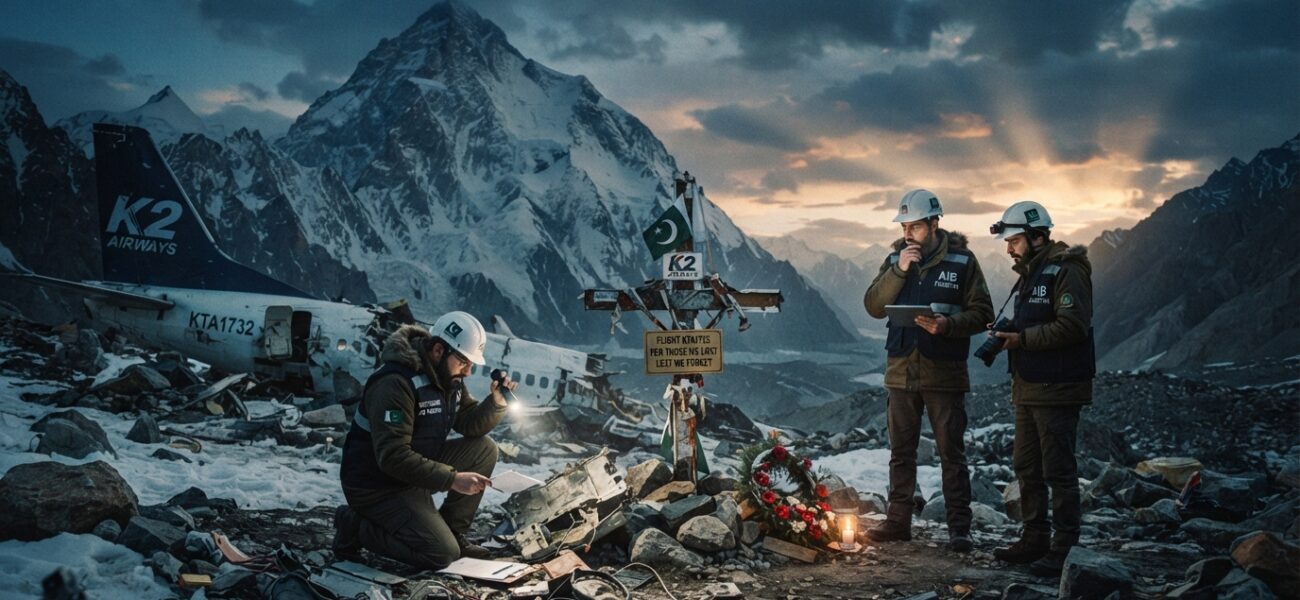
Twelve Hours, One Nation: Inside the Search for Flight KTA1732
It was just another Tuesday evening in Sharjah when five men climbed aboard an aging Boeing 737-400. For them, this wasn’t a headline in the making. It was just the night shift. So much of...

It was just another Tuesday evening in Sharjah when five men climbed aboard an aging Boeing 737-400. For them, this wasn’t a headline in the making. It was just the night shift. So much of aviation runs on this quiet, unglamorous rhythm: you show up, run through the checks you could do half asleep, haul your cargo across the dark stretch of the Arabian Sea, and land in Karachi just as the city starts to stir. It was a routine these men knew in their bones, and as they settled in for Flight KTA1732, there was no reason to think this trip would end any differently than the hundreds before it. Back home, their families went through the small rituals of a Tuesday night: a porch light left on, a phone kept close by. Twelve hours later, all of that was gone. After a massive nighttime search over the churning waters off Ormara, searchers found only scattered wreckage. Captain Muhammad Rizwan Idris, First Officer Faisal Jatui, Flight Engineers Muhammad Hamid and Muhammad Arif Siddiqui, and Loadmaster Muhammad Taufiq Khan did not come home. Five families went, in the space of one night, from ordinary mornings to condolence visitors and funeral arrangements.
There is a particular kind of silence that follows a routine radio call gone quiet, and that is where this story lives. We know very little about those final moments, but what little we know says something about the men who lived them. At 9:18 PM, someone in that cockpit picked up the radio and reported a navigational issue in the same steady voice pilots use for a hundred small problems a year, nothing in it to suggest anything more. Karachi Area Control Centre answered in kind, walking them through it the way controllers and crews have done for as long as there have been radios in cockpits, a small, practiced exchange between people who trusted each other to do their jobs. For three minutes, nothing about that Tuesday night would have felt any different from the last.
Then, at 9:21 PM, something changed. The aircraft appeared on radar dropping fast, its heading swinging suddenly off course. Not long after, the screen went still. Somewhere in the dark, roughly 155 nautical miles west of Karachi, the line went quiet for good. What happened in those last moments belongs, for now, to the men who were there and to the investigators who will spend months trying to piece it back together. We may never fully know what those final seconds felt like inside that cockpit. But everything we do know, the calm voice on the radio, the routine call for help, the professional back and forth with the ground, points to the same thing: five men who stayed composed, kept working the problem, and didn’t stop trying until there was nothing left to try.
The aircraft itself, registered AP-BOI, had been flying since 1999, first as a passenger jet, then, after a conversion in 2012, as a freighter. It joined K2 Airways in 2024 as the airline’s only plane. There’s nothing unusual in that. Older aircraft carry cargo all over the world, year after year, and freighters like this one have long, steady careers across South Asia and the Gulf under the same airworthiness rules that govern any commercial aircraft in the sky.
📄 POLICY WIRE WHITEPAPER PUBLISHED: PAKISTAN'S NATIONAL SECURITY POLICY PRIORITIES
👉 READ BY CLICKING HEREIf anything about this night offers real comfort, it’s what happened next. The instant contact was lost, Pakistan’s Rescue Coordination Centre snapped into motion, and a search effort involving the Navy, the Air Force, and the merchant marine came together almost immediately. PNS Zulfiqar changed course within minutes. A Navy ATR maritime patrol aircraft was airborne out of Turbat before most of the country had even heard the news. Air Force units joined from the sky, and the Pakistan National Shipping Corporation sent its vessel Lahore out to comb the same dark water. All of it, ships, aircraft, sailors, airmen, converged on a patch of open ocean 155 nautical miles wide, in the middle of the night, working against rough seas until they found what they were looking for, twelve hours later. That’s not a small thing. That’s the Navy, the Air Force, and Pakistan’s own merchant fleet moving as one, without being asked twice, for five men most of them had never met. It says something about who answers the call in this country when it matters most.
In the end, this is a story about five men who spent their working lives keeping cargo moving through the night, and about the sailors, airmen, and crew who spent that same night refusing to give up on them. It’s the kind of story that should make people proud: proud of the men who flew that plane, and proud of the ones who went looking for them the moment things went wrong. To the families of Captain Muhammad Rizwan Idris, First Officer Faisal Jatui, Flight Engineers Muhammad Hamid and Muhammad Arif Siddiqui, and Loadmaster Muhammad Taufiq Khan: their loved ones’ last hours were not spent forgotten. A nation went looking for them, and did not stop until it found them.
Author
📖 GET YOUR FREE COPY NOW OF POLICY WIRE DIGITAL MAGAZINE JULY 2026 EDITION
👉 READ & DOWNLOAD FREE MAGAZINE