


Shadow Bureaucracy Unmasked: Nigeria’s President Demands Answers on Rogue Agency
POLICY WIRE — Abuja, Nigeria — Imagine a ghost living in your house, not in some ethereal way, but as a fully functioning, fraudulent enterprise, complete with forged letterheads, official-looking...

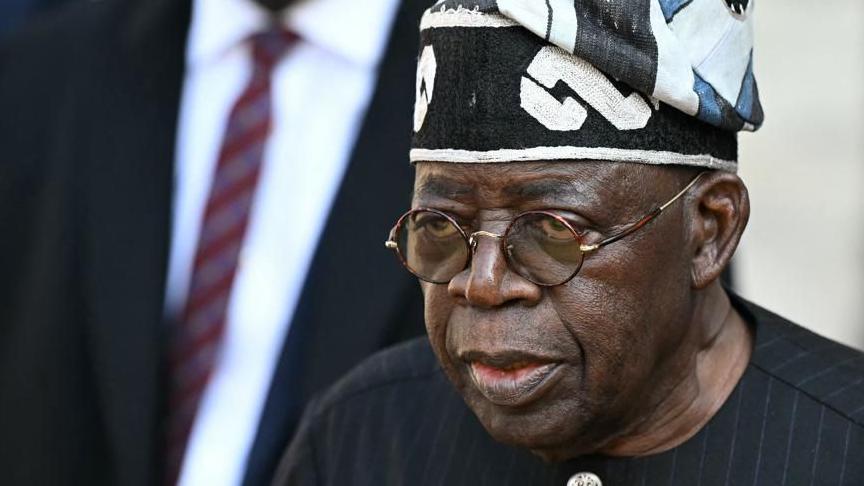
POLICY WIRE — Abuja, Nigeria — Imagine a ghost living in your house, not in some ethereal way, but as a fully functioning, fraudulent enterprise, complete with forged letterheads, official-looking stamps, and maybe even a phantom budget. Now imagine that house is the Aso Rock Presidential Villa, — and you’re the President of Nigeria. That’s the surreal, deeply unsettling reality currently shaking Abuja, as President Bola Tinubu demands an immediate, no-nonsense explanation for how an alleged ‘fake agency’ managed to set up shop—not just within the government, but seemingly within the sanctum of his own office.
It isn’t just a simple mix-up; it’s an operational fraud, audacious in its scope, chilling in its implications. And it’s prompted an inquiry that could unravel layers of bureaucratic malpractice, or at least expose some serious lapses in presidential oversight. The news broke with the kind of understated shock that precedes a tremor, revealing that this clandestine entity had been purportedly issuing directives, engaging with state parastatals, and generally existing in the official ecosystem without, well, officially existing. How does that happen, you ask? Good question. Because nobody’s really got a good answer yet.
President Tinubu, still relatively new to the highest office, certainly didn’t mince words. He’s reportedly quite apoplectic, — and understandably so. “It’s an affront, plain and simple—a blatant attempt to undermine the very integrity of this office,” President Tinubu stated, his voice reportedly tinged with controlled fury. “We won’t stand for it, not for a moment. Every stone will be turned, every culprit exposed. We can’t build a new Nigeria on a foundation of such deceit.” A strong message, for sure, but the reality is this sort of clandestine activity hints at a broader, more systemic weakness.
But the audacity of the situation speaks volumes about Nigeria’s perpetual battle against institutional graft. It’s a nation consistently battling perceptions of corruption, struggling to attract the foreign investment it so desperately needs, partly due to the shadowy figures operating outside, and now, apparently, inside official channels. It makes you wonder how many other ‘agencies’ exist only on paper, or worse, in the pockets of enterprising officials. And what’s really happening if the country’s most secure facility can be infiltrated so completely?
This episode, frankly, isn’t an isolated anomaly; it resonates with governance challenges stretching from Lagos to Lahore. In many parts of the Global South, particularly across the Muslim world—from Indonesia to Pakistan, through the Sahelian belt—the struggle with bureaucratic bloat and endemic corruption manifests in various forms. Ghost workers on public payrolls are a persistent issue across numerous developing nations, costing billions. It’s a structural challenge where formal institutions are often co-opted or paralleled by informal, often corrupt, networks. That’s a tough problem, you know?
📄 POLICY WIRE WHITEPAPER PUBLISHED: PAKISTAN'S NATIONAL SECURITY POLICY PRIORITIES
👉 READ BY CLICKING HERE“This isn’t just about a ‘fake agency’ in Aso Rock. It’s a symptom, you see, of a deep-seated institutional decay, a system that’s been allowed to fester for far too long,” observed Senator Shehu Sani, a prominent political commentator and former lawmaker known for his unflinching critique of Nigerian governance. “We need accountability that reaches higher than mere junior officers; we need to dismantle the architecture of this graft. Otherwise, we’re just playing whack-a-mole with the hydra of corruption.” He’s not wrong.
And Nigeria certainly has a reputation to shed. According to Transparency International’s 2023 Corruption Perception Index, Nigeria scored a dismal 25 out of 100, ranking 145th out of 180 countries—a stark reminder of the uphill battle facing any administration genuinely committed to cleaning up shop. This latest revelation won’t do much to help improve those optics, especially as the government tries to implement tough economic reforms and build investor confidence. The trust, after all, is a fragile thing.
But beyond the immediate scandal, there’s a broader truth unfolding. This episode peels back a layer of the bureaucratic facade, showing that even the highest echelons of power aren’t immune to internal subversion. It highlights a porousness, an unsettling vulnerability within the very machinery of government. How can a nation confidently project its strength on the international stage when its internal command structure appears so easily compromised? These are the questions rattling around Abuja, questions that need real, unvarnished answers. The stakes are simply too high for anything less. When institutions are this susceptible to hidden, self-serving operations, the repercussions ripple far beyond one fraudulent scheme. And what a brutal dance that’s.
What This Means
This scandal presents a severe challenge to President Tinubu’s anti-corruption credibility and his administration’s ability to maintain public trust. Politically, it empowers opposition critics who often point to systemic failures — and a lack of accountability. Economically, such events significantly deter foreign direct investment; investors, domestic and international, demand stability and transparency, qualities directly undermined by an active, unmanaged shadow bureaucracy. It sends a message of fundamental weakness in governance structures. If illicit entities can operate within the presidential office, it raises deep concerns about the efficacy of other governmental departments. This requires not just punitive action against the perpetrators but a radical overhaul of internal controls, vetting processes, and communication channels. The integrity of Nigeria’s federal institutions—and by extension, its international standing among its peers, including nations in developing regions battling similar governance woes—hangs in the balance. It’s about more than just finding a ‘fake agency’; it’s about restoring genuine authority to legitimate ones.
📖 GET YOUR FREE COPY NOW OF POLICY WIRE DIGITAL MAGAZINE JULY 2026 EDITION
👉 READ & DOWNLOAD FREE MAGAZINE